
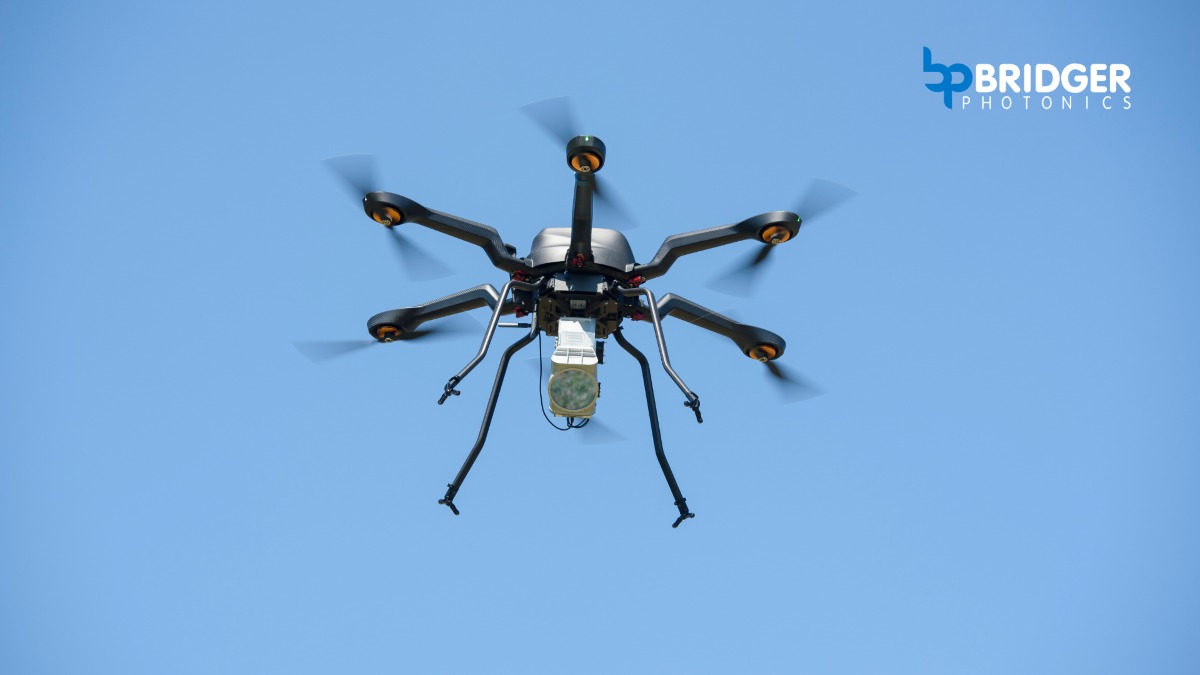
Methane detection specialist Bridger Photonics has announced the launch of a drone-based version of its powerful Gas Mapping LiDAR (GML) system — giving it wings beyond small aircraft and opening up emissions monitoring in hard-to-reach places like offshore oil rigs, liquefied natural gas (LNG) facilities, and sprawling distribution networks.
Up until now, Bridger’s patented GML tech has been soaring in small planes, setting the standard for detecting, pinpointing, and measuring methane leaks across the oil and gas world. Now, the same high-precision system is taking off on drones — bringing better access, quicker results, and safer operations.
So what makes the drone version special? For starters, it’s fast. Bridger’s drones can collect and return data almost instantly, minimizing downtime for operators. It also boosts safety — fewer people need to be on-site in potentially risky environments. And it’s precise, too, capturing both the source and the overall site emissions in one go.
“This has been years in the making,” says Mike Thorpe, Bridger’s chief scientist. “We’re now able to tackle the toughest methane monitoring challenges, especially in large and remote facilities.”
That said, Bridger Photonics is not alone in leveraging drone technology for methane detection. Several other companies have developed and deployed drone-based systems to monitor and identify methane leaks.
Percepto, for instance, has deployed autonomous drones in the Permian Basin equipped with advanced optical gas imaging that meets EPA test standards. ABB’s HoverGuard system uses drones to map methane leaks up to 100 meters away, while SeekOps offers a miniaturized methane sensor for drone-based quantification missions.
TotalEnergies has also developed its own airborne system that identifies both the presence and source of methane emissions. ChampionX combines optical gas imaging with drone-mounted gimbals to detect leaks across sprawling infrastructure, while Flogistix’s AirMethane platform uses fixed-wing drones and lasers to scan for multiple gases even in tough conditions. And ConocoPhillips has tested drones with onboard gas analyzers to detect and quantify leaks in live oilfield settings.
These initiatives highlight the growing adoption of drone technology in the energy sector to enhance methane leak detection and environmental compliance.
More: New US-made drone battery offers over 3-hour flight time


FTC: We use income earning auto affiliate links. More.


Comments