
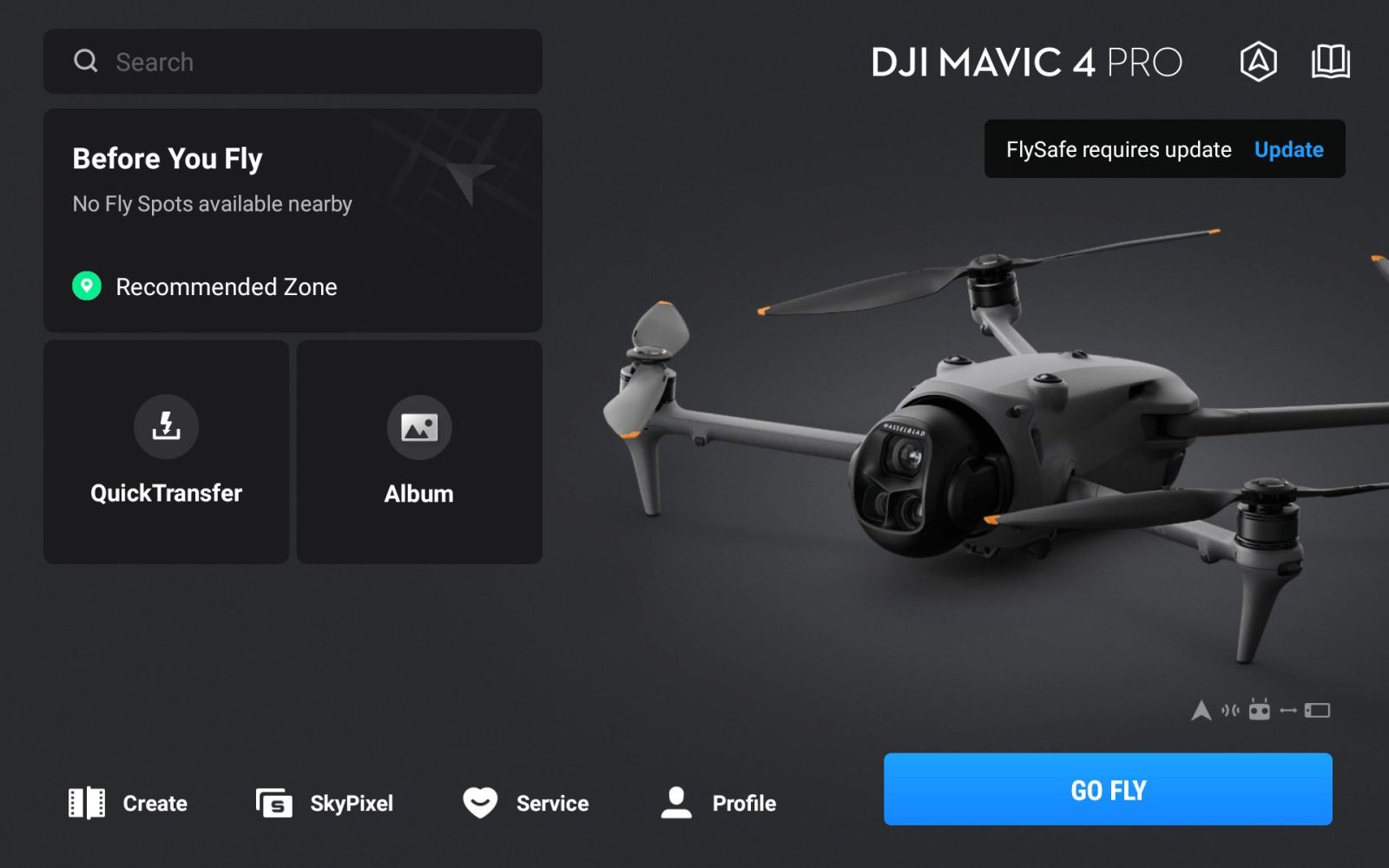
DJI is officially closing the chapter on its old geofencing playbook — not just in the United States or Europe, but everywhere. The drone giant announced today that its updated GEO airspace system is expanding to all remaining international markets, marking the company’s most dramatic shift in airspace guidance in more than a decade.
For drone pilots, hobbyists, commercial operators, and public safety teams alike, this update isn’t just another firmware tweak. It changes how you fly, how you plan missions, and what you’re responsible for once your drone leaves the ground.
Starting November 17, 2025, DJI will begin phasing in the update across its consumer and enterprise drones. Agricultural drone platforms will follow through firmware releases beginning in December, and by early 2026, DJI will retire the long-running GEO Unlock Request service entirely.
New: Save $160 on DJI Flip drone in early Black Friday deal
This global move mirrors the major transition that US pilots experienced earlier this year, when DJI shifted away from manufacturer-controlled No-Fly Zones and began relying on official FAA airspace data instead. Now, that same model — one that emphasizes awareness over automatic restriction — is coming to pilots around the world.
The most significant change: DJI’s remaining No-Fly Zones will be reclassified as Enhanced Warning Zones.
That means drones will no longer impose hard takeoff restrictions in sensitive areas such as airports, critical infrastructure, or government facilities. Instead, operators will receive prominent in-app warnings, but DJI won’t stop the flight. Whether you proceed or stop is entirely up to you.
This shift aligns with a regulatory philosophy adopted by aviation authorities globally: pilots, not manufacturers, are responsible for knowing where they can fly.
DJI rolled out this update in the European Union in 2024, where it was received without controversy. But when it was introduced in the US, DJI received criticism for dropping a major safety initiative, with many suggesting the company was relaxing geofencing as a retaliatory move against the US government.
DJI shut those rumors down quickly, stressing that the update was neither a protest nor a response to any potential US drone ban. Instead, the company said it was part of a long-planned strategy to standardize pilot-facing safety tools across regions, reduce confusion, and give operators more consistent airspace information.
The new global rollout shows DJI meant every word.
Why DJI is stepping back from drone geofencing
When DJI introduced geofencing back in 2013, it did so to fill a regulatory gap. Consumer drones were new, rules were inconsistent, and preventing accidental incursions was essential for safety. Over the years, the company pioneered safety innovations such as Remote ID, Return-to-Home, Vision Assist, and omnidirectional aircraft detection — tools that have avoided accidents countless times for DJI drones, including the Mini 5 Pro, Mavic 4 Pro, and the Air 3S.
But today’s environment is different: aviation authorities have robust digital airspace systems, pilots are more informed, and regulations like Remote ID and LAANC make geofencing less necessary as an enforcement tool. And that shift is exactly why DJI says it is stepping back.
For years, DJI’s internal geofencing relied on ICAO Annex 14 configurations — a system that didn’t always match local aviation rules. As a result, pilots in the US, Europe, and Asia often found themselves blocked by DJI despite having legal authorization from regulators.
That disconnect became especially painful for commercial operators and emergency responders using LAANC or equivalent approval systems. Even with official clearance, they still had to wait hours or days for a DJI unlock code.
DJI’s new model eliminates those delays entirely. If aviation authorities approve a flight, DJI drones simply follow the regulator’s rules, not their own. For many operators, this means smoother workflows, fewer delays, and better alignment with official approval systems.
But, with greater freedom comes greater responsibility, and DJI is making that point clear. The company says its FlySafe data will continue providing advisory information, but it does not replace official airspace maps. Pilots must now:
- Update their apps and firmware to receive current guidance
- Stay connected online to sync airspace data
- Check national aviation authority resources before flying
- Secure all necessary authorizations before takeoff
DJI’s message is simple: “We’ll guide you, but you make the call.”
Let’s not forget that the new global approach comes as drone-related airspace incidents continue to make headlines. In a recent high-profile example, a DJI Mini drone collided with a “Super Scooper” firefighting aircraft in Los Angeles, leading to some very real and uncomfortable consequences for the pilot: 14 days in federal prison, 30 days of home detention, and a $156,000 fine.
Regulators worldwide have made it clear that pilots — not manufacturers — will face consequences for reckless flights. Fines, license suspensions, and even criminal charges are all on the table when drones interfere with emergency operations. DJI’s updated system reinforces that reality: pilots must remain vigilant, informed, and compliant.
New: DJI warns pilots: US drone ban is closer than you think


FTC: We use income earning auto affiliate links. More.


Comments