

If you’re one of the early supporters of the HoverAir Aqua, the eagerly anticipated waterproof, self-flying drone, you’ve likely been watching shipping timelines like a hawk. After all, the crowdfunding campaign that launched in August 2025 attracted serious attention, raising over $2 million from more than 1,700 backers. Now, HoverAir has delivered a major update on when backers can expect their drones, and it’s a mix of disappointment and promise.
The bad news first: Aqua is officially delayed.
The good news? HoverAir says the extra time is being used to meaningfully improve performance, reliability, and usability, and early backers are getting a few perks in return.
DroneDJ readers may recall that the Aqua isn’t just another flying camera; it’s built from the ground up to work on and over water.
With its 100% waterproof and buoyant design, the sub-250g drone can float and launch directly from water, rather than just taking off from land. Its AI-powered subject tracking supports more than 15 automated flight modes. And you get 4K/100fps video capture from a 1/1.28-inch CMOS sensor, including HDR and H-Log video profiles. HoverAir promises up to 23 minutes of flight time per battery, with a top track speed of around 34 mph, and comes with a wearable controller called Lighthouse that allows the drone to take off, land, and follow you without the need for a phone or traditional remote.
This mix of waterproof capability, cinematic imaging, and hands-free automation hits a sweet spot for kayakers, paddleboarders, surfers, and content creators who want cinematic shots without lugging a giant rig around. And for HoverAir, the Aqua expands the company’s reputation for building solid, hands-off self-flying cameras. But while previous models — like the X1 ($237), X1 Pro ($499), and the 8K/30fps X1 ProMax ($599) — have focused on land-based filming with automated tracking, portability, and simplicity, Aqua takes that philosophy further into environments where most drones fear to tread: water.
So, what changed, and why are shipments getting delayed?
HoverAir confirms the first batch of Aqua units won’t begin shipping until February 2026, pushed from the original December 2025 timeline. For a crowdfunded hardware product, delays aren’t exactly shocking, but HoverAir is trying to show this isn’t a case of things going off the rails.
The company insists the decision to delay wasn’t taken lightly. The team claims they identified several improvements that would noticeably enhance Aqua’s real-world performance, especially around connectivity, usability, and reliability — all critical for a drone designed to operate around water, movement, and action sports. As such, this delay was chosen so backers get a product that exceeds expectations from day one, rather than something rushed to meet a calendar date.
What’s actually changing on the Aqua waterproof drone
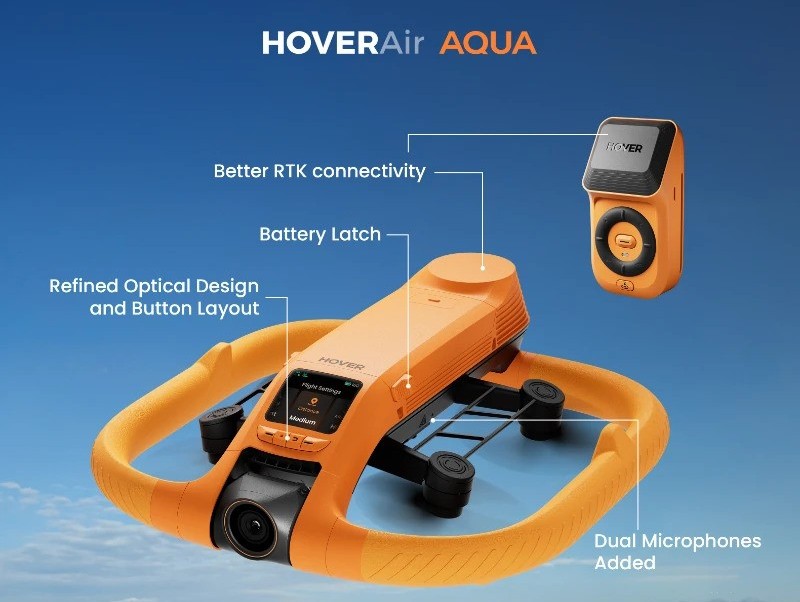
HoverAir has also shared some details about design refinements made to both the Aqua drone and its Lighthouse accessory.
One of the most notable changes is a redesigned tail section, optimized to improve RTK satellite signal reception. That may sound technical, but the payoff is simple: more precise tracking and smoother follow-me performance, especially in challenging environments. The Lighthouse has also been redesigned to work in sync with these improvements.
Audio is getting an upgrade, too. Aqua now features a dual-microphone system, replacing the original single-mic setup. The goal is clearer, more usable audio, particularly when filming in Mount Mode during activities like paddleboarding or surfing.
HoverAir is also reworking the battery latch mechanism, making it more secure while maintaining a tight water seal. The company says the new design is both more intuitive and more reassuring — two things you absolutely want when electronics meet water.
Finally, the aircraft’s onboard screen is being improved with better brightness, viewing angles, and clarity, making it easier to use outdoors and under direct sunlight. Button placement has also been refined based on user testing, aiming for smoother operation whether you’re standing on land or floating in the water.
To soften the blow of delayed shipping, HoverAir is including a free accessory with every Aqua order — a protective “Wetsuit” case designed to safeguard the drone during transport and storage, and also double as a mounting accessory for paddleboards, surfboards, and other gear. According to the company, it’s inspired by real wetsuits and adds both protection and utility whenever Aqua isn’t in the air.
They’re also launching a small Early Access Program for 30 backers to receive drones in January 2026 (still ahead of the main batch) in exchange for final feedback and close support.
Sure, the HoverAir Aqua delay is disappointing if you were counting down to unboxing season, but the story isn’t just about a missed date. It’s about a really unique drone concept (water-ready, floating, self-flying) that’s still forging new ground in consumer tech. Backers should expect a more refined product when it finally arrives.
And for anyone who wants aerial footage now, especially those hoping for a gadget under the Christmas tree this year, DJI’s ready-to-ship drones remain some of the best in class, right from ultra-light beginner drones like the Mini 5 Pro, selfie-friendly picks like DJI Neo, first-person view (FPV) options like the Avata 2, and more capable all-around flyers like the DJI Air 3S.
More: DJI throws huge holiday discounts on power stations


FTC: We use income earning auto affiliate links. More.

Comments