
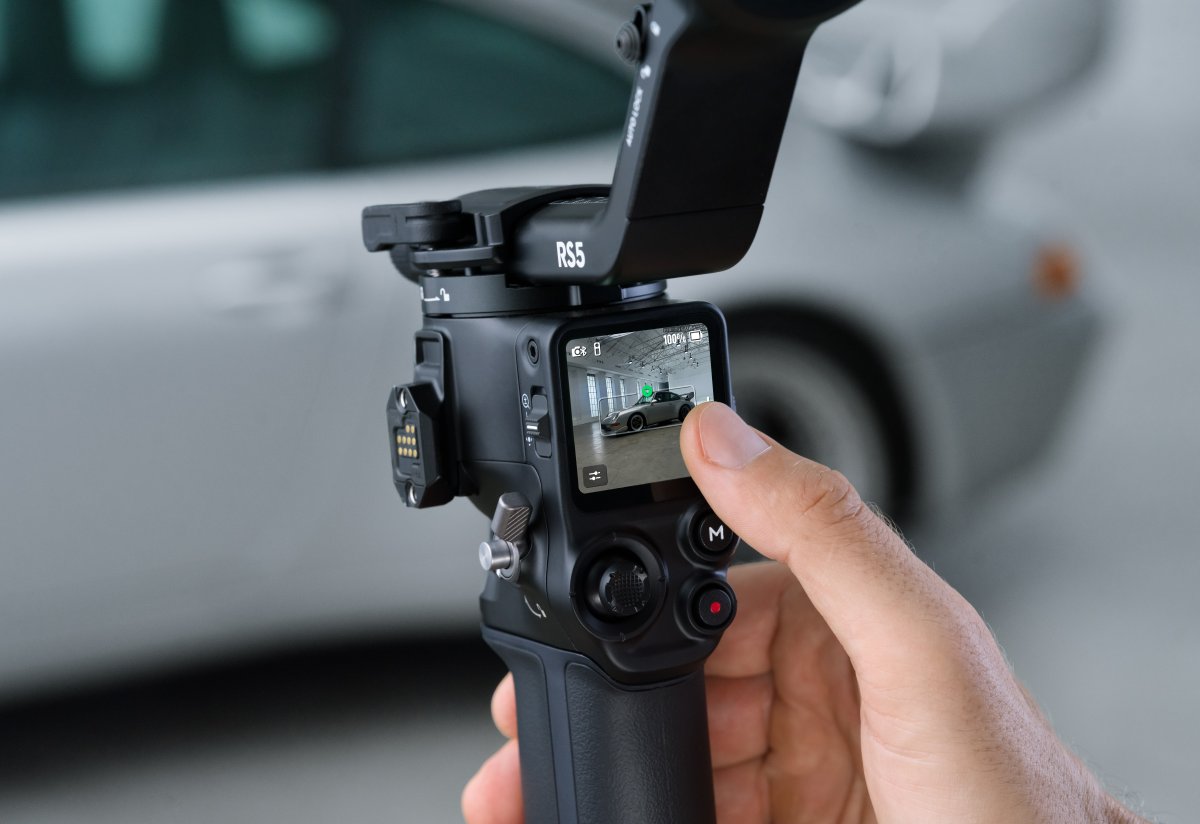
DJI is back with a new tool aimed squarely at creators, and this time, it’s all about working smarter, lighter, and longer. The company has officially launched the DJI RS 5, a brand-new lightweight commercial gimbal designed to give videographers more stability, faster setup, and surprisingly powerful intelligent tracking without adding bulk.
At first glance, the RS 5 feels like a natural evolution of DJI’s Ronin lineup. But dig a little deeper, and it’s clear this gimbal is designed for real-world shooting — crowded locations, fast-moving subjects, vertical video demands, and long days where efficiency matters just as much as image quality.
One of the biggest upgrades comes from DJI’s RS Enhanced Intelligent Tracking Module, an improved version of the tracking system first introduced with the RS 4 Mini. The new module lets videographers select and track subjects directly from the gimbal’s touchscreen — no phone, no external monitor required.
What’s notable here is flexibility. The RS 5 isn’t limited to tracking people. It can lock onto vehicles, pets, or other moving objects, and maintain focus on a human subject from up to 10 meters away. If the subject briefly exits the frame — something that happens constantly in live environments — the system can automatically re-acquire them, saving time and retakes.
The tracking module attaches magnetically, eliminating the need for extra adapters or tools. For solo shooters or small crews, that means faster setup and fewer things to manage mid-shoot. DJI is clearly aiming to make complex shots — like reverse tracking, orbit shots, or fixed-camera movements — accessible even to less experienced users.
New: Lowest ever: DJI Mini 3 drone deal slashes prices by $144
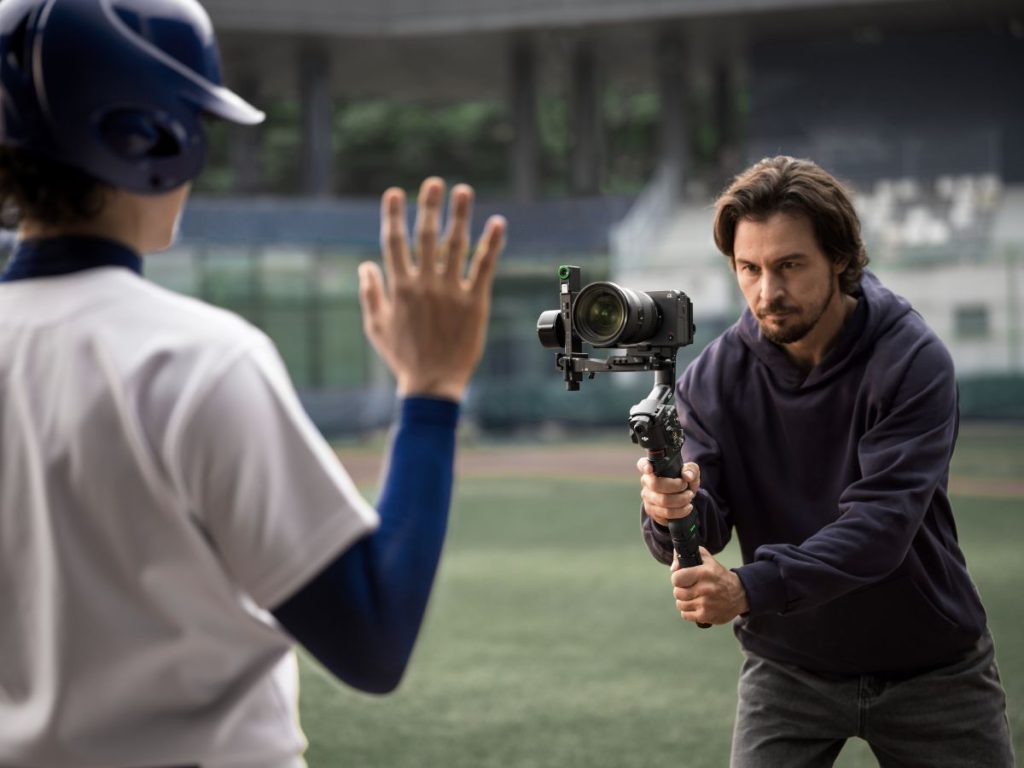
Stability has always been the Ronin series’ calling card, and DJI claims the RS 5 takes it a step further. The gimbal features the 5th-generation RS Stabilization Algorithm, boosting peak motor torque by 50 percent. In practical terms, this translates to smoother footage during fast walking, running shots, sudden direction changes, or aggressive camera movements.
Vertical video creators also get a boost. The RS 5 offers improved stability when shooting vertically and allows users to switch orientations without extra accessories — a small but meaningful time-saver for creators producing content for social platforms.
Despite all this power, the RS 5 remains compact. It weighs just 1.46 kg (3.2 lbs) with the battery grip and plates, yet supports payloads up to 3 kg, making it compatible with most mainstream mirrorless camera and lens combinations.
But DJI didn’t stop at just stabilization. The RS 5 introduces an Electronic Briefcase Handle, enabling controlled overhead or low-angle shots with one hand. Built-in electronic controls, a responsive joystick, and smoother transitions help reduce wrist fatigue — something anyone who’s shot handheld for hours will appreciate.
Another thoughtful addition is the on-screen Z-Axis Indicator, which provides real-time guidance on how to adjust walking pace and posture to minimize vertical shake. It’s a subtle feature, but one that reinforces DJI’s focus on helping creators get cleaner footage, not just more features.
Battery life also gets a major upgrade. The RS 5 charges fully in about one hour, a 60 percent improvement over the RS 4. The standard battery offers up to 14 hours of use, while the new BG70 High-Capacity Battery Grip can extend runtime to a claimed 30 hours, significantly reducing downtime on long production days.
Platform compatibility has also broadened. Wireless Bluetooth shutter control now supports Panasonic and Fujifilm cameras, joining Sony, Canon, and Nikon. Balancing is also smoother thanks to redesigned fine-tuning knobs with Teflon interlayers on each axis arm, making precise adjustments easier, even with heavier setups.
DJI has carried over trusted features like 2nd-gen automated axis locks, fast native vertical switching, and deep integration with its broader ecosystem. Pairing the RS 5 with DJI Focus Pro Motors allows joystick-controlled zoom and dial-based focus, while DJI SDR Transmission enables high-quality live feeds and remote control for collaborative shoots.
The new RSA Communication Port supports a range of handles and third-party accessories, and the open RS SDK gives developers room to build custom tools — keeping the RS 5 flexible for different shooting styles and workflows.
All in all, for solo videographers juggling speed, stability, and creativity, the RS 5 looks less like a simple refresh and more like DJI doubling down on practical, creator-first design.
More: Antigravity A1 drone gets first-ever discount with new flight simulator feature


FTC: We use income earning auto affiliate links. More.



Comments