

There’s a reason drones often sit in online carts longer than they should. It’s not just about cost; it’s the friction. Too many controls. Too much setup. Too many things that can go wrong in the first five minutes. DJI Flip was designed to chip away at that hesitation. And now, with a fresh round of all-time low discounts across its lineup, it’s suddenly stepping into a much more tempting territory for everyday buyers.
At the center of this price drop is the most stripped-down version: the controller-free Flip bundle, now available for $309 (down from $389). That number alone is enough to grab attention. But what makes it interesting is what DJI has removed to get there, and what it hasn’t.
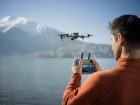
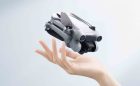
The Flip doesn’t actually need a traditional controller to function. It can fly directly from your smartphone using the DJI Fly app. You can launch it from your palm, frame your shot on your screen, and let it take off with a tap.
That shift sounds small, but it fundamentally changes how the product feels. Instead of operating something that resembles professional equipment, you’re interacting with it more like a camera. For casual users — the ones capturing travel moments, family gatherings, or quick social clips — that difference is everything.
Of course, DJI hasn’t abandoned traditional setups. You can still opt for versions bundled with the RC-N3 controller or the higher-end RC 2 with a built-in display. But the existence of a controller-free option at this price signals a broader idea: drone flying doesn’t have to feel complicated anymore.
What also stands out about the Flip is how clearly it’s been built with cautious first-time users in mind. The drone features fully enclosed propellers integrated into its body, creating a protective ring that makes close-range and indoor flights far less intimidating. This isn’t a snap-on accessory; it’s part of the design. Pair that with a 3D infrared sensing system that can automatically brake when obstacles get too close, even in lower-light conditions, and the experience starts to feel far more forgiving than what most people expect from drones.
But ease of use doesn’t come at the expense of capability. Under the hood, the Flip carries a 1/1.3-inch CMOS sensor capable of capturing 48MP photos and 4K HDR video at 60 frames per second. It also supports higher frame rates for slow-motion footage and vertical shooting modes tailored for social media platforms. For creators who want more flexibility, there’s support for 10-bit D-Log M, allowing for more advanced color grading in post-production.
Then there are DJI’s automated flight features — including subject tracking and preset shooting modes like Dronie, Rocket, Helix, and MasterShots. These are designed to create dynamic, multi-angle clips without requiring manual piloting skills. In practice, it means even first-time users can walk away with footage that looks intentionally composed rather than accidental.
Tucked among these features is a more cinematic tool that’s quietly made its way into the Flip’s capabilities: the Dolly Zoom effect. Long associated with professional filmmaking, this effect creates a visual shift where the subject remains steady while the background appears to stretch or compress. On the Flip, it’s simplified into an automated mode, making it accessible without requiring technical know-how. It’s not the headline feature, but it’s a clear signal of how far entry-level drones have come.
Another factor working in the Flip’s favor is its weight. At under 249 grams, it falls into a category that allows recreational users in the United States to fly without FAA registration, removing yet another barrier for beginners.
The current pricing across bundles reflects the broader appeal:
- DJI Flip (controller-free, two-battery kit): $309 (was $389)
- DJI Flip + RC-N3 controller: $349 (was $439)
- DJI Flip + RC 2 controller: $509 (was $639)
- DJI Flip Fly More Combo + RC 2: $619 (was $779)
The Fly More Combo, which includes extra batteries and a charging hub, is geared toward users planning longer sessions or travel use. But the most notable shift is at the entry level, where the Flip’s pricing now overlaps with products that offer far less capability. And at $309, it’s no longer just a considered purchase. For many, it’s starting to look like an easy one.
More: DJI Avata 2 prices crash ahead of new 8K FPV drone


FTC: We use income earning auto affiliate links. More.

Comments