
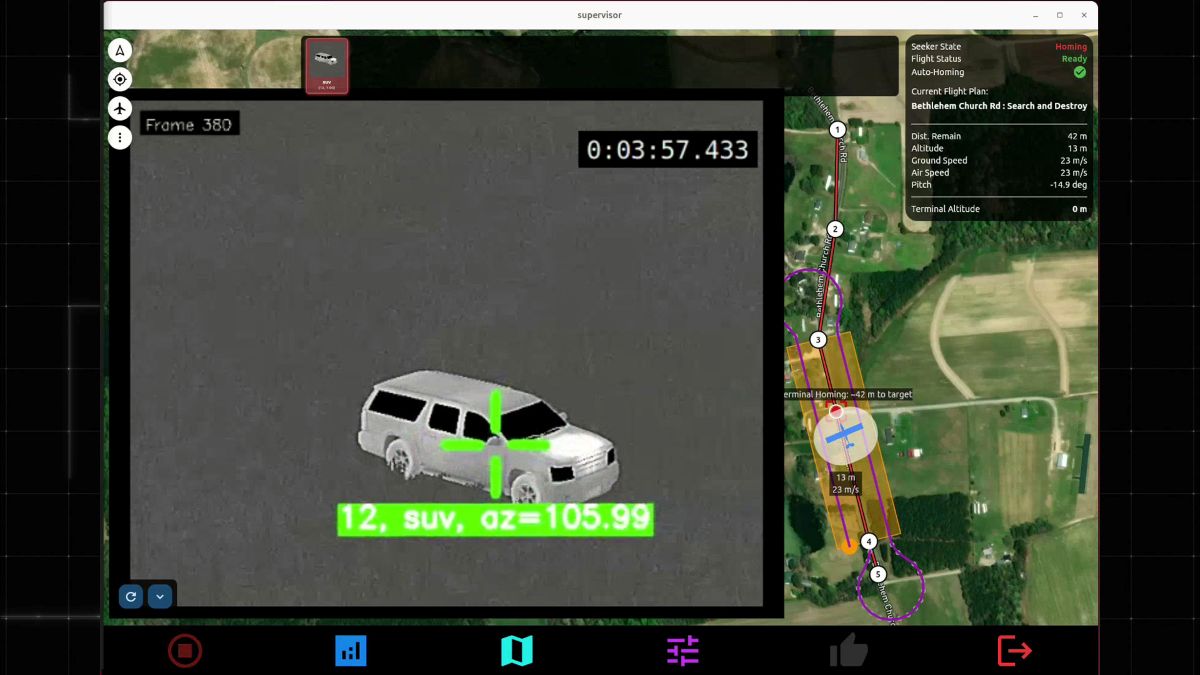
Teledyne FLIR OEM is doubling down on one of the fastest-evolving areas in modern defense: smarter, more autonomous drones. The company, part of Teledyne Technologies Incorporated, has rolled out a major upgrade to its Prism SKR (“seeker”) software, transforming it from a targeting tool into a full-fledged autonomy platform built with drones front and center.
And that shift matters. From first-person view (FPV) drones on the front lines to counter-UAS systems defending airspace, drones are now at the heart of modern military operations. This latest update is designed to make those systems far more capable, especially in chaotic, signal-denied environments.
At its core, Prism SKR now acts as a “closed-loop” autonomy system. Instead of just identifying targets, it manages the entire mission lifecycle — from tasking to execution — while continuously adapting in real time. That’s particularly useful for drone operations, where conditions can change in seconds and human control isn’t always reliable.
The platform supports a wide range of drone-related systems, including loitering munitions, air-launched effects (ALE), interceptors, and FPV drones. But it’s the new features tailored for drone missions that really stand out.
Take pixel-lock targeting, for example. This capability allows a drone to stay visually locked onto a target, even if communication signals are jammed or completely lost. In FPV drone missions, where operators often lose control in the final moments due to interference, this could be a game-changer. The system essentially takes over, ensuring the drone can complete its objective with precision.
And it’s not just about autonomy; it’s about continuity. Pixel-lock enables persistent re-identification (ReID) tracking, meaning the system can keep tracking the same target even through visual disruptions or degraded conditions. That’s a critical advantage in dense urban or contested environments.
The software also scales intelligently. It can assist human operators during handoff phases — like when control shifts from manual piloting to onboard AI — and then transition into fully autonomous execution when needed. That flexibility is key for drone missions that blend human decision-making with machine speed.
On the development side, Teledyne FLIR is making it easier to build and deploy these capabilities. Prism SKR integrates with AI-assisted tools like GitHub Copilot and fits into existing workflows via QGroundControl, helping teams adapt quickly without starting from scratch.
The bigger picture? This update signals where drone technology is headed… toward systems that don’t just follow commands but can think, adapt, and execute missions with minimal human input.
More: Major PX4 drone software vulnerability raises hijacking concerns


FTC: We use income earning auto affiliate links. More.




Comments