
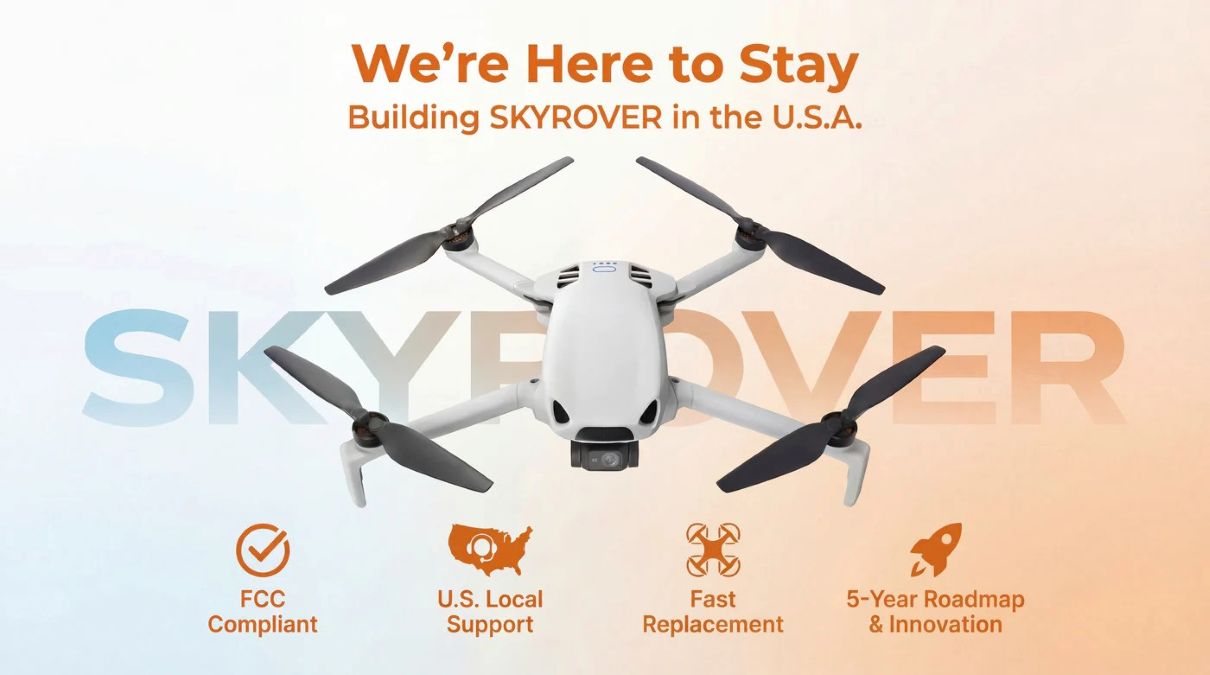
Skyrover, a relatively new but increasingly visible drone brand, is stepping into a tense and uncertain US market, and it’s doing so with a very clear message: we’re here to stay. Here’s what that means for American drone buyers right now.
A growing presence in the US drone market
Over the past year, Skyrover has quietly expanded its footprint in the United States, largely through mainstream retail channels like Best Buy and Amazon. That alone is notable since most emerging drone brands struggle to break into big-box distribution.
On the product side, Skyrover has been targeting entry-level and mid-range consumers, especially those who want to shoot vertical videos and social media content. Drone enthusiasts have pointed out similarities between Skyrover’s flight systems and technology used within the broader DJI ecosystem, suggesting the drone may benefit from engineering concepts derived from the tech giant’s platforms. But at the end of the day, Skyrover wants to distinguish itself by offering DJI-style capabilities without DJI-style prices.
The $289 Skyrover S1, for instance, features a 1/2-inch Sony sensor capable of capturing 48-megapixel photos and 4K video at 60 frames per second. Another standout feature is forward obstacle avoidance, something rarely seen in drones under $300. Skyrover X1, on the other hand, promises a 1/1.32-inch CMOS sensor, 360° obstacle avoidance, true vertical shooting, AI tracking, and extended transmission range for only $499.
The elephant in the room: Regulation
Skyrover’s recent public statement directly addresses a growing concern among US drone buyers: Will foreign-made drones remain viable in the long term?
That concern isn’t unfounded. Policymakers and regulators, including the Federal Communications Commission, have been tightening scrutiny on foreign technology, particularly devices that rely on radio communications and data transmission. The FCC plays a key role here because any drone sold in the US must comply with its equipment authorization rules. These regulations ensure that devices:
- Use approved radio frequencies
- Avoid harmful interference
- Meet safety and communication standards
More recently, the FCC has also been exploring restrictions tied to national security concerns. The FCC has already added foreign-made drones and key components to its “Covered List” following national security determinations. While some devices were later removed, most foreign-produced UAS and critical components still face restrictions when it comes to entering the US market.
Skyrover’s response: Reassurance and a roadmap
Skyrover is tackling those concerns head-on. In its statement to US customers, the company emphasizes that all its drones sold domestically are fully FCC-compliant and designed to meet current regulatory standards. That’s the baseline, but the more interesting part is what comes next. The company has laid out a five-year roadmap that reads as both a commitment and a strategic signal.
Short term (within one year):
- Maintain FCC compliance across all products
- Expand retail availability and local inventory
- Improve US-based customer support, including replacement-first service
That last point stands out. Instead of traditional repair workflows, Skyrover is leaning into replacement-based support, which could significantly reduce downtime for users.
Mid-term (2-3 years):
- Build a stronger US team
- Deepen partnerships with retailers and service providers
- Improve after-sales infrastructure
Long-term (up to five years):
- Explore US-based manufacturing
- Localize parts of its supply chain
- Continue adapting to evolving regulations
For American consumers, the biggest fear isn’t just buying a drone, it’s buying one that might lose support, updates, or legality down the line. Skyrover is clearly trying to get ahead of that narrative. By emphasizing regulatory compliance, local support infrastructure, and potential US manufacturing, the company is positioning itself as a stable, long-term player rather than a short-lived import brand.
Of course, execution will matter more than promises. Building a US supply chain and maintaining regulatory alignment, especially in a fast-changing policy environment, is no small task. But Skyrover’s message reflects a broader shift happening across the drone industry. As geopolitical tensions and regulatory scrutiny increase, foreign drone makers are being forced to localize operations, increase transparency, and invest in long-term US strategies.
For now, Skyrover’s approach is simple: reassure customers, stay compliant, and build trust over time.
More: GoPro’s new camera might be its biggest comeback move


FTC: We use income earning auto affiliate links. More.


Comments