
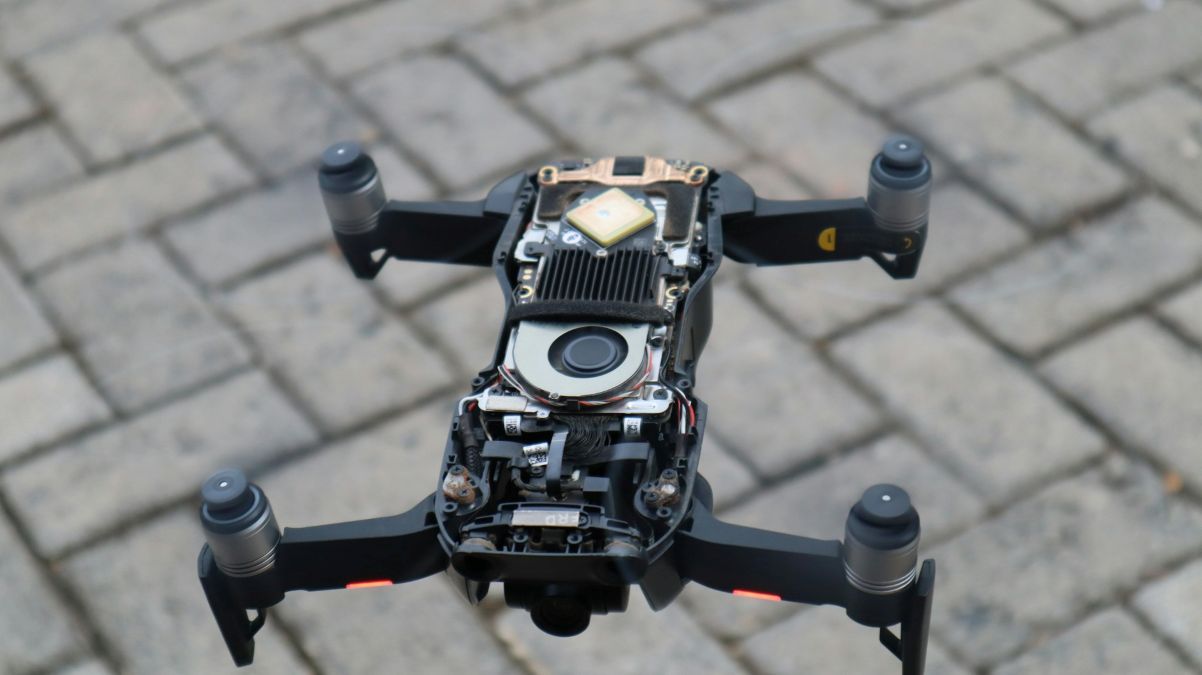
Investigating a rogue drone isn’t always straightforward. Law enforcement may detect an unauthorized aircraft near a prison, airport, or stadium, but identifying who flew it and proving what happened can require piecing together evidence from multiple systems. Cellebrite wants to change that.
The digital forensics company has expanded its exclusive partnership with drone detection specialist SkySafe, bringing real-time drone detection and airspace intelligence into its growing drone investigation platform. The move is designed to help investigators connect what happens in the sky with the digital evidence stored on the drone itself, creating a more complete picture of an incident.
The announcement also builds on a strategy Cellebrite began earlier this year. In March, the company entered the drone forensics market by acquiring SCG Canada, whose forensic technology allows investigators to extract flight logs, GPS data, photos, videos, and other evidence from more than 80 popular drone models. At the time, Cellebrite made it clear it wanted to expand beyond smartphones and computers into drone investigations. This latest partnership is the next step in that plan.
New: This drone-killer can destroy over 50 drones in one flight
With SkySafe’s technology now integrated into the workflow, investigators can detect and monitor drone activity as it happens before examining the drone itself after it’s recovered.
Instead of relying on separate systems for airspace monitoring and digital forensics, agencies can combine real-time flight intelligence with forensic evidence in a single investigation. That could make it easier to reconstruct a drone’s flight path, identify its operator, and correlate drone activity with other digital evidence collected during a case.
The timing also makes sense. Unauthorized drone activity continues to be a concern around airports, correctional facilities, sports venues, military installations, and other critical infrastructure. Drone incursions have also become a growing security challenge at major public events, where investigators often need answers quickly.
The expanded partnership reflects a broader shift in how drone incidents are investigated. Detecting a suspicious drone is only the first step. Investigators also need to understand where it flew, what it was doing, who controlled it, and whether the drone itself contains evidence that can support criminal charges.
That’s where Cellebrite sees an opportunity. By combining SkySafe’s live airspace intelligence with the forensic capabilities it gained through the SCG Canada acquisition, the company is positioning itself as a one-stop platform for drone investigations — from the moment a drone is detected to the analysis of the digital evidence recovered from the aircraft.
As drones become increasingly common for both legitimate and illegal activities, investigators are looking for faster ways to connect events in the air with evidence on the ground. Cellebrite is betting that bringing those pieces together in a single workflow will help agencies solve drone-related cases more efficiently.
More: Two more drones escape FCC’s sweeping foreign drone ban


FTC: We use income earning auto affiliate links. More.

Comments