
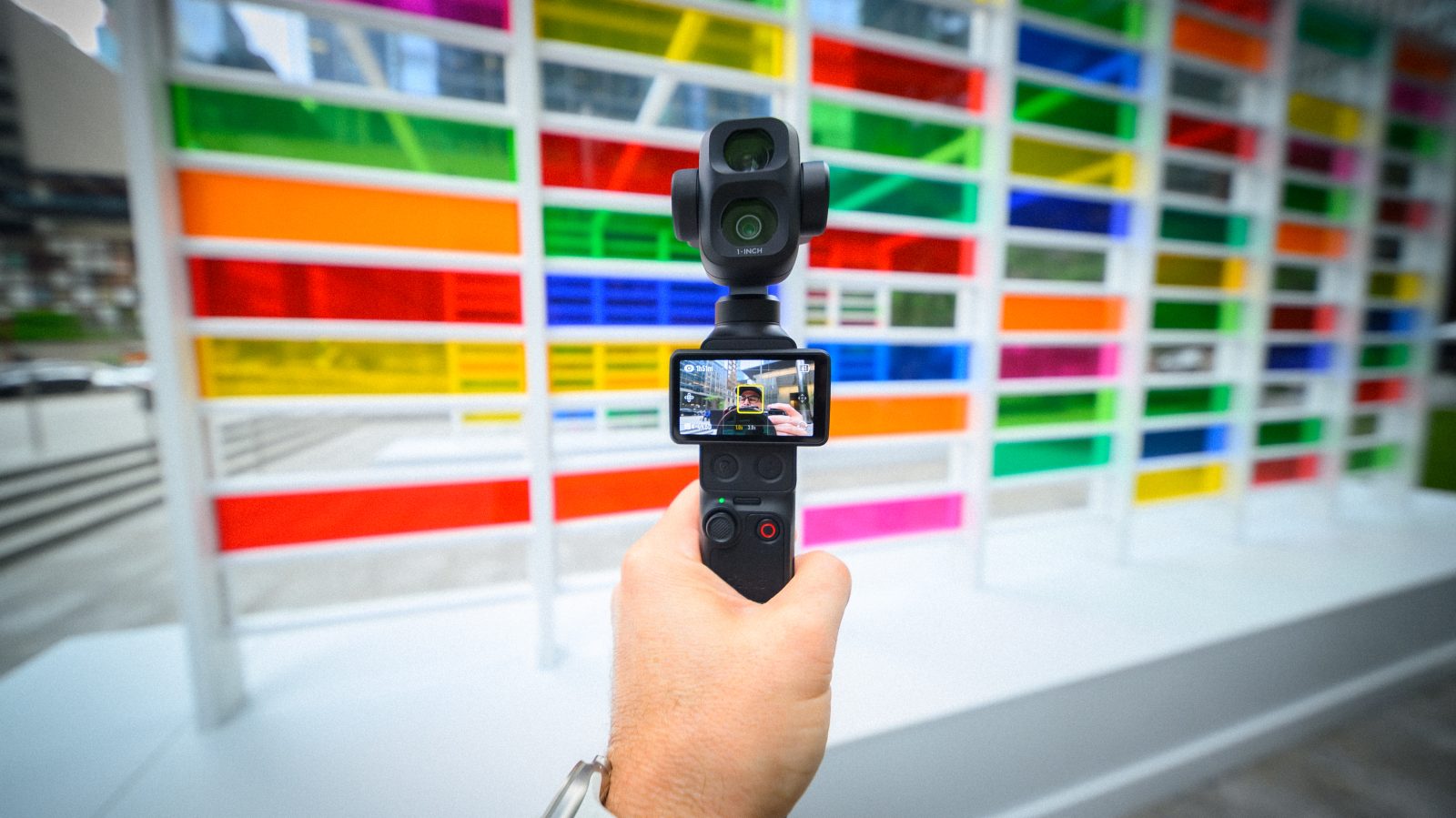
The Osmo Pocket 3 was a hard act to follow. For a stretch it was reportedly the best-selling camera in the world, which is remarkable for something you can palm. So the Osmo Pocket 4P arrives with real expectations, and DJI has answered them with the two specs everyone is already repeating: a dual-lens system and 17 stops of dynamic range.
After a day with the camera at a DJI event in Toronto, here’s the honest surprise. The 17 stops are impressive, but they’re not what won me over. The feature I’d actually reach for is the one barely making the headlines.
The telephoto lens is the story
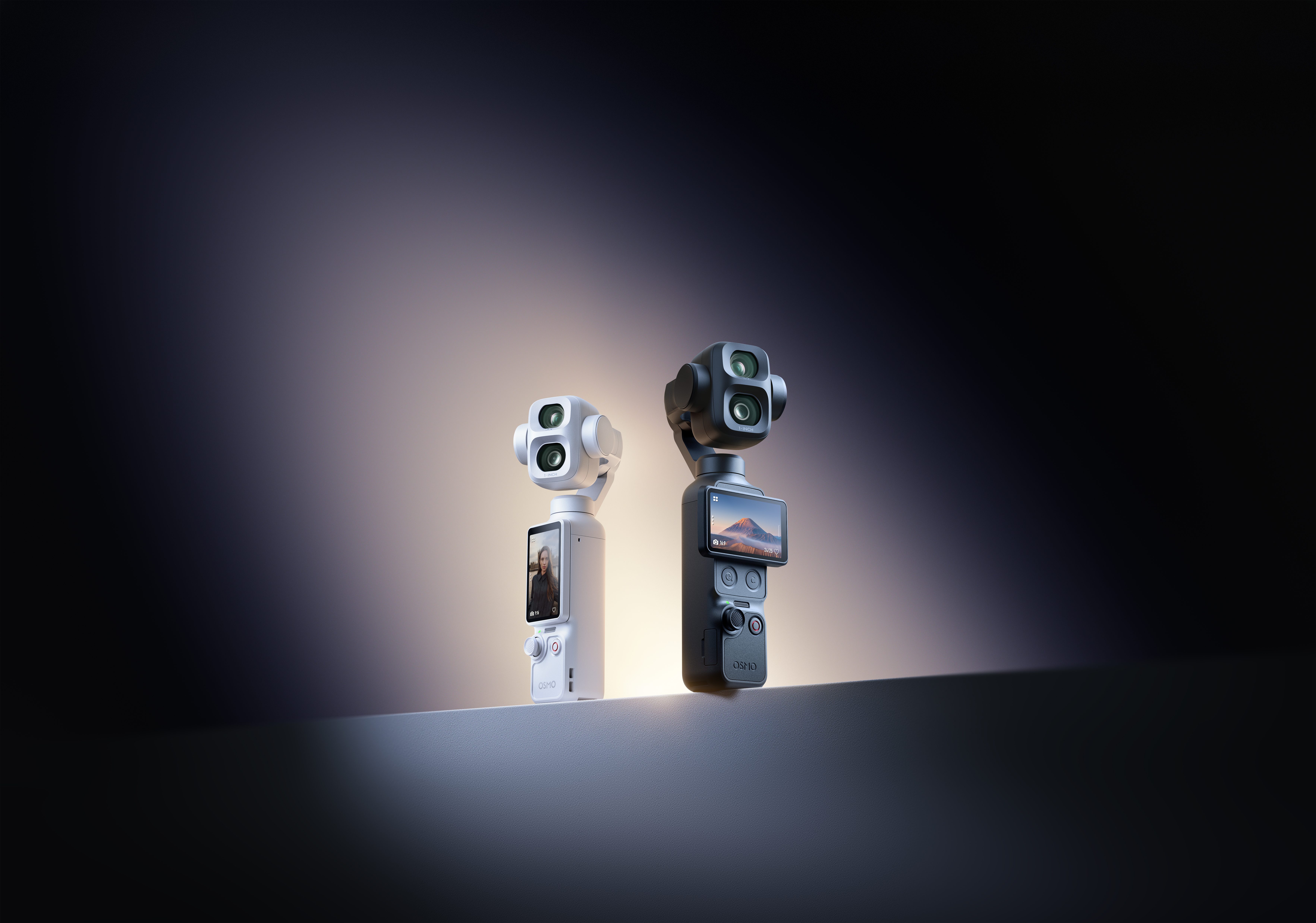
The 4P’s second lens is a medium telephoto, roughly 60mm equivalent at about f/1.8, with 3x optical zoom. On paper it’s the supporting act to the 1-inch wide-angle sensor that carries the 17 stops. In practice, it’s the reason to own this camera.
That extra reach gives you genuine depth of field and a cinematic look the wide lens can’t touch, and it gets you into tighter compositions where a bigger camera simply won’t fit. Paired with subject tracking, it punches far above its size. I recreated a dramatic, Michael Bay-style tracking move that would normally demand an expensive rig or a very skilled operator, and it came together in one or two takes on a device that fits in a jacket pocket. That’s the kind of shot that changes what you’ll actually carry on a shoot.
The digital zoom is the weaker half of the equation. Optical 3x is clean; push past it toward the 12x digital range and the image starts to fall apart, as digital zoom always does. The transition between focal lengths also felt a little abrupt. Both are the sort of thing a firmware update can soften, and DJI shipped one after my time with the camera that I haven’t tested.
What the 17 stops actually buy you
The dynamic range headline is earned, with a caveat worth understanding before you buy. The full 17 stops live in D-Log 2, and D-Log 2 records only on the wide-angle lens, capped at 4K60. So the maximum image quality and latitude are tied to the wide lens; the telephoto shoots the standard 10-bit D-Log and is capped at 14 stops.
Where the dynamic range shows its value is in hard, mixed lighting. Moving from bright overcast into near-darkness and back out again, the auto-exposure held detail through transitions that would normally force you to expose for one extreme and sacrifice the other, or reach for a variable ND. It isn’t a cinema camera, and it doesn’t pretend to be, but you can push D-Log 2 footage surprisingly far in the grade and keep the shadow and highlight information a sensor this small has no business holding onto.
The rest of the recording toolkit is deep. Both lenses top out at 4K60, slow motion reaches 4K 240 fps on the wide lens and 4K 200 fps on the telephoto, and a new low-light mode pulls a clean, usable image from ambient light alone. The tradeoff is consistent: slow motion and low-light both bake in a color profile rather than recording in log, and low-light caps at 4K30. DJI also added a slow-shutter mode this generation, closing a gap the Pocket 3 left open.
The practical details
The supporting specs are strong enough to disappear into the background, which is what you want. Storage is generous, with 103GB built in plus microSD support up to 1TB, so a forgotten card never ends a shoot. Charging is fast, roughly 80% in eighteen minutes, and the camera runs off USB-C power while recording. Battery life is the one number I’d wait on; DJI quotes about 210 minutes from a lab test, but a single day of mixed use isn’t enough to confirm what you’ll see in the field.
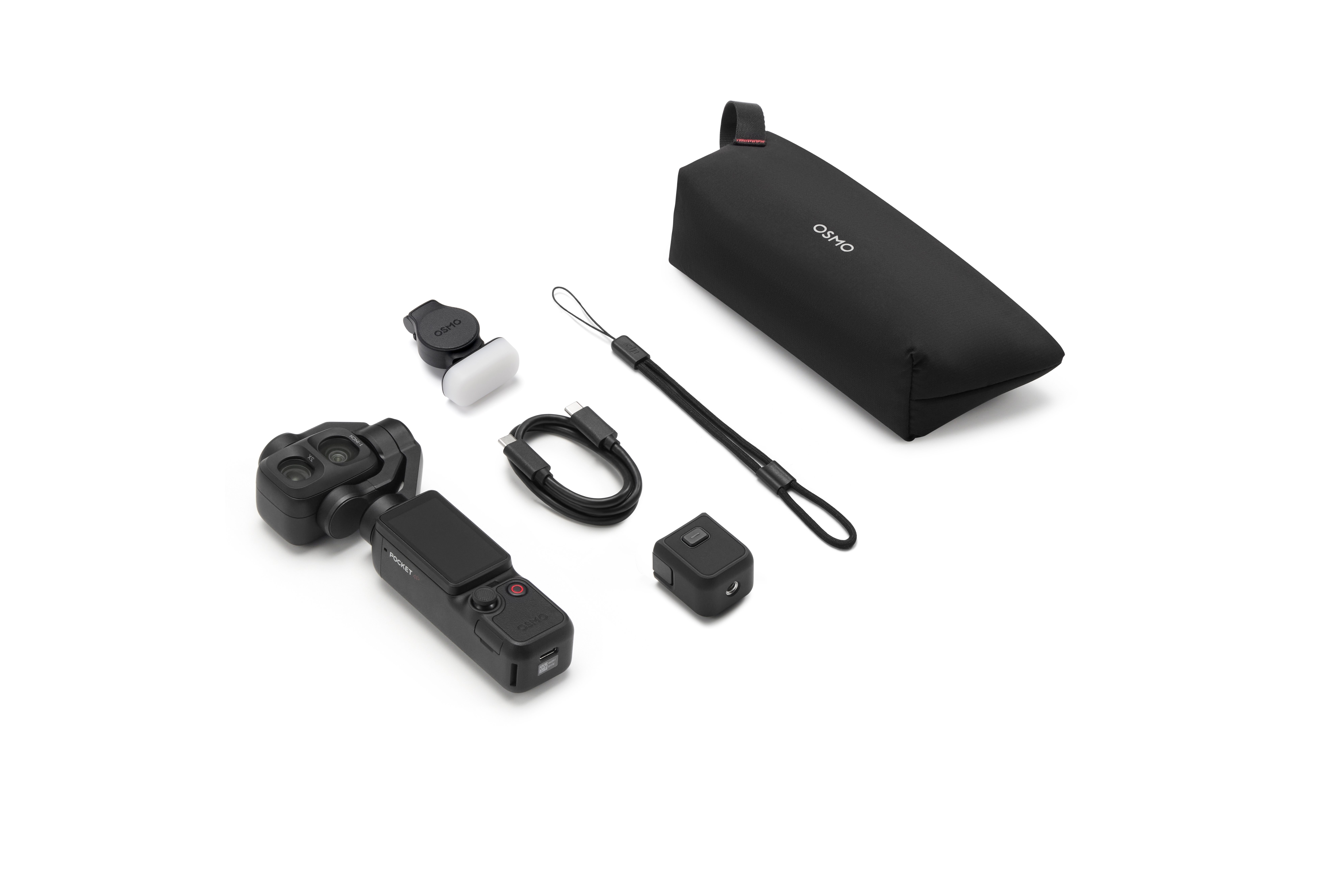
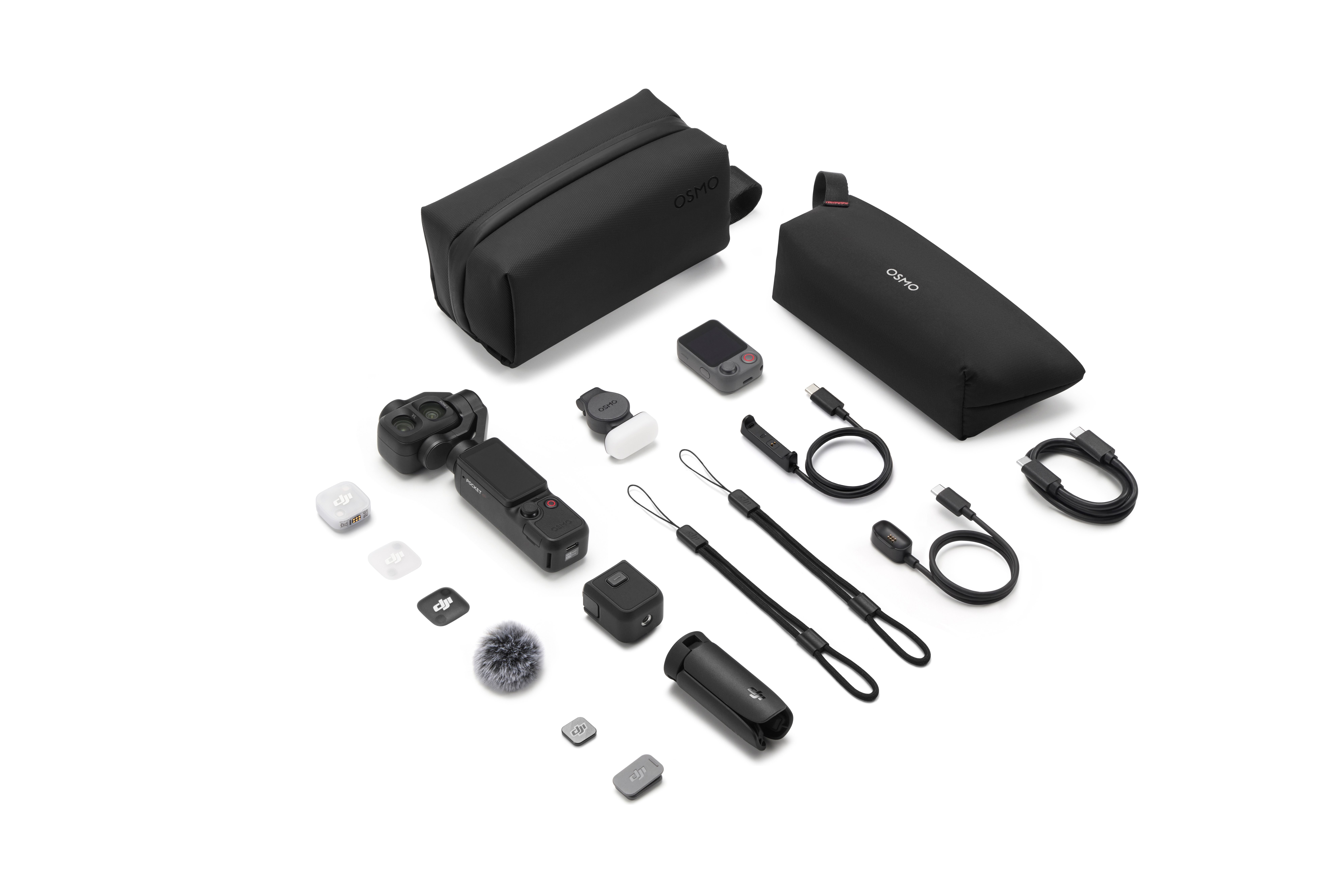
The creator bundle rounds things out with a small clip-on fill light that shifts warm to cool and a DJI mic (now the Mic 2 Mini). The mic sounds great; the light is handy in a pinch, though it’s brighter than most run-and-gun situations need. Usefully, the 4P pairs with any DJI mic, so you’re not locked to what’s in the box. The kit also includes Frame Tap, a small remote for running the gimbal from a distance.
The catch that decides it
Here’s where the recommendation splits, and it has nothing to do with the camera. As of this writing, the Osmo Pocket 4P is not legally available in the US.
If you’re outside the States, this is an easy yes. The only real question is the 4P versus the Insta360 Luna Ultra, and that comes down to which fits your workflow, because both are excellent.
If you’re in the US, it’s harder. Buying through a third party turns warranty, insurance, and returns into a gamble, and that’s a lot to risk on a camera at this price. For most US buyers I’d point to the Luna Ultra right now, purely because it’s available, serviceable, and backed if something goes wrong. If you’re committed to DJI and the dynamic range is worth the hassle, there are ways to get a 4P stateside, but go in cautious.
My genuine complaints are few, and most trace back to a single day with a pre-production unit: I wish D-Log 2 lived on the telephoto lens too and the digital-zoom transition needs polish. The biggest frustration, honestly, is that I can’t keep testing it. That tells you most of what you need If it lands in your country, it’s a very easy camera to recommend.
Pricing
The Osmo Pocket 4P officially goes on sale today in Canada, Europe, the UK, and Australia.
Osmo Pocket 4P – Standard Combo
£529 GBP
€599EUR
$859 CAD
Osmo Pocket 4P – Vlog Combo
£605 GBP
€689 EUR
$969 CAD
*Pricing in some EU countries may vary. These are the prices for most EU countries, including France, Spain, and Germany.
**Pricing is the same for the black and pearl white versions of the Osmo Pocket 4P.


FTC: We use income earning auto affiliate links. More.

Comments