

The US Air Force is preparing to buy several Chinese-made DJI drones for an unusual reason: to help protect one of America’s most sensitive military installations from the very drones it has spent years warning about.
According to newly posted federal contracting documents, the Air Force plans to purchase refurbished DJI drones for counter-drone training at F.E. Warren Air Force Base in Wyoming, home to the 90th Missile Wing and its fleet of Minuteman III intercontinental ballistic missiles. First reported by Stars and Stripes, the move underscores just how dominant DJI remains in the global drone market, even as the company continues to face scrutiny from US lawmakers and defense officials.
Rather than flying surveillance missions, the DJI aircraft will serve as realistic targets, allowing Air Force security personnel to train against the kinds of drones they are most likely to encounter in a real-world attack.
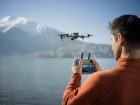
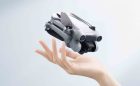
According to the solicitation, the Air Force is seeking a small-business supplier to provide two refurbished DJI Mavic 2 Pro drones with Fly More kits, two Mini 3 Pro drones, two Avata 2 Fly More Combos, and six payload-release devices.
The drones will be used by the 90th Missile Security Operations Squadron, whose mission includes protecting missile silos, launch facilities, and other strategic assets from both ground and airborne threats.
The justification documents make it clear why the Air Force isn’t simply choosing an American-made alternative. DJI controls an estimated 80% to 85% of the global commercial drone market, and its aircraft use proprietary radio-frequency signatures, communication protocols, and flight characteristics that US-made drones cannot accurately replicate. Computer simulations also fall short, the Air Force argues.
“Buying DJI brand drones is an absolute operational necessity,” the accompanying justification document states, warning that relying only on approved US-made “Blue” drones would leave security teams unprepared for the drones they are statistically most likely to face.
Speaking to Task & Purpose, Samuel Bendett, an expert on military drone technology with CNA, said the decision reflects battlefield reality. “If you want to train in modern tactical drone combat, you got to train against the technology that’s used in that tactical combat, and that’s DJI,” Bendett said. “DJI is like the new AK-47 for combat right now: simple, easy to use, great out of the box.”
That comparison highlights how widespread DJI platforms have become — not only among hobbyists and commercial operators, but also in conflicts around the world.
The Air Force says the purchase is driven by the rapid rise of commercial drones as military threats. The Pentagon recorded roughly 350 drone incursions at US military installations during 2024, while Europe has also experienced a series of suspected hostile drone incidents in recent years.
Officials emphasized that cybersecurity concerns are being addressed. Every drone used in training will be equipped with US-made RIZER software and operated in an air-gapped environment, preventing any connection to secure Defense Department networks or external data transfers.
The procurement is permitted under Defense Secretary Pete Hegseth’s July 2025 memorandum, Unleashing US Military Drone Dominance, which allows the military to acquire the “absolute minimum quantities” of foreign-made drone equipment needed for electronic warfare testing, counter-drone development, and realistic training.
The effort is also expected to support broader plans to standardize counter-drone training across Air Force Global Strike Command’s nuclear missile bases. Contract documents note that Malmstrom Air Force Base in Montana is pursuing similar DJI systems for its own training program.
The purchase comes as DJI remains at the center of an ongoing legal fight in Washington. A recent ruling by the US Court of Appeals for the DC Circuit sent the company’s challenge to its Pentagon designation back to a lower court for further review. The final outcome could determine whether DJI remains on the Defense Department’s list of companies alleged to support China’s military, a designation that restricts certain government contracting activities.
For now, however, the Air Force’s message is straightforward: when preparing to stop the world’s most common drones, it wants to train with the real thing.
More: Sri Lanka moving fast on pilotless air taxi commercialization


FTC: We use income earning auto affiliate links. More.



Comments