
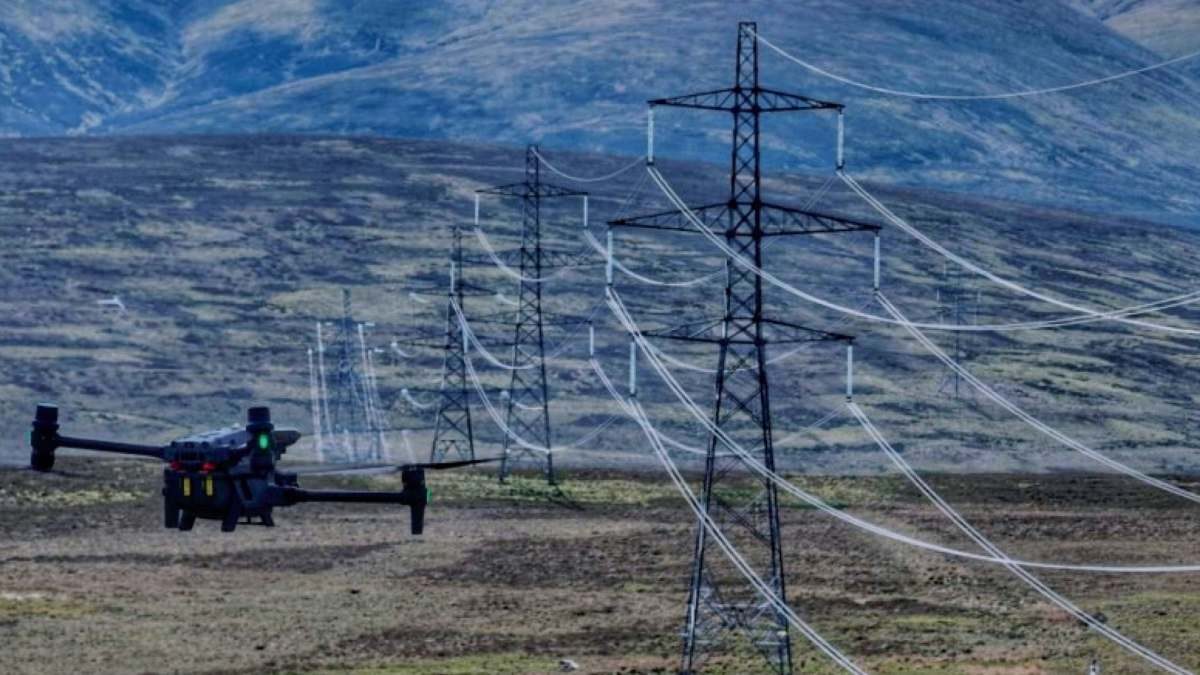
Britain’s electricity networks stretch for thousands of miles, connecting homes, businesses and renewable energy projects across the country. Keeping all that infrastructure in good shape is a huge inspection job, and increasingly, drones are doing more of the work.
That trend is set to continue after Cyberhawk, a subsidiary of Ondas, secured a new multi-year agreement with SSE’s regulated electricity network businesses, SSEN Transmission and Distribution.
The deal will run for three years, with an option to extend it by another two years. Under the agreement, Cyberhawk will provide specialist drone inspection and surveying services across SSE’s electricity networks in mainland Britain.
For Cyberhawk, it is more than just another contract. The company has already been working with SSE for more than a decade, using drones to inspect critical infrastructure while helping reduce the need for people to carry out potentially dangerous field inspections.
The new agreement also expands the relationship into a different part of SSE’s energy business.
Cyberhawk has been awarded Lot 2 for offshore wind turbine inspection, bringing its drone-based inspection services to SSE’s offshore renewable energy assets. That is significant as offshore wind farms become an increasingly important part of the energy mix and operators face the challenge of inspecting large numbers of turbines in difficult environments.
In other words, Cyberhawk isn’t just looking at power lines anymore. Its role with SSE now stretches across transmission and distribution infrastructure as well as offshore wind.
And there is another piece to the partnership that goes beyond flying drones. Cyberhawk recently renewed a separate multi-year agreement with SSE for iHawk as a Service, its digital infrastructure intelligence platform. The system essentially turns inspection data into a centralized digital record, bringing together imagery, geospatial information, and AI-assisted analytics.
That can help utility operators move beyond simply spotting a problem. The idea is to organize inspection information around individual assets, identify potential risks, manage follow-up work, and give teams a clearer picture of the condition of their infrastructure.
For a company managing thousands of miles of networks, that distinction matters. Collecting millions of images isn’t particularly useful if engineers then have to manually sift through everything to figure out what needs attention first.
“AI-assisted analytics” and centralized asset data can potentially make that process much more manageable.
Cyberhawk CEO Chris Fleming says the company was “extremely pleased” to continue its relationship with SSE, noting that this is the third major long-term agreement between the two companies following two previous five-year deals.
The expanding scope also reflects how the role of drones in infrastructure is changing. A decade ago, a drone inspection might have sounded like a relatively niche alternative to sending a crew into the field. Today, drones can capture detailed visual data across huge areas, while software and AI can help turn that data into information that utility companies can actually use.
SSE’s investment plans make that increasingly relevant. The company says it plans to invest £33 billion ($43.75 billion) in energy infrastructure by 2030, creating a substantial amount of infrastructure that will need to be inspected, maintained and monitored.
For Cyberhawk and other drone companies operating in this space, that could mean a growing market for repeatable, data-driven inspections rather than one-off drone flights.
The SSE agreement is also a useful example of where commercial drone technology is heading: less about simply putting a camera in the sky and more about building an entire inspection and asset-management workflow around the data that drone collects.
With power networks, offshore wind turbines, and its iHawk platform now covered by long-term agreements, Cyberhawk is positioning itself as more than a drone inspection contractor. It wants to be part of the digital infrastructure-management system behind some of Europe’s largest energy networks.
More: Insta360 cameras can turn your videos into explorable 3D worlds


FTC: We use income earning auto affiliate links. More.


Comments