
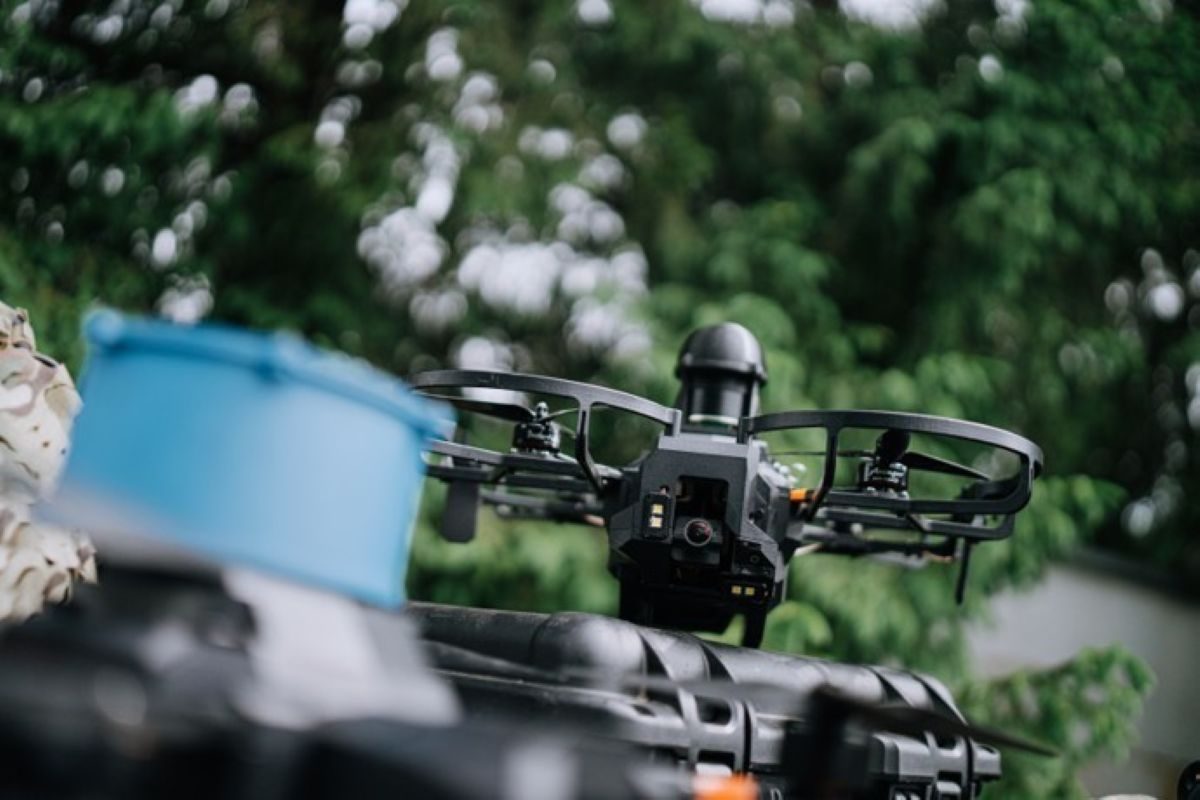
XTEND AI Robotics has secured a new US patent for a technology that could make drone payloads far more than passive tools. The company announced that the US Patent and Trademark Office has granted US Utility Patent No. 12,743,960, covering an architecture in which a “smart payload” can send real-time instructions to the robotic platform carrying it.
The patent was issued September 22, 2026, and centers on XTEND’s XOS operating system. The idea is relatively straightforward: instead of simply collecting information, a payload can use that information to influence what the platform does next.
For example, a sensor could detect a road, another drone, or an obstacle and send an instruction through a payload adaptor to the platform’s controller. XOS then translates that signal into a flight-control response, such as changing course to avoid the obstacle.
The operator remains in control, however. XTEND says the system is designed so that the payload can influence how the platform behaves while the human operator retains authority over mission-critical decisions.
The concept goes beyond navigation, too. Depending on the payload and mission, XOS can allow a payload to change what the operator sees on the display or trigger specific responses, including defense-oriented functions such as evasion, interception, and countermeasures.
That could be particularly useful as drones become more specialized. Instead of building a new platform around every sensor or mission requirement, manufacturers could potentially develop smart payloads that interact directly with the underlying robotic system.
XTEND is also positioning the patent as part of its broader open-ecosystem strategy. Its XOS Marketplace allows third-party developers and manufacturers to create hardware and software capabilities for XTEND customers.
The company’s Generic Payload Hub provides a common interface intended to let manufacturers integrate sensors, cameras, communications equipment, and other mission modules across XTEND’s fleet without creating a separate integration for every airframe.
In other words, XTEND wants payloads to behave more like apps than accessories. A compatible payload could potentially bring its own intelligence to a mission and influence how the platform responds in the field.
“Every mission is different,” XTEND cofounder and CEO Aviv Shapira says, adding that the technology allows a platform to adapt in real time based on what it is carrying while keeping the operator in command.
The patent also fits into XTEND’s larger effort to protect the software and architecture underneath its robotic platforms, rather than focusing solely on individual drones. If the company’s vision plays out, the drone of the future may not simply carry a smarter camera or sensor. The payload itself could become an active participant in the mission.
More: Your mapping drone can do more. DJI is now teaching you how


FTC: We use income earning auto affiliate links. More.


Comments