
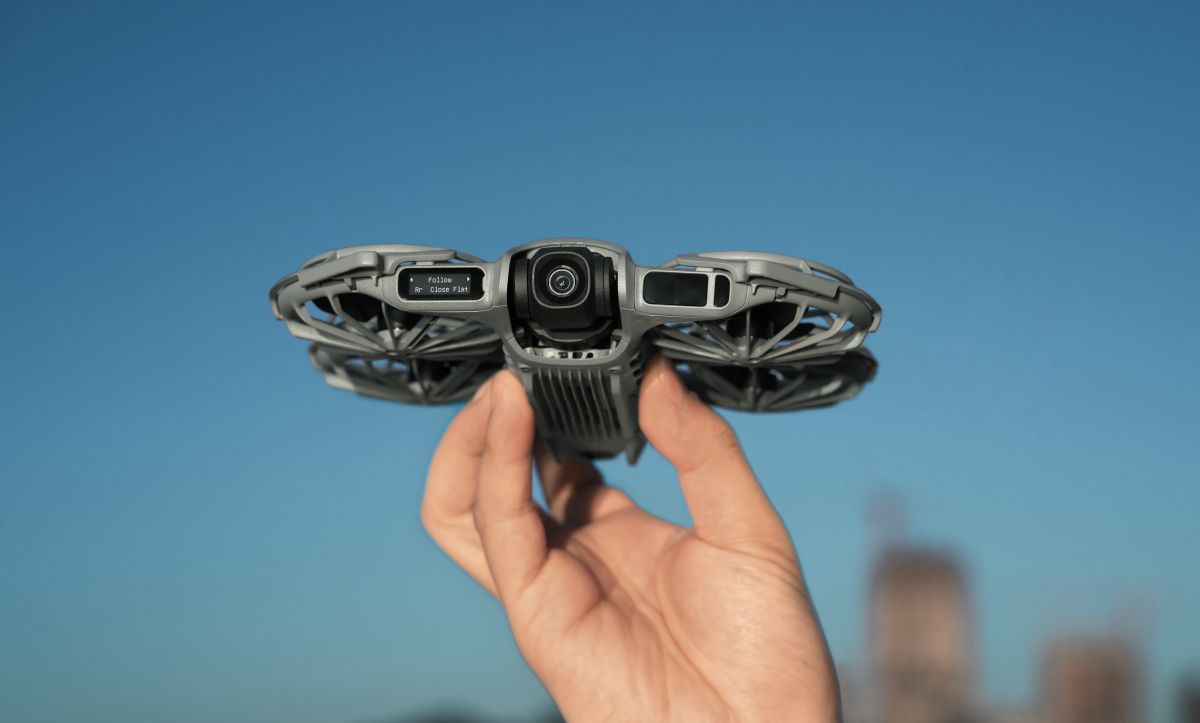
The latest compact “selfie-drone” from DJI, Neo 2, has just received a new firmware refresh, delivering a key feature that brings it closer to a true FPV (first-person view) experience. With the firmware version 01.00.0400, along with companion updates for DJI controllers and goggles, Neo 2 now supports Manual mode when used with DJI Goggles N3 or Goggles 3 and DJI FPV Remote Controller 3. Basically, you can now fly Neo 2 manually in immersive FPV style.
What’s new in the firmware?
- Manual mode + FPV-ready control: With the updated firmware, pilots using DJI Goggles N3 or Goggles 3 plus the FPV Controller 3 can switch to Manual mode — essentially bringing joystick-style manual flight into a drone previously positioned as a “smart follow” camera. This makes Neo 2 more versatile, especially for users who want the pilot-in-control thrill rather than relying solely on automated tracking.
- Bug fixes and performance tweaks: Alongside the new mode, the update resolves several known issues (DJI hasn’t publicly detailed all fixes), but overall improves stability and responsiveness when using the goggles and controller setup.
New: DJI’s first 360 drone gets FCC nod with US ban looming
Neo 2 launched as a tiny, travel-friendly “follow me / content-creator” drone, weighing just 151g. It packs a 12MP 1/2-inch CMOS sensor, a 2-axis gimbal, and can shoot 4K/ 60fps video as well as 100 fps slow motion. Its built-in omnidirectional obstacle sensing (with LiDAR/vision sensors) makes it safer for automatic flights around people or obstacles.
With the new firmware, however, you’re no longer limited to automated “follow-me” modes; you can now grab the controller and goggles, and explore the surroundings from Neo 2’s perspective, just like a full-fledged FPV drone. That’s a significant shift: the same lightweight drone becomes an entry point into FPV-style flying.
That said, it’s important to note that Neo 2 is not officially available in the US (at least for now). But DJI does have some pretty attractive Black Friday discounts running on its other FPV drone combos.
- DJI Neo Motion Fly More Combo: At just $419 (instead of the usual $529), the OG Neo gives you a complete DJI FPV experience — goggles, motion controller, batteries, charger, and the drone itself — in the lowest price ever.
- DJI Avata 2 Fly Smart Combo: With DJI’s stable digital transmission, goggles-ready immersion, and strong imaging/performance, Avata 2 remains a top pick for dedicated FPV flying. And in the current Black Friday sale, it’s available for only $619, instead of the typical $729.
FPV drones have surged in popularity in recent years, not just among hobbyists or racers, but also among creators and filmmakers. The immersive pilot perspective, fluid motion, and potential for dramatic cinematic movement are things that traditional drones often struggle to replicate.
What makes the DJI Neo series important is that it signals a shift in how even compact, entry-level drones are being designed: they’re no longer pigeon-holed as “safe and easy for beginners,” but are evolving to serve both audiences — casual content creators and FPV enthusiasts. For someone who travels light, wants simple follow-me videos sometimes, and immersive FPV flights other times, the DJI Neo series can be a compelling all-rounder.
More: DJI launches SkyPixel contest with huge $200K prize pot


FTC: We use income earning auto affiliate links. More.

Comments