
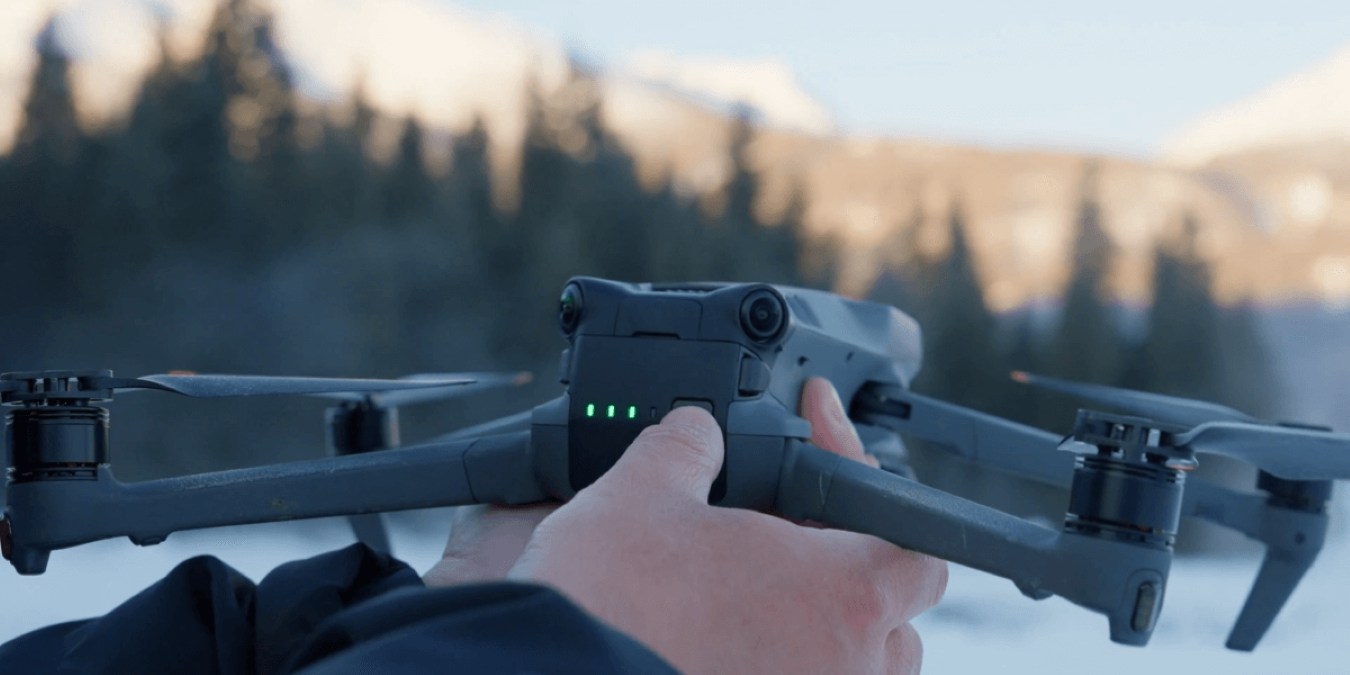
Before you send your drone over a snow-covered forest or across a frozen lake, DJI has a message for pilots: winter flying looks incredible, but it demands extra skill and preparation. Here’s what to know…
Though DJI makes some of the most resilient consumer drones in the world — so much so that they have filmed the world’s highest peak in a single, continuous shot — freezing air, icy propellers, and fast-dropping batteries can quickly turn cinematic winter flights into risky ones. This is why DJI is reminding pilots that while drones like the Mini 5 Pro, Mavic 4 Pro, and Air 3S are built to perform in challenging environments, winter flying still demands extra skill, preparation, and restraint.
The drone maker highlights four areas that matter most in winter conditions: battery management, environmental awareness, flight control, and proper storage after landing.
1. Battery management: Cold is the enemy
Cold temperatures are brutal on drone batteries. Before you even think about takeoff, inspect your battery carefully. Look for swelling, damage, or loose connections. A poor contact can cause sudden power loss mid-air — something no pilot wants to discover over a frozen lake.
Charging fully is non-negotiable in winter. A fully charged battery maintains higher voltage, reducing the risk of sudden drops that can trigger emergency landings or shutdowns. But warmth matters just as much as charge level.
Ideally, keep batteries at room temperature before flight, or warm them to above 20°C (68°F) using a dedicated battery warmer. After takeoff, let the drone hover for about a minute. This allows internal heat to build, improving discharge performance. Cold batteries have higher resistance, which means weaker power delivery when you need it most.
On DJI drones, you can check battery temperature directly by tapping the three dots in the camera view and navigating to System Settings > Safety > Battery > Battery Info. This quick check can prevent a ruined flight (or worse).
2. Environmental assessment: Snow isn’t just snow
Winter conditions aren’t limited to cold air. Rain, snow, fog, haze, and even cloud layers dramatically increase risk. Visibility drops, moisture builds, and propellers can ice over faster than many pilots expect.
Propeller icing is one of the most dangerous winter hazards. It typically occurs in low temperatures combined with high humidity — think snow flurries, foggy mornings, or flying through clouds. As propellers spin at high speeds, moisture freezes instantly on their surface.
That ice changes the propeller’s shape, reducing efficiency and increasing motor load. Prolonged overload can trigger warnings, cause uncontrolled descent, or even damage motors permanently.
If you see a Motor Overload warning, land immediately if possible. If visibility is limited by fog and landing is tricky, disabling obstacle avoidance and descending slowly can help. Just remember to re-enable obstacle avoidance once you’re safely on the ground.
3. Flight control tips: Smooth wins in winter
Cold batteries don’t respond well to aggressive flying. Rapid climbs, sudden throttle punches, and sharp maneuvers can cause current spikes that trigger voltage protection — sometimes stopping motors entirely.
The solution? Fly gently. Smooth stick inputs are especially important on lighter drones like the Mini 4 Pro, while even more powerful platforms like the Mavic 4 Pro benefit from controlled, deliberate movement in winter air.
Battery awareness is also critical. Watch your remaining power closely and plan your return-to-home earlier than usual. Pushing flight time in winter often ends with forced landings, or worse, losing control before you make it back.
4. Proper device storage: What you do after flying matters
Winter flying doesn’t end when you land. After each flight, wipe down your drone with a soft, dry cloth to remove snow or moisture. This prevents liquid from entering internal components and helps avoid corrosion or short circuits.
For long-term storage, batteries should be kept at around 65% charge, with one full charge-discharge cycle every three months. This prevents deep discharge, which can permanently impact performance.
Finally, store your drone in a cool, dry environment — ideally a dry cabinet. Moisture buildup can accelerate material aging, cause lens mold, and shorten battery lifespan.
Winter aerials are worth the effort. And with the right preparation, snowy drone footage isn’t just stunning; it’s safe, controlled, and repeatable.
More: 3 DJI drones you can control with your Apple Watch


FTC: We use income earning auto affiliate links. More.




Comments