
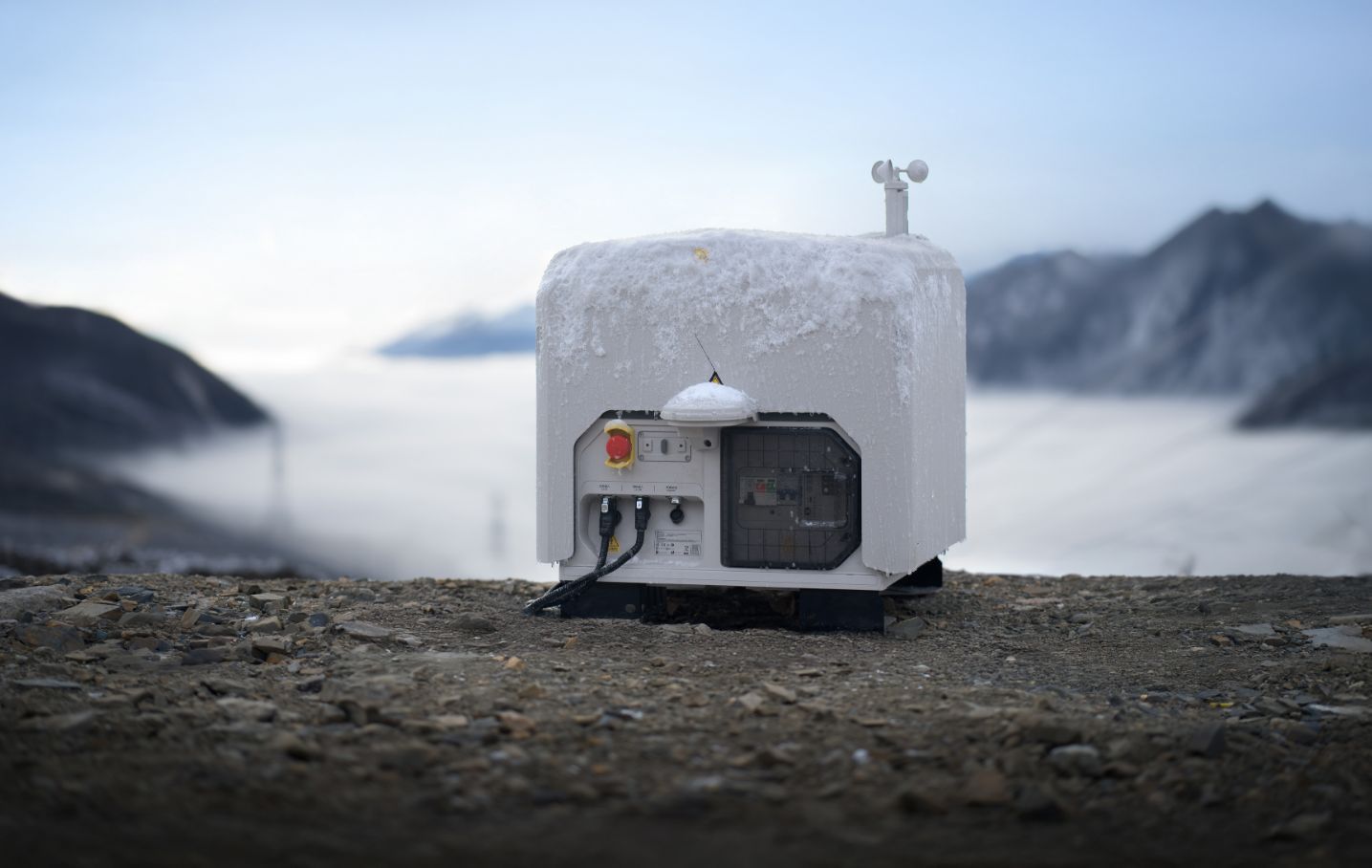
Winter doesn’t pause critical drone operations, but it does raise the stakes. As DJI Dock 3 continues to roll out across public safety, infrastructure inspection, utilities, and industrial monitoring, operators are increasingly relying on it in cold, windy, and low-visibility environments. To help teams get the most out of their Dock 3 deployments this winter, DJI has released a set of practical cold-weather safety recommendations aimed at improving flight stability, battery reliability, and overall mission success.
Cold temperatures, strong winds, snowfall, and reduced daylight can all impact autonomous operations. Without the right precautions, these conditions can shorten flight time, degrade sensor performance, and increase the risk of mission failure. DJI’s winter operations guidance focuses on minimizing those risks while keeping Dock 3 missions reliable and predictable.
Before diving into winter-specific tips, it’s worth briefly understanding what the DJI Dock 3 brings to the table.
DJI Dock 3 is an automated, all-weather drone-in-a-box solution designed for 24×7 remote operations. Paired with the Matrice 4D or Matrice 4TD, the dock enables fully autonomous missions such as inspections, emergency response, perimeter monitoring, and asset surveillance, without requiring an on-site pilot. With automated takeoff, landing, charging, and cloud-based mission control, Dock 3 is built for continuous operations in demanding environments, including cold climates.
1. Monitor weather conditions on every single flight
Winter weather can change quickly, especially at altitude. DJI strongly advises avoiding missions during strong winds, heavy snowfall, or dense fog, as these conditions can overwhelm obstacle sensing and stability systems. Operators should confirm local weather before every flight and enable the “Prevent Flight Using Weather Forecast Data” feature within project settings. This adds a critical layer of protection by grounding flights when forecasted conditions exceed the aircraft’s wind resistance or visibility limits.
2. Inspect propellers to reduce icing risk
The Matrice 4D series propellers feature a hydrophobic coating designed to reduce ice buildup in cold, high-humidity environments below 5°C. However, DJI notes that prolonged sunlight exposure can cause fine cracks in this coating. While these cracks don’t immediately compromise flight safety, they significantly reduce anti-icing effectiveness.
To stay ahead of problems:
- Inspect propellers regularly during winter
- Replace them if coating cracks are visible
- Replace propellers after 450 total flights to reduce icing-related risks
3. Increase Return-to-Home battery reserves
Cold weather reduces battery efficiency, while winter winds — especially at higher altitudes — can dramatically increase power consumption during return flights. DJI recommends increasing the Return-to-Home (RTH) reserved battery level, particularly in windy regions.
At the same time, avoid setting RTH altitude unnecessarily high. Higher altitudes often mean stronger headwinds, increasing the risk of running out of battery before the drone reaches the dock. Where safe and compliant, lowering RTH altitude and using smoother flight profiles can make a measurable difference.
More: New DJI Matrice 400 firmware improves LiDAR, battery reliability
4. Follow stricter night operation guidelines
Winter brings longer nights and lower ambient light, which can limit visual positioning and obstacle avoidance performance. DJI advises operators to be especially cautious during nighttime missions.
Best practices include:
- Continuously monitoring surroundings for obstacles
- Ensuring no structures exceed altitude or RTH limits
- Only flying routes that have already been verified in daylight
- Avoiding validation of new routes at night
5. Check firmware before every flight
Firmware updates are more than just feature additions; they often include flight control optimizations and safety fixes. DJI recommends confirming that the aircraft, dock, and accessories are running the latest firmware versions before every mission. Keeping firmware up to date is one of the simplest ways to improve winter reliability and system stability.
6. Proactively inspect battery health
Batteries are particularly vulnerable in cold weather. DJI urges operators to regularly check battery health indicators and physical condition. Any signs of swelling, cracks, external damage, or Health Management System (HMS) warnings should trigger immediate replacement. Batteries with lower cycle counts deliver stronger output and are far better suited for winter operations.
7. Secure all accessories and payloads
Cold temperatures can cause materials to contract, increasing the risk of loosening over time. Before each mission, operators should confirm that all accessories — such as obstacle avoidance radar, speakers, and spotlights — are firmly secured.
DJI recommends tightening screws with the included hex wrench until slight tool deformation is visible, and marking screws with paint or a marker to easily detect loosening. If accessories are not recognized by the system, DJI After-Sales Support should be contacted immediately.
The bottom line is, winter operations don’t have to mean reduced reliability. By following DJI-recommended safety practices, operators can fine-tune the Dock 3 for cold-weather performance while reducing risk and downtime.
More: How to shoot epic ski footage with DJI Osmo 360 camera


FTC: We use income earning auto affiliate links. More.




Comments