
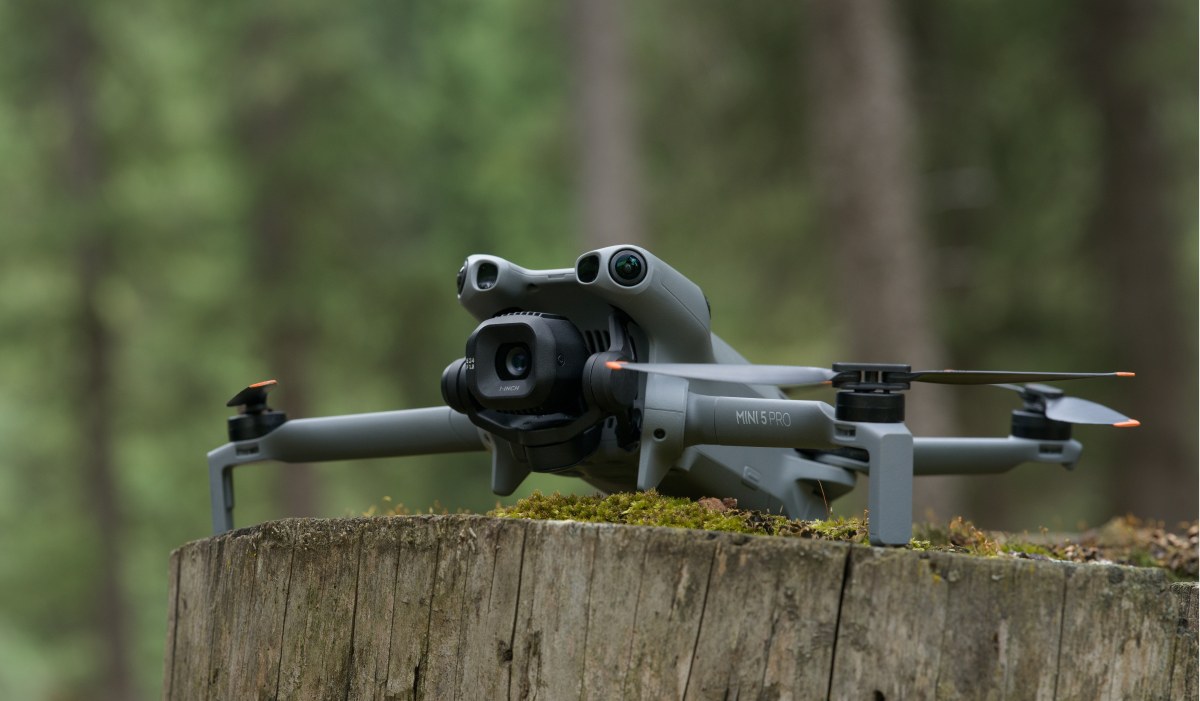
DJI has issued a sharp response to last week’s US court ruling that keeps the company on the Pentagon’s blacklist of “Chinese military companies.” While the world’s largest drone maker is disappointed by the decision, it emphasizes that the court has actually validated its long-standing claim: DJI is not controlled by China’s government, nor is it tied to the military.
The ruling, handed down by US District Judge Paul Friedman on September 26, allows the Department of Defense (DoD) to continue labeling DJI as a “Chinese Military Company.” The designation has been in place since 2022, and while it doesn’t ban DJI outright, it bars federal agencies from using its drones and casts a cloud over its business in the US.
But according to DJI, the outcome isn’t as black-and-white as headlines suggested.
Court rejected most Pentagon claims
In its statement, DJI points out that the judge has rejected the bulk of the Pentagon’s allegations. The court found no evidence to support claims that DJI is owned or controlled by the Chinese Communist Party, connected to China’s Ministry of Industry and Information Technology, or linked to a military-civil fusion development zone.
That, DJI says, is critical. “The Court affirmatively rejected most of DoD’s allegations,” the company stresses, highlighting that its independence from Chinese military structures has now been confirmed by a US federal court.
The judge did side with the Pentagon on just two points, as DroneDJ reported last week. First, DJI’s recognition as a National Enterprise Technology Center (NETC) was deemed valid evidence of Chinese government support. But DJI counters that the NETC designation is a broad award for “industry-leading technological innovation capabilities,” given to companies across sectors as varied as food, apparel, and automotive. “It does not suggest any military connection,” the company notes.
Second, the court upheld DoD’s claim that DJI’s drones have “substantial dual-use applications in military and civilian settings.” The company acknowledges that drones, like many commercial technologies, could theoretically be misused. But, it emphasizes, the court did not find any evidence that DJI products have actually been misused by China’s military.
In fact, DJI highlights its efforts to stop combat use: “DJI was the first drone company to publicly denounce and actively discourage the combat use of its products, and DJI has never manufactured military equipment or marketed drones for combat.”
DJI says policies remain firm
While the court said it didn’t matter whether DJI prohibits military use, the company underscores that it will continue enforcing strict policies against it. “DJI will continue to uphold its robust policies prohibiting the military use of its drones,” the statement reads.
This line is especially significant in light of global reports of drones being repurposed in conflict zones. DJI has long tried to distance itself from that trend, even building geofencing and other restrictions into its products.
DJI makes it clear it’s not walking away from the fight. “DJI remains dedicated to advancing drone technology that benefits society, and we are evaluating avenues available to respond to this ruling,” the company says.
The focus, according to DJI, will stay on “empowering creators, businesses, and public safety organizations worldwide with safe, innovative, and accessible technology.”
Why it matters for US drone pilots
For American drone pilots, the clarification matters. The original ruling sparked concerns that DJI could be lumped in with defense contractors or accused of covert government ties. DJI’s statement stresses that even the court acknowledged those accusations don’t hold up.
Still, the blacklist designation carries real consequences. DJI has already lost access to federal contracts, and its reputation has taken hits in the private sector. Pilots are also wary of whether DJI’s latest drone models — like the Mavic 4 Pro and Mini 5 Pro, which skipped an official US release — will continue to bypass the market.
By emphasizing the court’s rejection of most Pentagon claims, DJI is hoping to reassure both US customers and regulators that it remains a civilian technology company at its core.
But with Washington hardening its stance on Chinese tech firms, DJI’s road ahead is anything but simple. The company says it’s evaluating its options, and drone pilots across the US will be watching closely to see what that means for the products they rely on.
More: DJI’s first 360 camera already has a huge discount


FTC: We use income earning auto affiliate links. More.

Comments