
The US government just turned up the heat on DJI, again. In a unanimous 3-0 decision, the Federal Communications Commission (FCC) has voted to give itself the authority to retroactively ban electronic devices that were already cleared for sale in the country, if their makers are later deemed national security risks.
That might sound like bureaucratic fine print, but it’s a big deal because it could become the final nail in the coffin for DJI’s new drones in the US. The move, first reported by The Verge, is being framed as a national security measure to block potential backdoors in Chinese-made telecom gear. But in practice, it could also stop DJI from importing any new drones or wireless products into the US starting December 23.
The FCC isn’t banning DJI by name. Instead, it’s preparing to add the company to its “Covered List” under the Secure and Trusted Communication Networks Act — a move that would make it illegal to import any DJI product that contains a radio transmitter without explicit security clearance. That includes drones, gimbals, and even pocket-sized cameras like the Osmo line.
As Adam Welsh, Head of Global Policy at DJI, tells DroneDJ:
DJI is not included on the FCC’s Covered List, so this change to the rules does not currently apply to DJI. However, under the FY25 National Defense Authorization Act (NDAA), a national security agency must complete a risk assessment of DJI drones by December 23, 2025. If that assessment is not completed by the deadline, DJI and another Chinese drone manufacturer would automatically be added to the FCC’s Covered List, without any evidence of wrongdoing or the right to appeal.
The thing is, no US agency has stepped forward to start this review process, even though the deadline is less than two months away. Here’s Welsh:
DJI has repeatedly expressed its readiness to take part in a transparent, timely, and fair audit through official channels. More than ten months have now passed with no sign that the process has begun. As the deadline approaches, we urge the US government to start the mandated review or grant an extension to ensure a fair, evidence-based process that protects American jobs, safety, and innovation.
Earlier this year, DJI believed the situation wouldn’t be so bad. Even if the company was blacklisted, the ban wasn’t supposed to affect drones already approved for sale. In other words, older models like the Air 3S could stay on shelves even if an upcoming Mavic 5 Pro couldn’t.
That assumption is now out the window. The new FCC order allows retroactive bans, meaning the government could revoke previous product authorizations — one by one — if a device is linked to a flagged company.
There are limits, though. The FCC insists it won’t confiscate or deactivate drones already in consumers’ hands, and each ban will involve a 30-day public comment period. So, your current gear is safe, at least for now.
New: DJI launches Zenmuse L3, its most advanced drone LiDAR yet
National security or national paranoia?
Despite years of speculation, the US has never presented public evidence that DJI’s drones pose a security threat. Still, government agencies have accused the company of having ties to the Chinese military, a claim DJI is actively fighting in court. A federal judge recently allowed that designation to stand but said there’s no proof the company is directly controlled by Beijing.
That nuance hasn’t stopped the suspicion. Some lawmakers remain wary of what they call “spies in the sky,” worried that drone footage could somehow make its way back to China.
For those critics, the FCC’s new power is long overdue. For DJI fans, it’s another example of how geopolitics keeps grounding technology that’s otherwise soaring.
“The US government has every right to strengthen national security measures, but this must go hand in hand with due process, fairness, and transparency,” Welsh says.
Nonetheless, DJI appears to have quietly created shell companies to keep its products flowing into the US. The Skyrover X1 combo, for instance, is strikingly familiar to the Mini 4 Pro. Independent drone analyst Konrad Iturbe has even compiled a GitHub list of so-called “DJI front companies,” many identified by tracking the same OcuSync radio frequencies used in DJI’s flagship models. The FCC’s new rule gives regulators a way to shut those loopholes down fast, since any product containing a DJI-designed transmitter or component could be blocked.
In any case, unless a US security agency intervenes soon, DJI will have to cease importing any new radio-based devices, drones, or other equipment. That means fewer fresh launches in the US and potentially higher prices for what’s already in stock.
Meanwhile, DJI seems to be moving full steam ahead on its home turf. In China, the company has rolled out two new products — the Osmo Mobile 8 smartphone stabilizer and the omnidirectional obstacle-sensing Neo 2 drone, both featuring upgrades aimed at beginners and content creators. Yet, just like the unreleased Mavic 4 Pro and Mini 5 Pro, there’s no telling if these latest launches will ever make it to US shores.
More: DJI Neo 2 is the perfect starter drone you won’t crash
Top comment by Kyle Maynard
It's government overreach call your senators. They say a bunch of things that sound like they're dangerous, but they're really not. These drones already can't go into secure locations.
Curiously, though, some drones that DJI decided not to bring to the US are now suddenly popping up on Amazon’s shelves, with next-day delivery in many areas. This includes the Mavic 4 Pro and Mini 5 Pro. So, if you’ve been eyeing a flying camera, now might be the time to act — because this could be your last chance to grab a DJI drone before the ban officially takes flight. Here’s what’s still available in the US:
- DJI Mini 3: Beloved for its balance of affordability and pro-level quality, the Mini 3 shoots crisp 4K HDR video and weighs under 249 grams, meaning no registration is required for recreational flyers.
- DJI Neo: A compact new entrant, the Neo is DJI’s attempt to reimagine the everyday mini drone. It delivers stunning flight stability, beginner-friendly controls, and quick 2.7K recording, ideal for first-time pilots or travelers.
- DJI Mini 4K: A budget-friendly model that punches above its weight, offering the same portability as the Mini 2 but with improved low-light performance and cinematic 4K video.
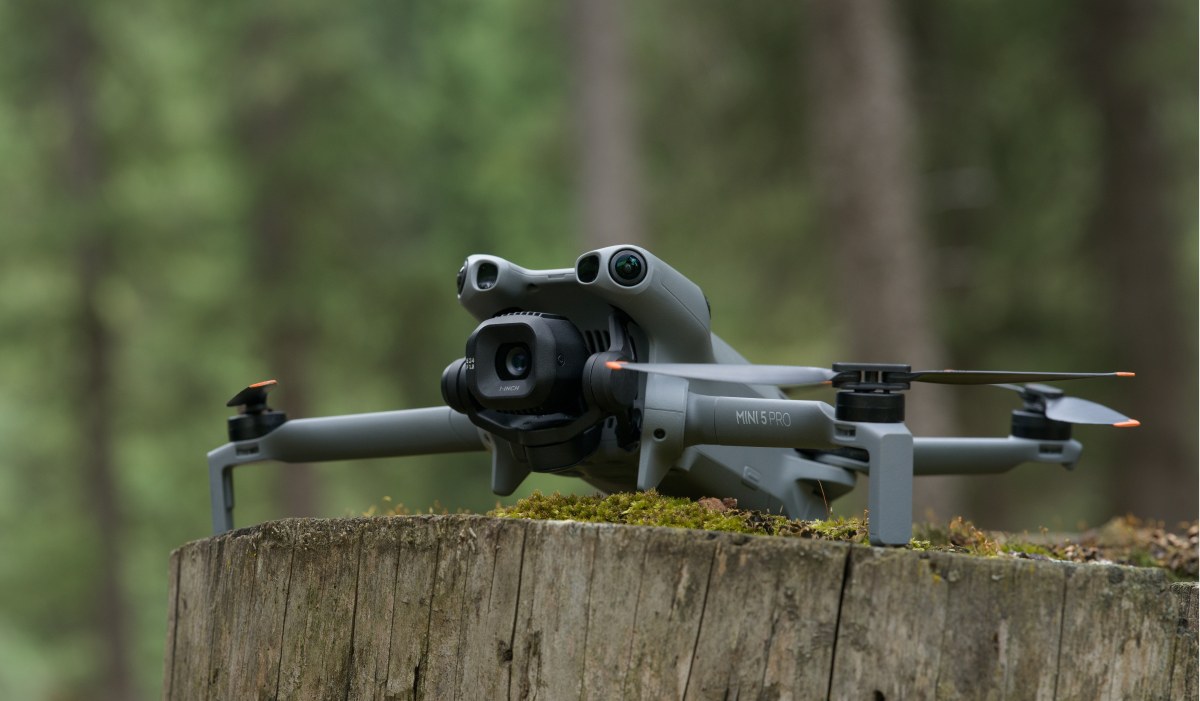
- DJI Mini 5 Pro: DJI’s latest ultra-portable powerhouse, the Mini 5 Pro combines lightweight design with advanced obstacle sensing, 4K/60fps video, and extended flight times — perfect for creators who want pro features without the bulk.
- DJI Mavic 4 Pro: The Mavic 4 Pro is DJI’s top-tier prosumer drone, boasting superior 1-inch sensor cameras, cinematic gimbal stabilization, and long-range O3+ transmission, making it ideal for serious photography and videography enthusiasts as well as professionals.
- DJI Air 3S: Designed for creators who demand versatility, the Air 3S boasts a dual-camera setup, enhanced obstacle sensing, and flight times that stretch up to 46 minutes.
- DJI Avata 2: A thrilling first-person-view (FPV) drone that lets users experience flight like never before, complete with smooth indoor and outdoor controls and crisp 4K/60fps footage.
- DJI Flip: DJI’s most creative concept yet — an ultra-portable camera drone designed for social creators, folding flat into a pocket while capturing buttery-smooth clips for TikTok or Instagram.
For years, DJI drones have defined what’s possible in aerial photography, offering precision, portability, and cinematic quality few can match. But with the FCC tightening rules and national-security reviews looming, that golden era may be nearing its end in the United States.
Right now, DJI drones remain fully legal to own, operate, and purchase. Yet if regulators move forward as expected, this could be the last season American consumers see DJI drones on store shelves.
More: Insta360 launches new 8K X4 Air camera as sales skyrocket 90%


FTC: We use income earning auto affiliate links. More.

Comments