
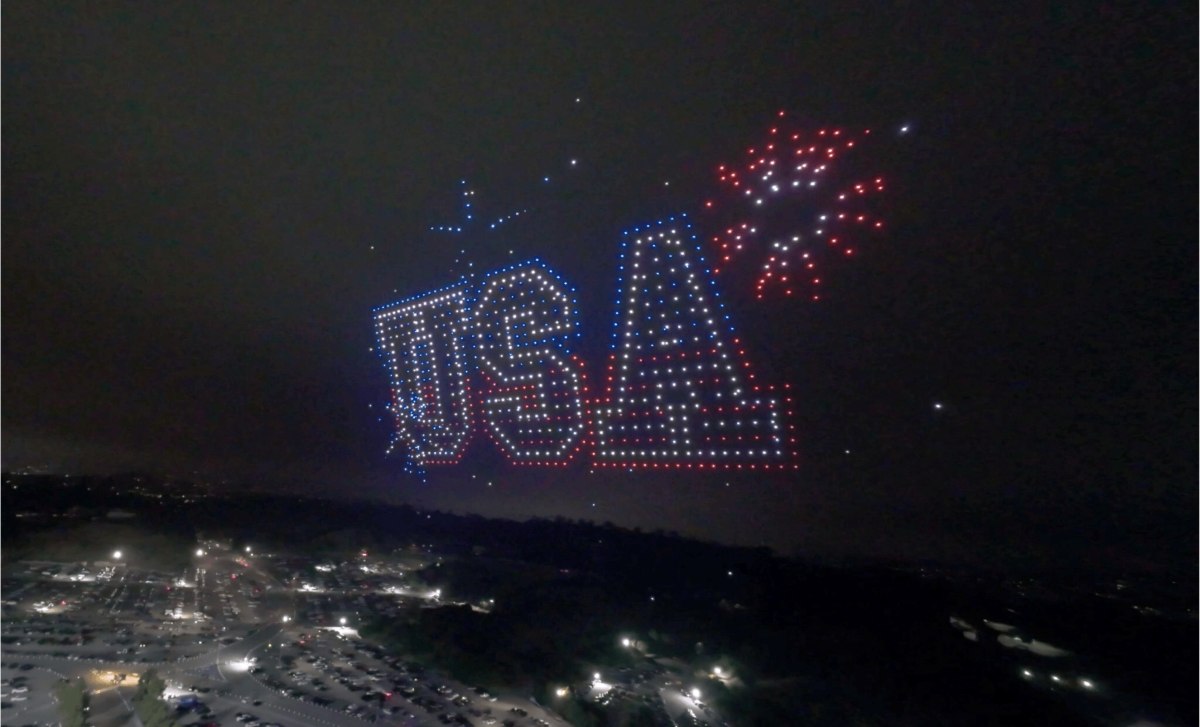
Drone light shows have moved fast over the past few years. What started as a novelty at tech expos and city celebrations is now a full-blown alternative to fireworks — quieter, reusable, and capable of pulling off visuals pyrotechnics never could. But as the sector has scaled, one thing hasn’t always kept pace: shared, industry-wide safety standards. That gap is exactly what the newly launched Drone Light Show Alliance (DLSA) is aiming to fix.
Announced this month, the DLSA introduces the first comprehensive, cross-platform standards for commercial drone light show operations, designed to help operators, manufacturers, and regulators speak the same safety language. Backed by Sky Elements Drones, the professional membership organization is positioning itself as a neutral forum for collaboration, not a proprietary system or gated platform.
At its core, the DLSA is about moving the industry away from fragmented safety practices and toward shared accountability.
The alliance’s flagship release, the DLSA Standards for Conducting Drone Light Shows, lays out uniform operational requirements, safety protocols, and system classifications. The structure is modeled after frameworks used by groups like the National Fire Protection Association (NFPA) — a familiar reference point for regulators and municipalities already accustomed to fireworks and public safety guidelines.
For drone show operators, that structure matters. The standards are designed to provide clear, actionable guidance that can be referenced in Federal Aviation Administration waiver applications, helping streamline conversations with regulators while reducing ambiguity around acceptable practices.
Alongside the operational standards, the DLSA has also released a Drone Show Design Safety Hierarchy, which introduces Tier 1 and Tier 2 system classifications. These tiers spell out system requirements tied to show complexity, equipment selection, and operational safeguards, offering operators a transparent roadmap for procurement and risk management.
One of the more pointed motivations behind the DLSA’s formation is a concern that safety knowledge has increasingly been treated as a competitive advantage rather than a shared responsibility.
“The drone show industry stands at a crossroads,” says Preston Ward, Sky Elements’ general counsel and chief pilot. “Manufacturers and operators have begun treating safety as a trade secret, a tactic that undermines the collective goal of advancing the industry responsibly.”
Instead of locking safety data inside closed platforms, the DLSA establishes an open-access framework. Any operator, regardless of company size or equipment manufacturer, can reference the standards and incorporate them into their own compliance efforts. That philosophy extends to fault testing, which the alliance describes as the backbone of safety assurance.
As part of the launch, Sky Elements has publicly released its complete fault testing documentation for its Sky Command Ground Control System, conducted after every firmware update. The DLSA is encouraging other manufacturers and operators to follow suit, publishing their own testing results and using the alliance as a shared repository.
“The foundation of safety assurance is fault testing,” Ward says. “By sharing these results publicly, manufacturers and operators demonstrate accountability to each other, to regulators, and to the communities where drone light shows perform.”
Sky Elements’ role as the founding backer of the DLSA is notable, and not without context. The company is one of the most visible names in drone light shows, known for large-scale performances and record-setting fleet sizes. But like much of the young industry, it has not been immune to operational failures over the years. Those incidents — some highly public and disruptive — have underscored how unforgiving drone operations can be when systems, procedures, or oversight fall short.
Rather than sidestepping that history, the formation of the DLSA suggests an effort to turn those lessons into infrastructure for the entire industry, not just internal fixes.
Sky Elements has already received FAA approval for an updated waiver incorporating the DLSA’s Tier 1 system standards, allowing a second Part 107 certificate holder to perform verification checks remotely under defined conditions. The company says it conducted numerous successful shows throughout 2025 using its Sky Command system under this updated framework.
The DLSA is careful to note that adopting its standards does not guarantee FAA approval. Each operator remains responsible for complying with their specific waiver conditions, Part 107 requirements, and local regulations. Still, by providing a common reference point, the alliance hopes to reduce guesswork and raise the baseline for safety across the board.
To lower barriers to participation, the DLSA will be fully funded by Sky Elements during its first year. Beginning in year two, it plans to introduce tiered membership dues modeled after organizations like the American Pyrotechnics Association, scaling costs based on company size.
More: DJI releases new firmware updates for Power 2000, Power 1000 V2


FTC: We use income earning auto affiliate links. More.


Comments