
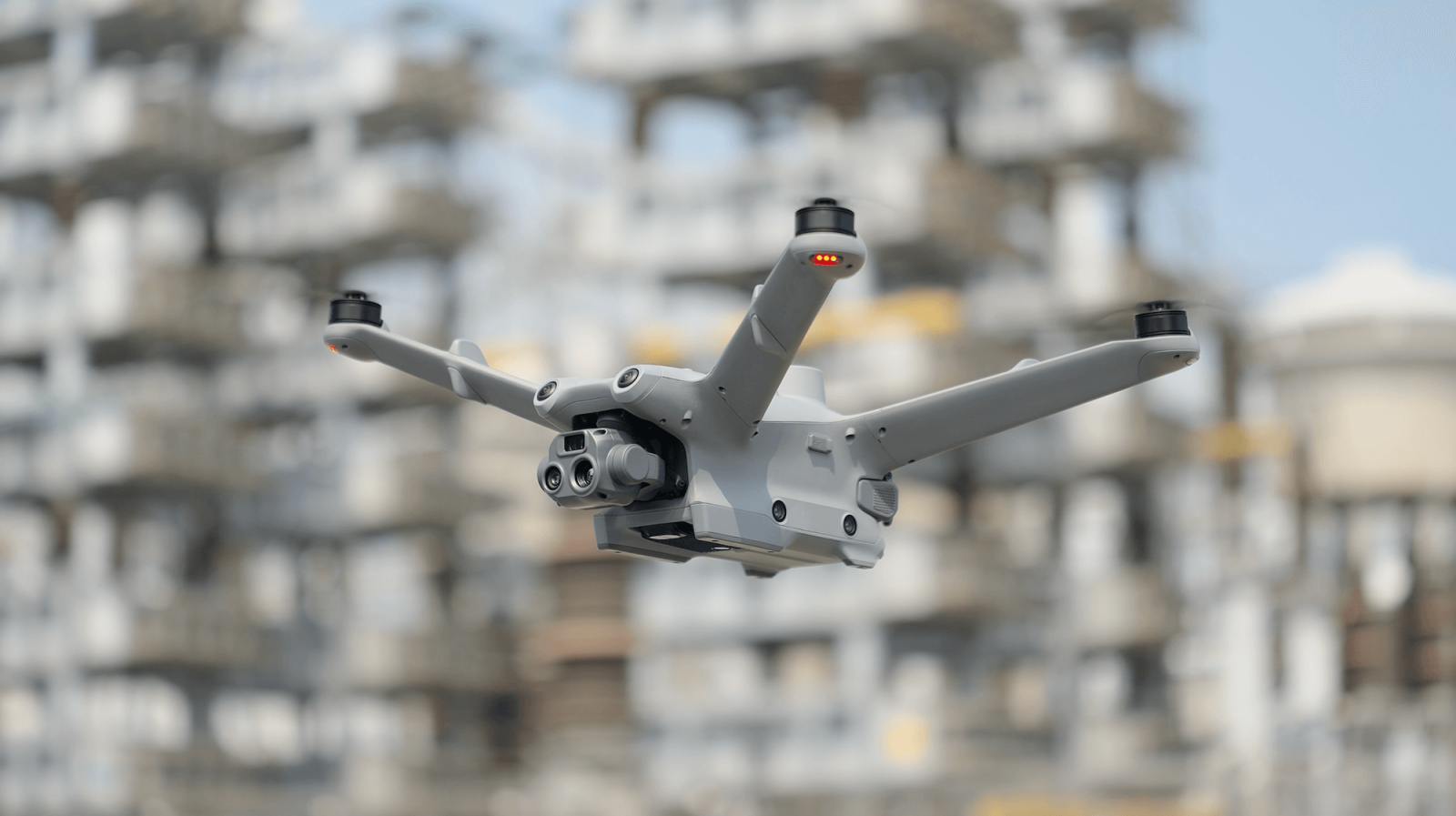
Brazil has just handed DJI a regulatory win that could reshape how enterprise drones scale, not just in South America, but worldwide. Brazil’s National Civil Aviation Agency (ANAC) has officially granted Design Authorization for the DJI Matrice 3D series and DJI Dock 2. On paper, it’s a certification milestone. In practice, it could dramatically shorten the runway for beyond visual line of sight (BVLOS) drone operations across the country.
For years, the biggest roadblock to scaling automated drone programs hasn’t been the aircraft. It’s been the paperwork.
Enterprise teams — from utilities to mining operators — have increasingly turned to “drone-in-a-box” systems for automated inspections. The Dock 2 is built for high-frequency, remote missions. But BVLOS approval has traditionally required long, complex reviews of system design, safety architecture, and operational risk.
With ANAC’s Design Authorization, that system-level review has already been done.
In other words, companies can stop asking, “Can we legally deploy this?” and start focusing on, “How fast can we put it to work?”
The approval validates DJI Dock 2’s overall architecture, including system-level safety, hardware redundancy, and software design. Importantly, this isn’t a one-off experimental permit tied to a pilot project. It applies to routine operations, creating a foundation for long-term, scalable deployments.
For drone service providers and in-house flight departments, this is where things get interesting.
Before this authorization, businesses often had to effectively certify the dock system themselves—re-proving airworthiness elements and technical design standards to regulators. That meant months of back-and-forth and significant legal and engineering effort.
Now, that burden has largely been lifted.
The core aircraft and system architecture are already validated at the national authority level. The “from scratch” certification marathon for the dock design is no longer part of the equation.
That alone could shave months off deployment timelines.
But this doesn’t mean Brazil has opened the skies with zero oversight. BVLOS remains a regulated activity, and operators still carry operational responsibility.
Companies must:
- Secure required business registrations and operational approvals under Brazilian law
- Ensure pilots or remote operators hold appropriate qualifications
- Conduct mission-specific risk assessments for each site
- Submit flight authorizations through Brazil’s SARPAS system
- Actively monitor missions, with a human operator maintaining decision-making authority
Automation may power the mission, but human accountability remains central under BVLOS rules.
The CAER: Your drone’s license plate’
While Design Authorization covers the system blueprint, each individual aircraft still needs its own Special Airworthiness Certificate for Drones — known as CAER.
Think of the Design Authorization as type approval for a car model. The CAER is the specific license plate tied to your vehicle.
Every Matrice 3D unit deployed in Brazil is now eligible for a CAER, provided it meets ANAC requirements. One important condition: the aircraft must be fitted with an ANAC-approved anti-collision light, and proof of installation is required to obtain the certificate.
Once a drone has its CAER, it becomes eligible to submit BVLOS flight requests through Brazil’s airspace authority via the SARPAS system. Without it, long-range operations remain grounded.
There’s another key advantage: transferability. The CAER can be passed along to the final operator. That means a service provider or enterprise team can receive a system that is already “airworthiness-ready,” allowing them to focus on mission planning instead of regulatory engineering.
For organizations deploying multiple docks across different sites, this transforms Dock 2 from an experimental tech initiative into a standardized industrial tool. And with regulatory risk significantly reduced at the hardware level, forecasting return on investment becomes easier. CFOs like that.
Why this matters beyond Brazil
ANAC isn’t a lightweight regulator. Brazil’s aviation authority is widely respected for its technical rigor. Its approval carries credibility well beyond national borders.
For civil aviation authorities in other regions, this certification provides a documented reference point. It demonstrates how the Dock 2 and Matrice 3D platform meet high-level safety requirements at a national level.
That could simplify conversations elsewhere.
For DJI’s enterprise division, the milestone reinforces a “compliance-by-design” approach — building hardware that can stand up to stringent regulatory scrutiny from day one.
More broadly, it signals something bigger for the drone industry: fully autonomous, remotely managed operations are no longer just a pilot project concept. They’re moving into standardized, regulator-approved territory.
Brazil may be the first international market to grant this level of airworthiness approval for this product line. But it likely won’t be the last.
More: DJI’s SkyPixel contest shows how far drone storytelling has come


FTC: We use income earning auto affiliate links. More.



Comments