
The United States Army is doubling down on a new way to stop hostile drones, not just with missiles or jammers, but with AI-powered nets in the sky. Utah-based Fortem Technologies says it has secured a three-year, $18 million contract to deploy its DroneHunter interceptors and support services at Army sites worldwide. The deal is aimed at strengthening defenses against what military leaders increasingly see as one of the most urgent battlefield (and homeland) threats: small, unauthorized drones.
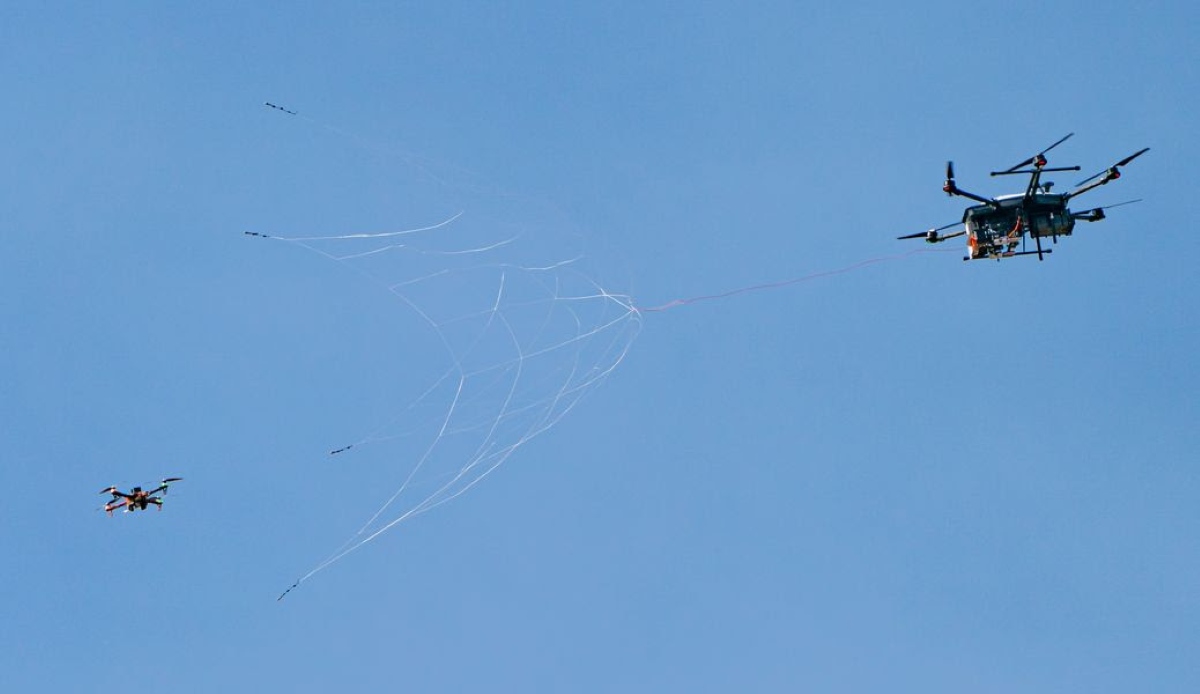
Instead of blowing drones out of the sky, Fortem’s DroneHunter system captures them midair using a net. The interceptor autonomously detects, tracks, and flies toward an intruding drone before firing a tethered net that entangles the target. The captured drone is then lowered safely to the ground, minimizing the risk of falling debris or collateral damage — a critical concern when operating over military bases or populated areas.
The Army has already issued its first order under the agreement, valued at nearly $4 million, signaling that deployment is moving quickly.
“Protecting soldiers and materiel from the growing drone threat is one of the most urgent defense challenges of our time,” says Fortem CEO Jon Gruen. He adds that the award reflects the Army’s confidence in the company’s ability to move “beyond detection” and deliver safe, real-world interception.
New: 10 million calls: The drone system changing policing
The contract builds on a wave of recent wins for Fortem. In January, the Pentagon selected DroneHunter as its first purchase under the Replicator-2 initiative — a Defense Department effort focused on rapidly fielding autonomous systems at scale. The company also recently delivered its next-generation DroneHunter units and demonstrated what it calls the industry’s first 5-on-5 fully autonomous drone swarm takedown, in which multiple hostile drones were detected, tracked, and neutralized simultaneously with zero collateral damage.
Last month, Fortem secured a separate multimillion-dollar award from the US Department of Homeland Security to help protect venues during the 2026 FIFA World Cup from drone threats — highlighting how counter-drone tech is becoming just as relevant for major civilian events as for military installations.
Fortem’s broader system, known as the SkyDome Family of Systems, combines radar sensors, command-and-control software, and autonomous interceptors into a layered airspace security network. Notably, Fortem says it is the only company authorized to deploy a drone-on-drone kinetic interceptor in US airspace. Its technology has also been operationally validated in conflict zones and high-risk regions overseas.
As drone warfare evolves rapidly, from improvised battlefield quadcopters to coordinated swarms, the Army’s latest investment signals a clear shift: the future of base defense may increasingly rely on autonomous drones policing the skies above them.
More: DJI explains why it’s challenging the FCC drone ban


FTC: We use income earning auto affiliate links. More.


Comments