
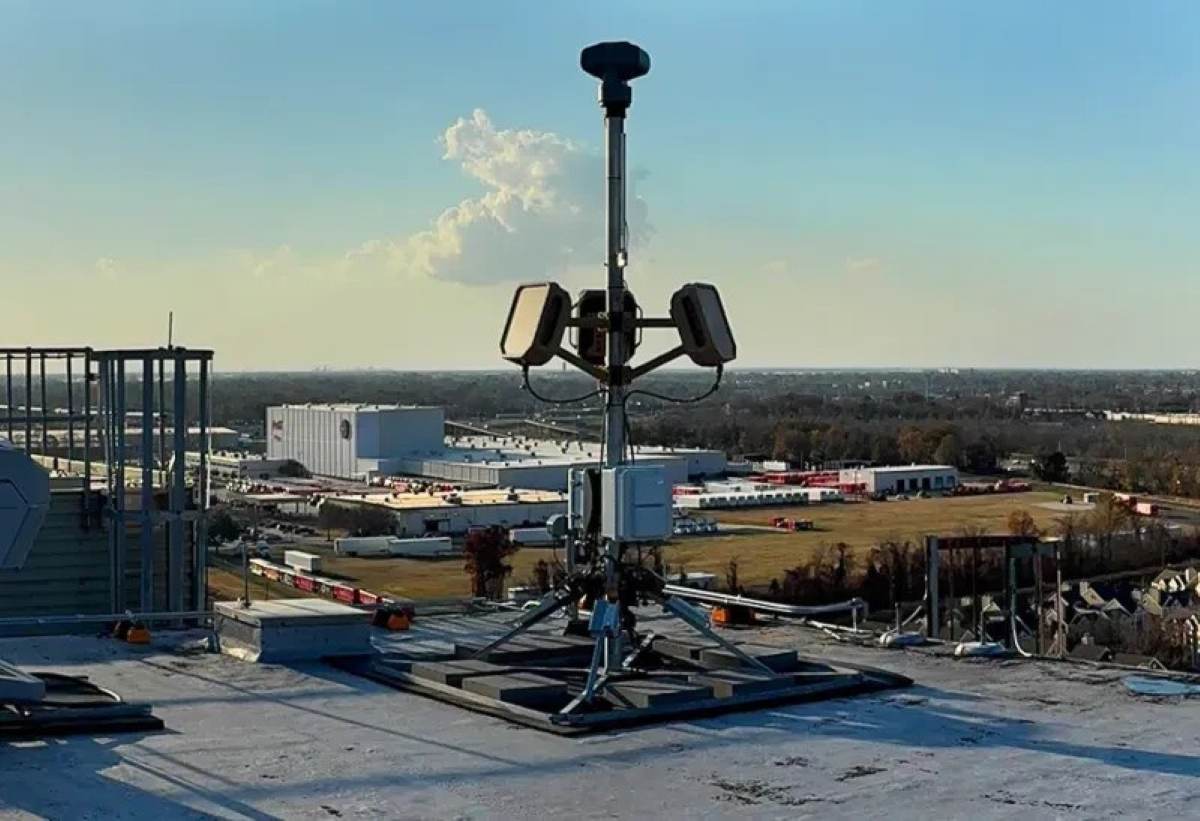
As police departments across the US rapidly expand drone programs, one challenge is becoming harder to ignore: crowded low-altitude airspace. From authorized emergency-response drones to rogue aircraft flying near sensitive locations, agencies increasingly need better visibility into what’s happening overhead.
That’s the focus behind a new partnership between Echodyne and Axon, two companies aiming to strengthen the infrastructure supporting public safety drone operations in the US and abroad.
The partnership will combine Echodyne’s radar systems with Axon’s growing drone ecosystem, including its Axon Air and Dedrone solutions. The goal is to help law enforcement, homeland security teams, and Drone as First Responder (DFR) programs operate more safely while also identifying unauthorized or potentially dangerous drone activity.
DFR programs have become one of the fastest-growing trends in public safety technology. Instead of waiting for officers to arrive first, drones can be launched immediately after a 911 call, giving responders live aerial footage before they reach the scene. Departments across the US increasingly use these systems for everything from search-and-rescue missions to traffic incidents and active emergencies.
But as more drones enter the skies, agencies face a growing need for accurate low-altitude airspace awareness. Unlike traditional aviation systems focused on higher altitudes, DFR operations require detailed tracking much closer to the ground, where buildings, infrastructure, and other drones create a far more complex environment.
Echodyne says its MESA radar technology is designed specifically for those situations. The company’s systems can help agencies track authorized drones while also detecting rogue or malicious aircraft nearby. According to the companies, the partnership is already supporting hundreds of DFR missions every day, with dozens of additional deployments underway.
Eben Frankenberg, CEO of Echodyne, describes radar as “the cornerstone of airspace awareness,” especially as remotely piloted and future autonomous drone operations continue expanding.
Axon executive vice president of operations Eric Hertz says public safety agencies are increasingly relying on drones to improve response times, coordination, and situational awareness. But as those programs scale, he noted that agencies also need trusted systems that help them safely operate in increasingly crowded airspace.
The announcement highlights how the next phase of public safety drone growth may depend not just on the drones themselves, but on the invisible infrastructure managing the skies around them.
More: Dallas fire stations now double as police drone response hubs


FTC: We use income earning auto affiliate links. More.




Comments