
A University of Houston engineer has developed a new onboard safety system that could help drones avoid crashes before they happen, even when unexpected events knock them off course.
The technology, designed specifically for quadrotor drones, acts as an autonomous “safety supervisor.” Instead of replacing the drone’s pilot or flight software, it continuously monitors the aircraft during flight and steps in only when it detects that the drone is about to enter a dangerous situation.
The idea is straightforward. A drone may be following its planned flight path perfectly, but an unexpected gust of wind, a sudden disturbance, or another external force can quickly push it toward an obstacle or unsafe area. The new system is designed to recognize that risk in real time and automatically make corrections before a crash occurs.
The research was led by Marzia Cescon, David C. Zimmerman Assistant Professor of Mechanical and Aerospace Engineering at the University of Houston’s Cullen College of Engineering, and was published in the American Society of Mechanical Engineers Digital Collection.
Cescon describes the technology as an “invisible fence” surrounding the drone.
“You can think of it as an invisible fence that defines where the drone can safely be,” she explains. “Whenever the ‘safety supervisor’ predicts that the drone will get dangerously close to the fence and potentially crash onto it, the algorithm we designed pushes it away from it.”
Under the hood, the system relies on a mathematical framework known as a Control Barrier Function (CBF). The software continuously monitors the drone’s tilt and position, predicts whether it’s approaching an unsafe condition, and temporarily takes control if necessary to keep the aircraft within safe operating limits.
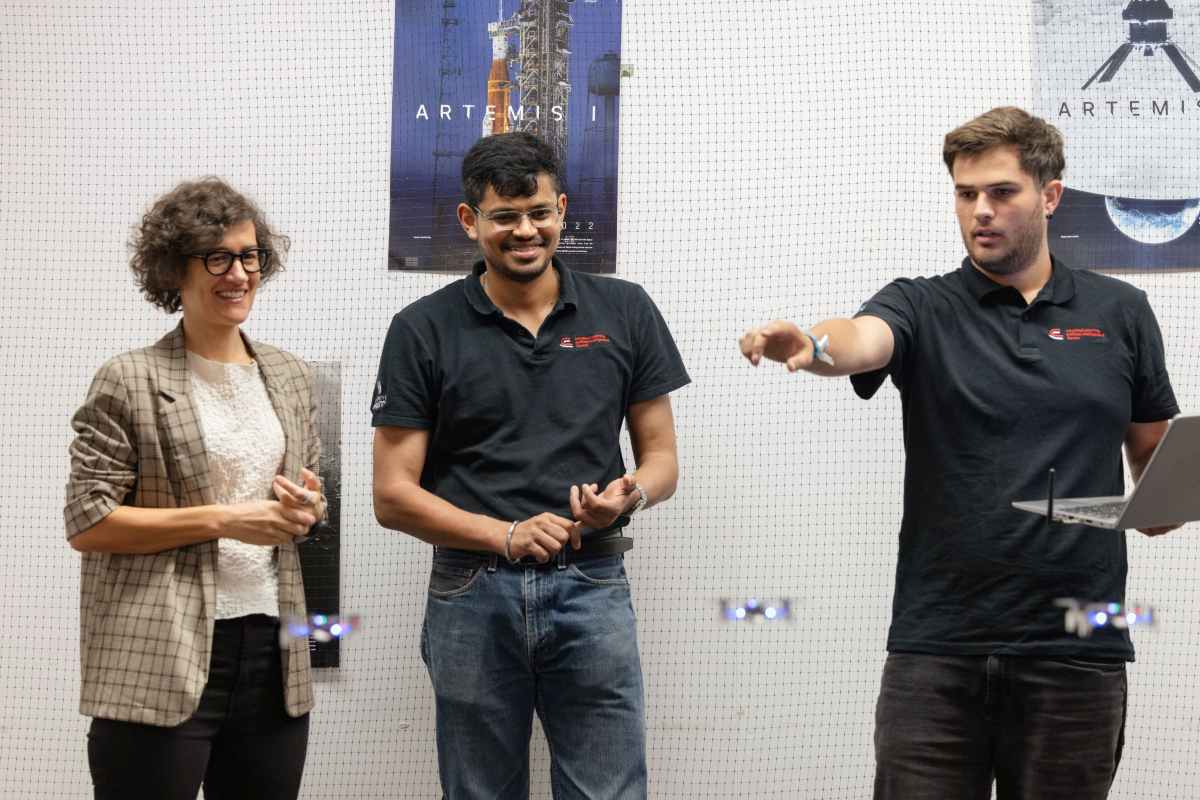
According to Cescon, the work bridges an important gap between theoretical safety research and practical drone operations. Rather than existing only in simulations, the safety supervisor was developed and tested on real hardware at the university’s Advanced Learning, Artificial Intelligence and Control laboratory.
As drones take on increasingly complex jobs — from inspecting critical infrastructure to operating in crowded or confined environments — systems like this could provide an extra layer of protection without interfering with normal flight. By intervening only when needed, the technology aims to make autonomous and pilot-assisted drone operations more reliable while reducing the risk of accidents caused by unpredictable conditions.
More: AVSS sets production record amid rising global drone demand


FTC: We use income earning auto affiliate links. More.



Comments