
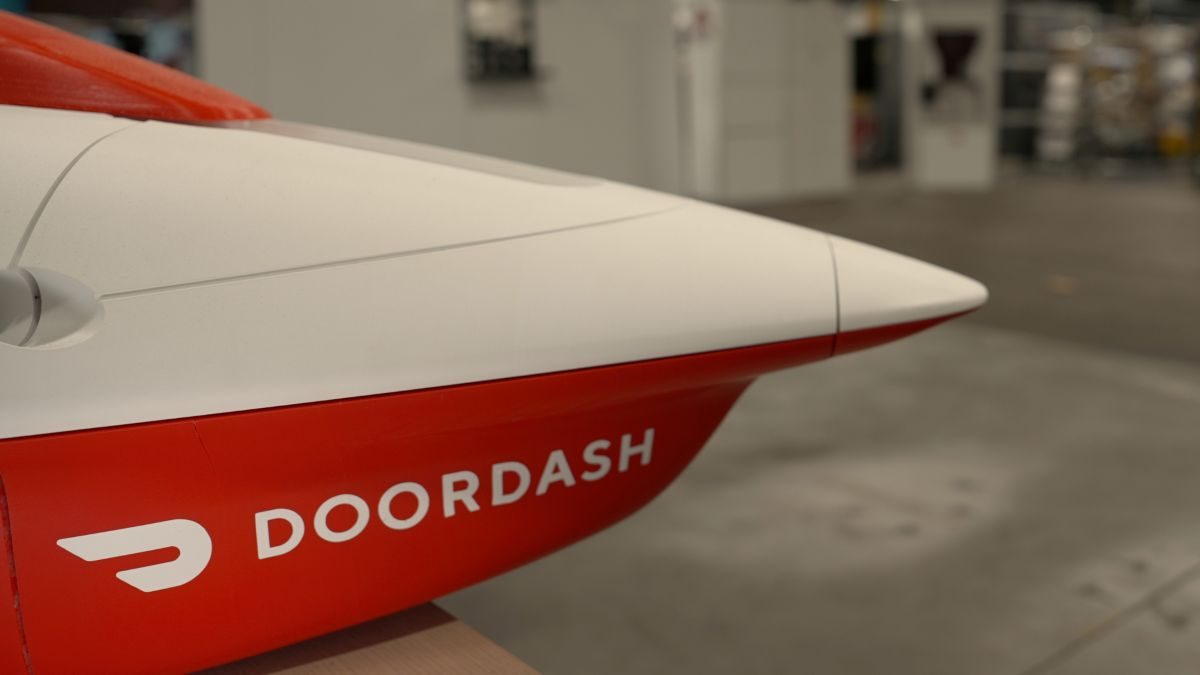
If you’ve been waiting for drone delivery to move beyond flashy demos and limited pilot programs, this could be one of the biggest signs yet that the technology is entering the mainstream.
DoorDash has announced that it has earned FAA Part 135 air carrier certification and is launching DoorDash Air, its own in-house drone delivery program. The certification allows the company to commercially operate its own drone fleet, making DoorDash just the eighth drone operator in the US to receive the FAA approval required to run commercial drone delivery services.
While the announcement is about drones, it’s arguably an even bigger story about logistics. After years of partnering with companies like Wing and Flytrex to test aerial deliveries, DoorDash is now building its own end-to-end drone operation — from the aircraft itself to the software that decides whether your order should arrive by car, robot, or drone.
That’s an important shift because it shows one of America’s biggest delivery platforms believes drone delivery is no longer an experiment. It’s becoming another tool in the delivery toolbox.
And the timing makes sense. Millions of Americans already expect groceries, meals, pharmacy items, and convenience-store purchases to show up at their door in less than an hour. The next challenge isn’t convincing people to order online; it’s finding faster, more efficient ways to complete those deliveries.
DoorDash says its own data, gathered from more than 10 billion lifetime deliveries, revealed an interesting pattern. More than 20% of orders now travel between three and five miles, but those mid-range deliveries also take nearly 25% longer to complete because matching them with the right Dasher often takes extra time. That’s exactly where drones can make a difference.
New: 700 drones confiscated during FIFA World Cup security operation
According to the company, deliveries under five miles average less than 25 minutes when handled by drones. Think about the kinds of orders where those extra minutes matter: cold medicine for a sick child, coffee for someone finishing a long hospital shift, forgotten groceries before dinner, or a last-minute phone charger before a trip. Those are the moments where speed becomes the product.
What’s particularly interesting is that DoorDash isn’t pitching drones as replacements for human delivery drivers. Instead, the company sees them as another delivery option that complements Dashers and even its autonomous sidewalk robot, Dot. Large grocery orders, apartment deliveries, and many complex deliveries will still require people. Drones, meanwhile, can tackle lightweight, time-sensitive trips that currently slow down the network.
Behind the scenes, every order already flows through DoorDash’s Autonomous Delivery Platform, software that decides in real time whether a Dasher, a ground robot, a drone, or one of the company’s autonomous partners is the best choice for the job.
In other words, customers may not even think about how their order arrives. They simply get the fastest available option. That kind of orchestration may end up being more valuable than the drone itself.
DoorDash executives repeatedly emphasized that building an aircraft is only part of the challenge. The much harder task is creating everything around it — the routing software, merchant handoff systems, inventory integration, loading infrastructure, and marketplace technology that allows thousands of businesses to plug into the same network without changing how they operate.
The company calls this entire ecosystem DoorDash Air. “It’s not just the plane; it’s the whole airline,” is essentially the philosophy behind the program. That thinking reflects how the drone delivery industry has evolved over the past several years.
Early efforts focused heavily on aircraft design. Today’s race is increasingly about operational scale, regulatory approvals, automation software, and integrating drones into existing commerce networks.
DoorDash believes its biggest advantage isn’t necessarily the aircraft itself but the massive marketplace it’s already built. Every restaurant, pharmacy, grocery store, and convenience shop already using DoorDash could eventually gain access to drone delivery without investing in any drone infrastructure of their own.
The company also says drone partner pilots have already produced encouraging business results. Some participating merchants reportedly saw order volume increase by roughly 30% during the weeks following launch, suggesting faster delivery options can encourage customers to place more orders.
The FAA certification itself is also significant. Part 135 certification isn’t simply paperwork. Operators must pass a rigorous five-stage FAA evaluation covering aircraft airworthiness, maintenance programs, operational procedures, and safety systems before they’re allowed to conduct commercial air carrier operations. Becoming only the eighth operator to receive that approval underscores how selective the process remains.
DoorDash says its drone platform has been developed inside DoorDash Labs, the same robotics team responsible for its autonomous sidewalk robot, Dot. The company also notes that its drone is American-designed and built, with most components manufactured in the US — a detail that could become increasingly relevant as policymakers continue encouraging domestic drone development.
The aircraft itself remains largely under wraps for now. DoorDash says it will reveal more details later this year, including how its first-party drone fleet will operate alongside Dashers, autonomous robots, and existing drone delivery partners.
Taken together, the announcement signals something much bigger than another drone launch. Some of the world’s largest retailers, restaurant chains, healthcare providers, and logistics companies are now investing in aerial delivery. What once sounded futuristic is gradually becoming another layer of everyday commerce.
DoorDash’s latest move suggests the future of delivery may not belong to one method alone. Instead, the winning formula could be a smart network where software chooses the right vehicle — whether that’s a person, a robot rolling down the sidewalk, or a drone flying overhead — to get your order to your doorstep as quickly and efficiently as possible. For consumers, that future may arrive sooner than they think.
More: DJI’s newest gadget may outshine its new camera


FTC: We use income earning auto affiliate links. More.


Comments