
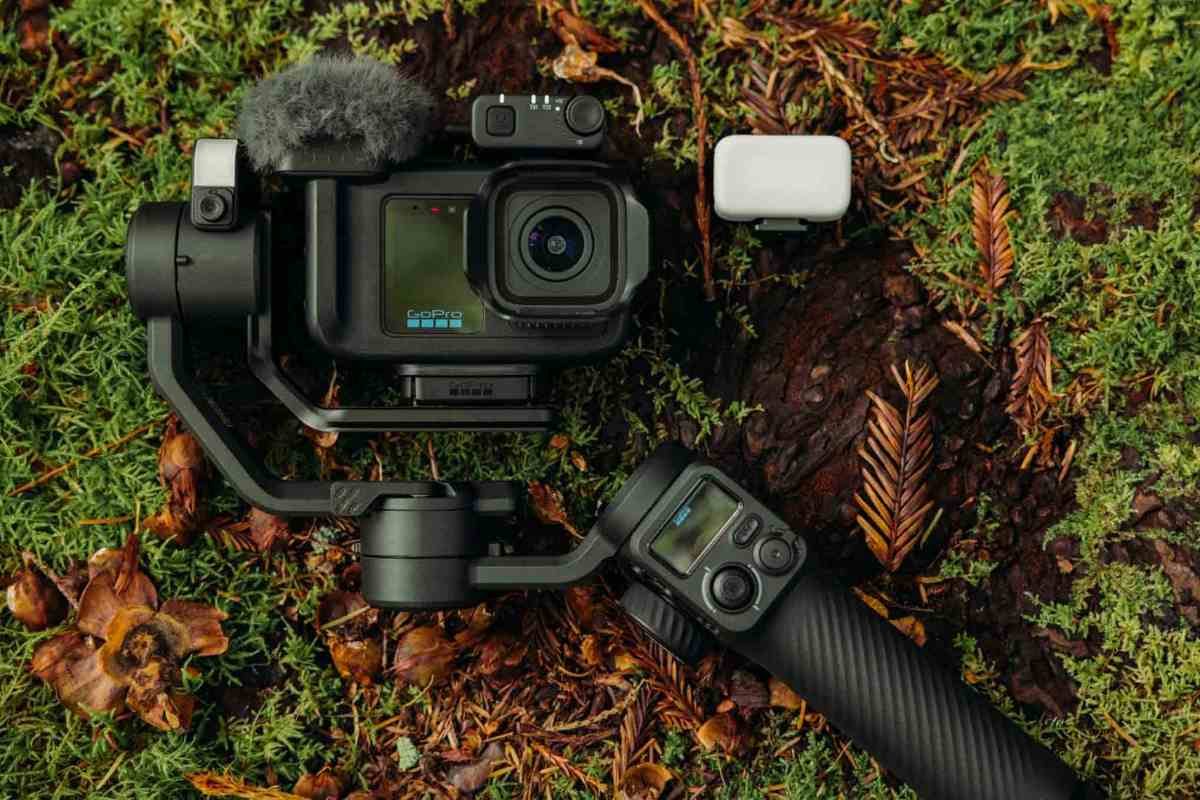
For more than two decades, GoPro has been the company that convinced millions of people to strap a camera to a surfboard, mountain bike, ski helmet, or race car. It practically invented the action camera category, turning everyday adventurers into filmmakers and building one of the most recognizable brands in consumer electronics. But after years of slowing sales and mounting competition, the company has just announced a move that could redefine what “GoPro” means altogether.
In a surprise deal unveiled Tuesday, GoPro has entered into a definitive agreement to merge with optical-photonics company Starman Optical — a transaction that keeps GoPro publicly traded while steering it toward entirely new markets including AI infrastructure, government, defense, robotics, and aerospace.
At first glance, the merger looks like a financial lifeline. GoPro shareholders will receive a combined $285 million in cash — about $1.14 per share — while retaining roughly 10% ownership of the combined company. Even more significant, GoPro’s approximately $92 million debt will be wiped clean when the deal closes, giving the company a substantially debt-free balance sheet for the first time in years.
But the money isn’t the biggest story. The real headline is that GoPro no longer wants to be known solely as the company behind action cameras. Instead, it wants to become an American optics and imaging powerhouse whose technology stretches from adventure cameras to AI data centers.
That’s a remarkable pivot for a brand whose biggest challenge in recent years has been fending off rivals like DJI and Insta360 in the consumer camera market.
So why Starman? Unlike GoPro, Starman doesn’t make cameras for consumers. It develops and manufactures optical transceivers — critical high-speed networking hardware that moves enormous amounts of data between AI servers using light. As AI data centers continue expanding at breakneck speed, demand for these components has exploded.
The combined company believes GoPro’s decades of experience in imaging, optics, and its portfolio of more than 2,500 US patents can complement Starman’s US-based manufacturing capabilities, opening doors to commercial, government, and defense contracts that are far larger than the action camera business alone.
GoPro founder and CEO Nicholas Woodman calls the merger an opportunity to build “a leading American imaging and optical solutions company,” while Starman CEO Charles Tebele emphasizes bringing production of strategically important optical hardware back to the United States.
If you’re a GoPro owner wondering whether this means the company is walking away from cameras, the answer, at least according to GoPro, is no.
The company repeatedly says it will continue supporting its consumer products, Quik subscription platform, cloud services, and future camera roadmap alongside its expansion into enterprise and defense markets.
In fact, it’s hard to argue GoPro is losing interest in creators after looking at what it’s launched this year.
The biggest statement came with the Mission 1 Pro, arguably the most ambitious camera GoPro has ever built. Instead of simply refreshing its action camera formula, the company introduced a compact cinema camera powered by a new 50MP one-inch sensor and GP3 processor, capable of shooting up to 8K/60fps video with Open Gate recording, GP-Log2 color, 32-bit float audio, impressive low-light performance, and its signature HyperSmooth stabilization. It’s a camera aimed as much at professional filmmakers as weekend adventurers.
GoPro has also refreshed its 360-degree lineup with the MAX 2 ($299 after 40% off), bringing higher-resolution immersive capture, improved stabilization, and more flexible reframing for creators producing everything from travel videos to real estate tours. Together with the company’s compact $204 Hero camera for casual users seeking a lightweight, ultra-portable action camera, GoPro arguably offers its broadest consumer lineup in years.
Ironically, those launches may have been laying the foundation for this week’s announcement all along. Rather than abandoning cameras, GoPro appears to be proving that the same expertise behind its latest products can translate into far larger opportunities — from powering AI infrastructure to supplying advanced optical technologies for government and aerospace applications.
The merger is expected to close before the end of 2026, pending shareholder and regulatory approval. Whether the strategy pays off remains to be seen. But one thing is already becoming clear: the next time someone says “GoPro,” they may no longer be talking only about the camera mounted on a snowboard; they could just as easily be talking about the technology powering tomorrow’s AI networks.
More: What to expect from DJI at IFA 2026


FTC: We use income earning auto affiliate links. More.


Comments