
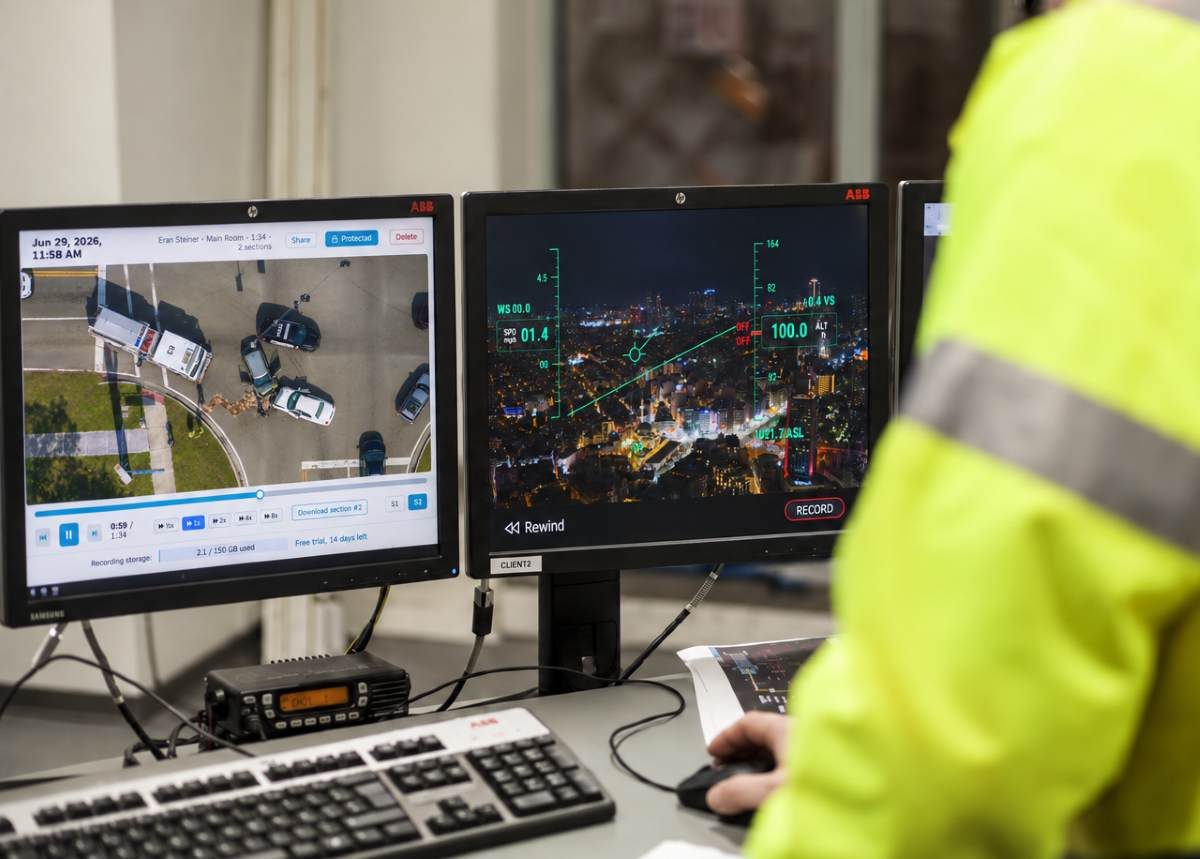
As drone operations become increasingly remote, it’s not always possible for every decision-maker to be watching a live video feed the moment something important happens. AirData is aiming to solve that problem with a major upgrade to its live streaming platform, introducing cloud recording and a DVR-style rewind feature that lets authorized viewers jump back up to 10 minutes without interrupting an active mission.
The California-based drone operations software company has announced Stream Recording and Rewind for AirData Live Streaming, adding three new capabilities designed for public safety agencies, utility companies, infrastructure inspectors, and other enterprise drone operators.
The biggest addition is a 10-minute rewind feature that allows viewers joining an active livestream late to immediately review what happened before they connected, then return to the live feed. AirData has also introduced cloud recording, which automatically saves livestreams for playback after a mission. Perhaps the most useful feature is the ability to begin recording after an event has already started and still capture up to the previous 10 minutes of video, effectively ensuring that key moments aren’t lost simply because no one pressed the record button in time.
The update arrives as drone operations continue shifting toward Drone as First Responder (DFR) programs, dock-based drone deployments, and increasingly remote operations. In many of these scenarios, the drone pilot, aircraft, and personnel making operational decisions may all be in different locations. A DFR drone, for example, may arrive at an emergency scene before responding officers, while utility inspections often involve engineers reviewing live footage from hundreds of miles away.
“In a live operation, the most important moment does not wait for the right person to start recording,” says AirData founder and CEO Eran Steiner. “Especially on longer ops, the operator is not recording the whole time, so a key moment can go uncaptured. That’s the problem we built this to solve.”
According to Steiner, the new capabilities also provide a second copy of mission footage stored independently from the aircraft, while remaining compatible with virtually any drone brand, docking system, or flight application.
New: FCC drone ban could put America’s drone light shows at risk
The company says the new workflow could be particularly valuable for public safety agencies. Instead of relying on radio updates or verbal explanations from drone pilots, commanders or analysts joining an incident late can immediately rewind the feed to understand what the drone observed before they logged in.
Chad Tillman, UAS coordinator for the Huntsville Police Department in Alabama, says his agency has already seen benefits from the new tools. “We have been using AirData Live Streaming for years, and Record and Rewind has given us a tremendous new tool to capture events as they unfold,” Tillman says. “Our analysts are now not only able to watch the live feeds, but can pause, rewind, zoom, and capture critical details that may have been missed as events unfold.”
The same functionality could also help utility and infrastructure inspections. If a remote engineer joins after a drone has already flown past an area requiring closer examination, they can simply rewind the footage instead of asking the pilot to reposition the aircraft or waiting until the flight ends to review footage stored on the drone.
AirData is also emphasizing redundancy. Because video is uploaded to the cloud as it’s streamed, recordings remain available even if a drone crashes, is lost, or its onboard SD card becomes damaged or inaccessible. Organizations can configure where recordings are stored, including data centers outside the US, while administrators can set retention policies and securely share recordings using PIN protection, expiration dates, and QR codes.
The recording system isn’t limited to AirData’s own mobile app, either. It also supports RTMP, RTSP, and SRT video streams, allowing organizations with mixed drone fleets, dock-based systems, and third-party streaming hardware to use the same recording and rewind workflow across different platforms.
The announcement also comes as the FAA continues developing its long-awaited Part 108 framework, which is expected to establish rules for routine beyond visual line of sight (BVLOS) drone operations. As enterprise drone programs become increasingly remote and autonomous, maintaining comprehensive operational records — including mission video alongside flight logs, maintenance records, and personnel data — is expected to become increasingly important.
AirData says Stream Recording and Rewind is available immediately for existing AirData Live Streaming customers, who can request a trial through the AirData web application. Organizations not currently using the company’s live streaming platform can contact AirData’s enterprise sales team for more information.
More: Airwise adds another Remote ID partner to its airspace platform


FTC: We use income earning auto affiliate links. More.




Comments