
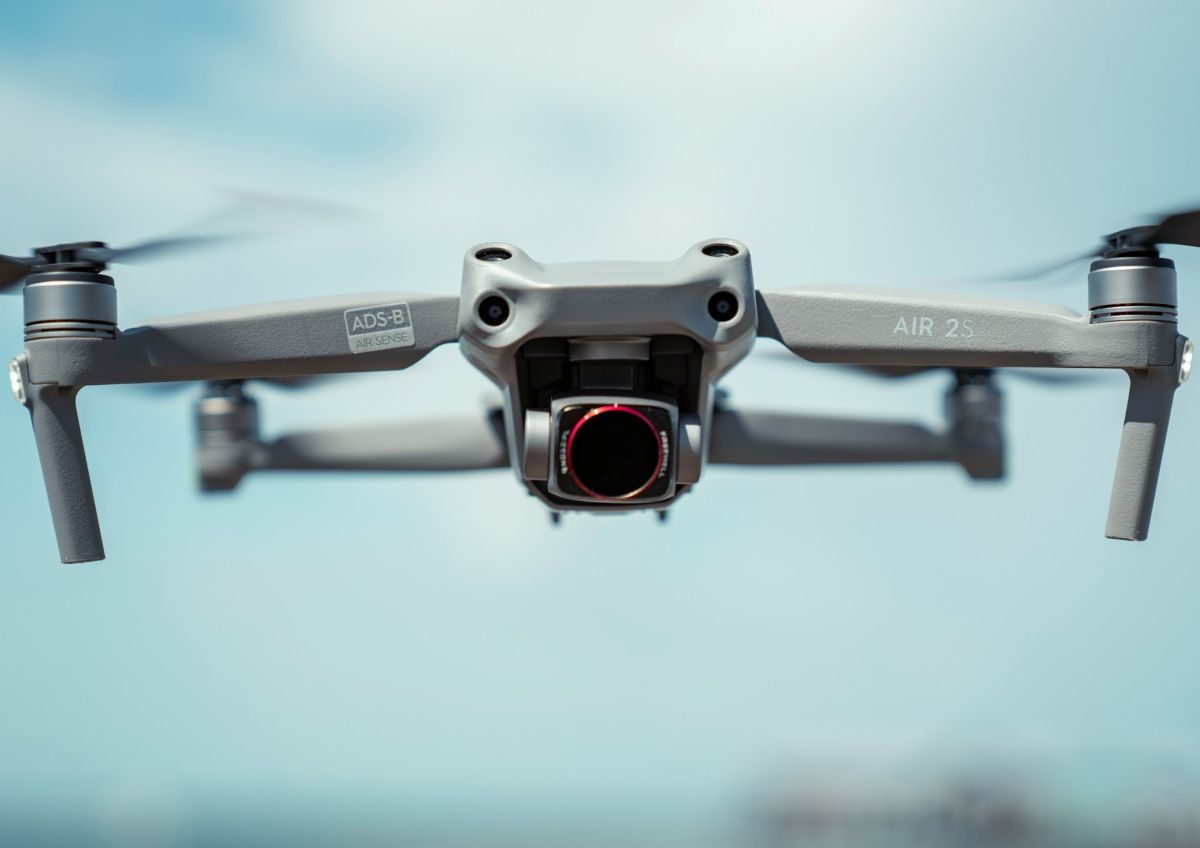
DJI’s Mavic Air 2 and Air 2S may be several years old, but the company hasn’t forgotten about them. Both camera drones have received new firmware updates, marking a return to software maintenance after the Mavic Air 2’s last update in 2023 and the Air 2S’s in 2024.
Don’t expect exciting new features, though. DJI’s release notes for both updates list the same change: bug fixes. There are no new shooting modes, camera improvements, or flight capabilities to report. Still, after such a long gap, the releases offer a reminder that DJI is continuing to tend to two established products even as newer drones compete for attention.
Mavic Air 2 gets an update after 2023
The Mavic Air 2’s aircraft firmware moves to v01.01.18.00. The accompanying firmware versions are v04.11.05.00 for the RC-N1 remote controller and v01.01.00.76 for the DJI Smart Controller. DJI Fly for iOS and Android is listed at version 1.21.16.
The Mavic Air 2 launched in 2020 and helped make advanced aerial photography more accessible. Its 1/2-inch sensor captures 48MP photos and 4K video at up to 60fps. It also offers up to 34 minutes of flight time, ActiveTrack 3.0 subject tracking, APAS 3.0 obstacle avoidance, and 8K Hyperlapse.
That combination of portability, intelligent flight features, and capable imaging helped make it a compelling option for creators who wanted more than an entry-level drone without stepping into a more expensive professional setup.
Air 2S follows with its own firmware refresh
The DJI Air 2S receives aircraft firmware v02.04.28.00, with bug fixes again being the only listed improvement. Its previous firmware update was more than two years ago.
DJI has also listed updates for several compatible controllers: v04.12.02.00 for the RC-N1, v01.03.2600 for the DJI RC, v03.02.0900 for the DJI RC Pro, and v01.01.00.76 for the Smart Controller. DJI Fly for both iOS and Android is listed at v1.21.16.
When the Air 2S arrived in 2021, its larger 1-inch sensor was a major step up from the Mavic Air 2. It captures true 20MP photos and 5.4K video at up to 30fps. Four-directional obstacle sensing, MasterShots, and improved subject-tracking capabilities further strengthened its appeal to aerial photographers and videographers.
Neither firmware release changes what these drones can do on paper. Bug fixes aren’t the sort of upgrade that typically gets pilots rushing to update, but they can still matter to people who rely on their aircraft for travel videos, photography, or paid projects.
While the Mavic Air 2 and Air 2S receive routine bug fixes, the newer Air 3S showcases just how much DJI’s midrange camera drones have evolved. That drone features a dual-camera system built around a 50MP, 1-inch CMOS primary camera and a 48MP, 1/1.3-inch CMOS medium tele camera with 3x optical zoom. Both cameras support 10-bit video, while the main camera can shoot 4K at up to 120fps in slow-motion mode. DJI also added Free Panorama, giving creators more flexibility when capturing expansive landscapes.
Perhaps its most notable upgrade is forward-facing LiDAR, which works alongside other sensors to support obstacle detection in low-light conditions. Improved Smart Return to Home can also help the drone navigate around obstacles during its return journey, while ActiveTrack 360° makes it easier to keep moving subjects in the frame. The drone also offers up to 45 minutes of flight time and 42GB of built-in storage.
All in all, DJI Air 3S is a substantial leap from the Mavic Air 2 and the Air 2S, yet the older drones remain capable tools for pilots who don’t need the latest features.
And that’s ultimately what makes these firmware updates worth noting. DJI’s lineup has moved forward considerably, but owners of its older camera drones are still receiving at least some software maintenance. The updates won’t transform these aircraft, but they do show that a product’s usefulness doesn’t necessarily end when its successor arrives.
Owners should check their aircraft and controller firmware and follow DJI’s installation instructions. If an update fails, DJI recommends restarting the aircraft, remote controller, and DJI Fly app or the appropriate DJI Assistant 2 software before trying again.
More: DJI Osmo Pocket 4 update makes tracking easier for holiday videos


FTC: We use income earning auto affiliate links. More.

Comments