
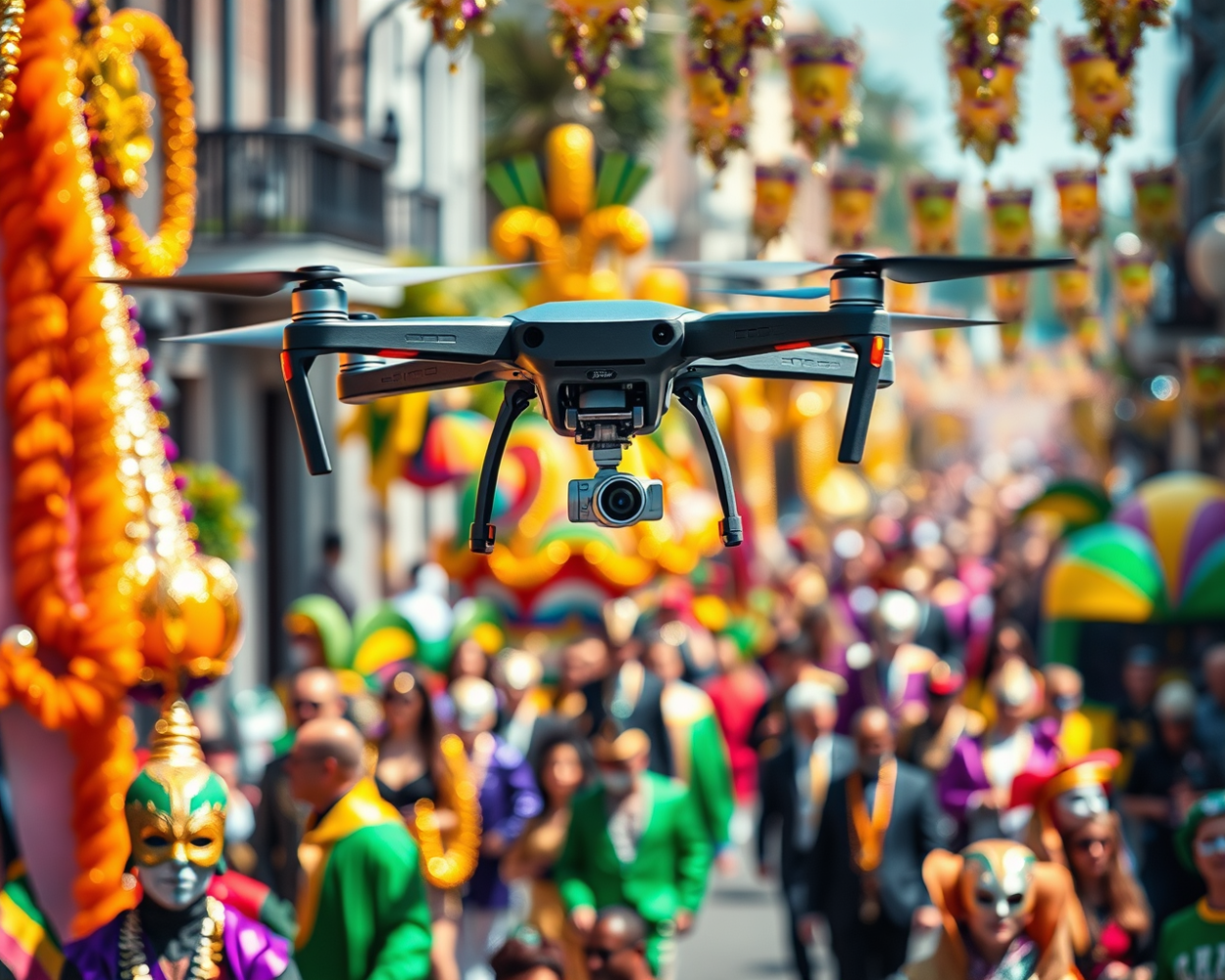
A new law signed by the Louisiana governor gives local and state law enforcement officers the ability to take down any drones that illegally fly over parade routes. While the law is fairly vague in how officers can act, it’s not the most restrictive state law we’ve seen released recently.
Leave it to Louisiana to create a law specifically aimed at their love of parades when it comes to drones. The law, named the “We Will Act” Act, gives state and local law enforcement the ability to take down drones over parade routes.
For those that don’t know, New Orleans is notorious for its Mardi Gras parades that happen on a nearly nightly basis during the season. With thousands, if not millions, of attendees viewing many parades over the time of their trips.
The act requires a “No Drone Zone” to be created and publicly shared prior to the parade and that only drones that threaten public safety are to be taken down.
Also, drones that are authorized for the parade are allowed to be flown in the “No Drone Zone.”
Violating the “No Drone Zone” could land you a fine of $2,000 to $5,000 and/or in prison, with or without hard labor, for up to one year.
DroneDJ’s Take
What is a No Drone Zone? The FAA defines a “No Drone Zone” as an area that restricts the operations of drones in a specific location. However, it only restricts the takeoff and landing of drones in the area and not flights in the airspace above the zone.
The Louisiana law implies its regulation of the airspace over the zone, another law whose constitutionality is confusing given the FAA’s sole jurisdiction over the national airspace.
The law conveniently doesn’t provide a definition for its use of the “No Drone Zone,” adding confusion to the mix if a pilot assumes they can still fly over the zone, just not take off or land. Adding to the confusion, even the FAA uses the term “No Drone Zone” in reference to TFRs during certain sporting and other major events.
Authorized vs Unauthorized vs Nefarious. I think the law attempted to create clear categories for drones in scenarios like this: authorized drones that don’t cause a threat and unauthorized, nefarious drones that could threaten the public. However, there seems to be a third category: unauthorized drones that do not pose a threat to public safety.
Is it nefarious to hover your drone above a building or open space of ground to capture the parade? Or are any drones that are authorized to be in the area deemed nefarious? I’m sure officers will default to the second one.
That brings up the second question: how does one tell if a drone is authorized or not? Will police be tracking all drones in the airspace and having a list of authorized Remote IDs, or will it be a judgment call for cops on the ground?
This law puts a lot of faith in a system that is already based on the honor system; police won’t take down drones that aren’t causing a threat, and pilots won’t illegally fly their drones. Both are situations that are ripe for misinterpretation.

FTC: We use income earning auto affiliate links. More.


Comments