
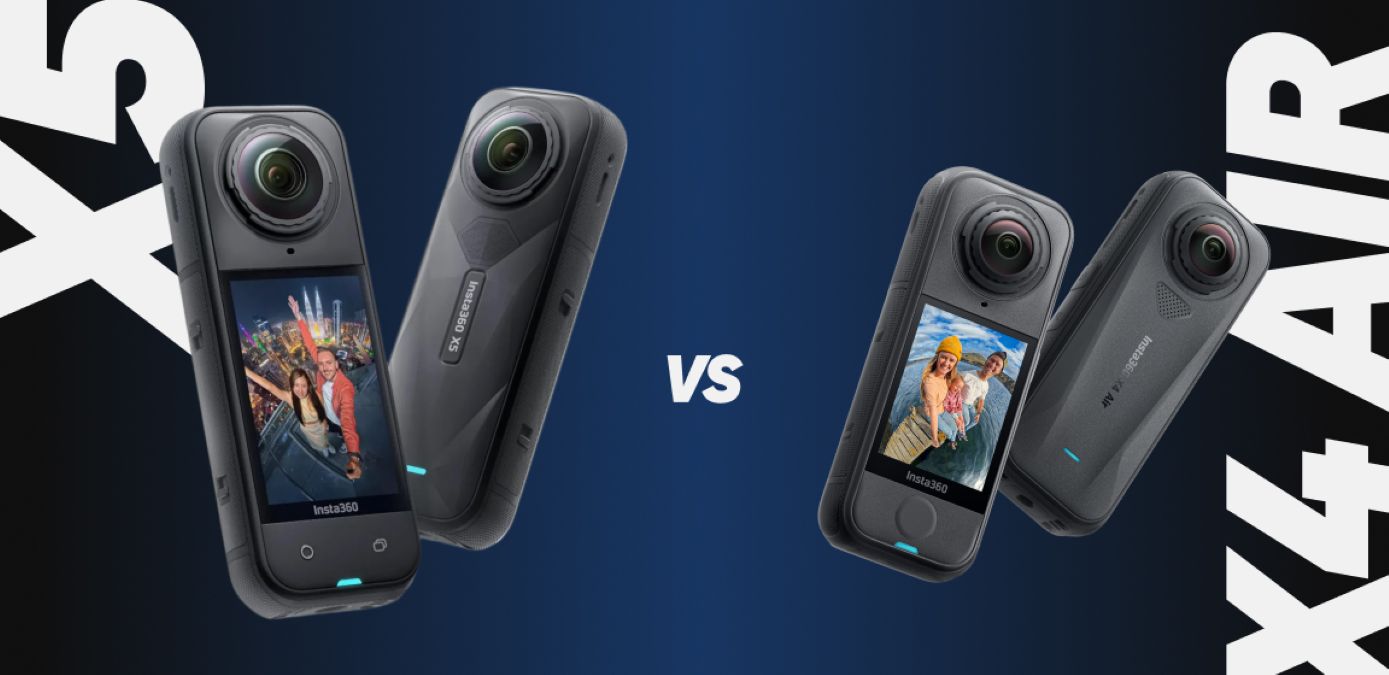
Choosing between two 360 cameras shouldn’t feel like a technical exam; it should feel like choosing a travel buddy. Because that’s really what these cameras become: the little sidekick that documents your hikes, road trips, late-night noodle runs, or your next “I can’t believe I actually did that” adventure. And Insta360’s newest 360 cameras, the X4 Air and X5, couldn’t be more different in personality.
One is feather-light and friendly, perfect for anyone who wants high-quality 360 shots without lugging around a brick. The other is a beefier, more serious machine built to satisfy creators who nitpick shadows and dynamic range. Let’s break it down so you can figure out which one matches your vibe.
Insta360 X4 Air: Pocket-friendly, go-anywhere sidekick
The first thing people say when they pick up the $399.99 X4 Air is usually some variation of: “Wait, that’s it?” At just 165 grams, this is Insta360’s lightest 360 camera yet… the kind of gadget you forget is even in your pocket. Stick it on your bike handlebars, clip it to a backpack strap, or hand it to a kid at a family barbecue and it just… works. No drama.
Despite the tiny build, Insta360 didn’t skimp on the tech. The X4 Air packs dual 1/1.8-inch sensors and records 8K30fps 360 video, something usually reserved for larger, more expensive flagship models. Its AdaptiveTone system automatically balances brightness and color, which is great if you’re shooting in mixed lighting or don’t want to fiddle with manual settings. Even its low-light performance is noticeably better than the original X4, making evening street shots, sunsets, and cozy indoor scenes look clean and punchy.
And then there’s the fun stuff. Replaceable lenses (a huge deal if you’ve ever cried over scratches), invisible selfie stick support, a deep accessory ecosystem, and easy editing powered by Insta360’s AI tools. For creators who just want to capture life without overthinking it, the X4 Air nails the convenience-meets-quality sweet spot.
Insta360 X5: The ‘Best of everything’ powerhouse
Now let’s talk about the $464.99 X5 (typically $549.99), which feels less like a casual travel buddy and more like a straight-up production tool. This thing is built for people who care about details like noise texture in the shadows and color roll-off at sunset.
Inside are dual 1/1.28-inch sensors, backed by three processing chips — two pro imaging chips plus a dedicated 5nm AI chip. That’s a major bump in imaging power over the X4 Air. The result? Better low-light performance, much richer dynamic range, and cleaner footage in tricky lighting.
The X5’s PureVideo Mode deserves special attention. This dedicated low-light mode smooths out noise, boosts brightness, and retains detail where smaller sensors usually fall apart. Nighttime city shots, tunnels, nighttime skiing — whatever you’re into — look shockingly good.
For action lovers, the X5 also offers 4K120fps slow motion, which turns even chaotic moments into smooth, cinematic clips. And if battery anxiety is your mortal enemy, the X5’s impressive 208-minute Endurance Mode (in 5.7K24fps) solves that with ease.
It’s tougher, too. Stronger replaceable lenses, optional lens guards, deeper compatibility with pro-level mounts and workflow tools… the whole camera is built for creators who don’t mind a little weight if it means absolute control over the shot. If you’re shooting professionally, doing extreme sports, or simply want the best 360 camera Insta360 makes right now, the X5 is the obvious pick.
So, which one should you get? Here’s the simplest breakdown…
Choose the Insta360 X4 Air if you want, something lightweight and totally non-intimidating. Something that delivers 8K 360 video in a budget while still feeling premium. Essentially, a playful camera that guarantees easy editing and a fun shooting experience for everyday content around travel, pets, family, and casual adventures.
Choose the Insta360 X5 if you want the best image quality Insta360 currently offers, way better low-light performance, a 4K120fps slow motion video option, and longer runtimes for outdoor days. Basically, a portable camera built for extreme sports or professional shooting.
Either way, you’re getting a 360 camera designed to capture life in ways a flat, single-lens camera simply can’t.
More: GoPro MAX2 update delivers major 360 camera upgrades


FTC: We use income earning auto affiliate links. More.




Comments