
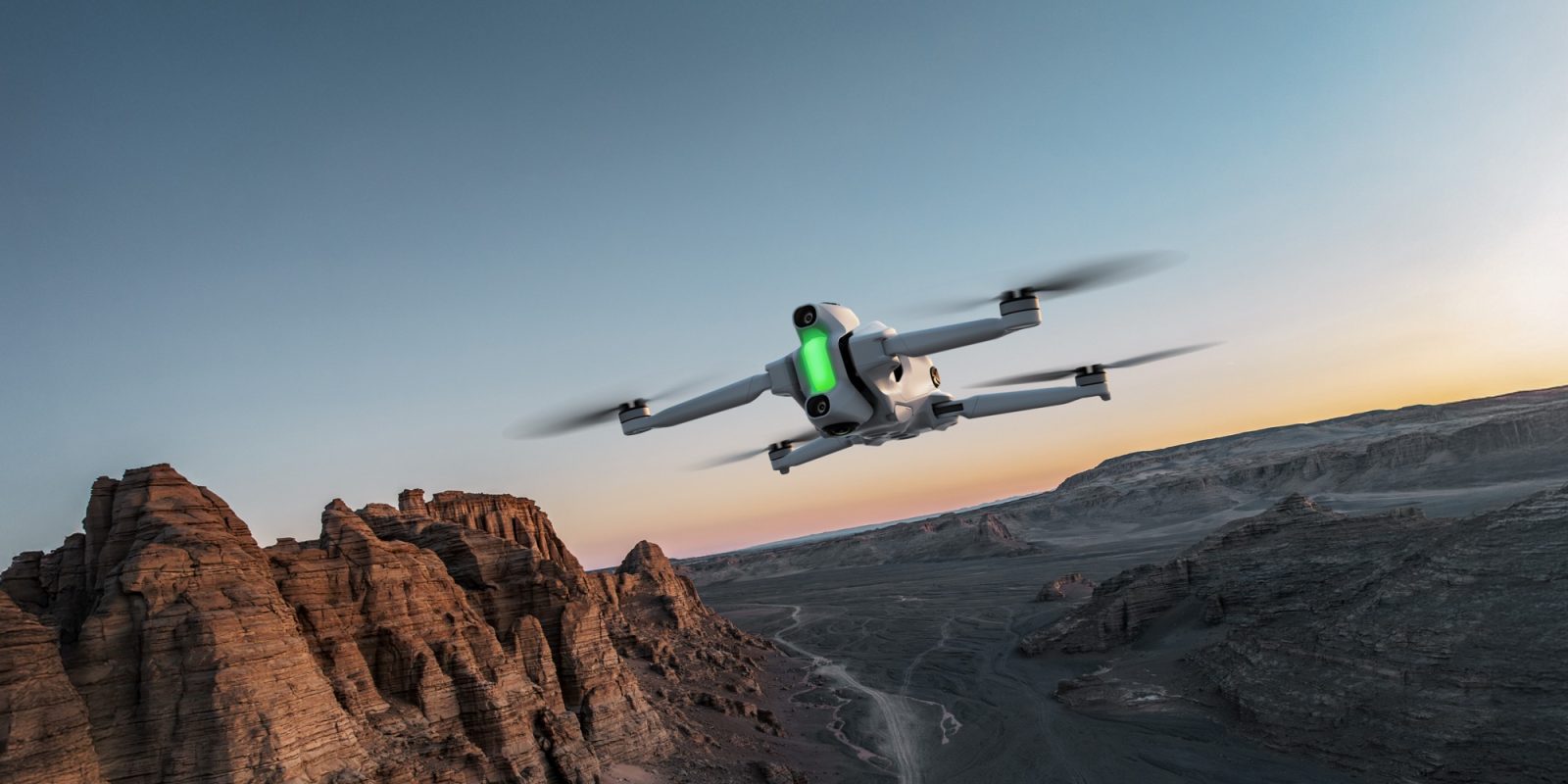
If you’ve been eyeing Insta360’s Antigravity A1 drone with bated breath, now’s the time to set a reminder. Antigravity has dropped a teaser across its social channels, stamping a firm launch date on its debut drone: December 4, 2025, at 9:00 a.m. EST. That means the A1 is arriving nearly two months earlier than the previously expected January 2026 release.
In the teaser, the price is still locked — listed cryptically as “XXX [LOCKED]” — and there’s no public confirmation of what kind of bundles (drone-only, Fly More kit, etc.) will be offered. But the push to December feels strategic: by getting to market first, Antigravity hopes to claim first-mover advantage before DJI’s 360-drone answer hits the shelves.
The Antigravity A1 isn’t just another drone with a 360-camera slapped on: it’s been built from the ground up for immersive, cinematic aerial capture. Here’s how:
- True 8K 360° capture: A1 uses a top-and-bottom dual-lens camera configuration reminiscent of Insta360’s action cams, recording everything around the drone seamlessly — no blind spots, no missing corners.
- Invisible-drone effect: Thanks to automatic, real-time stitching, the drone itself can essentially vanish from video, giving a “camera in the sky” vibe rather than “drone in the sky.”
- Sub-250 g weight: At only 249 grams, A1 falls under the 250-g threshold, meaning in many countries (including the US) it may dodge cumbersome registration/licensing rules for casual flyers.
- Immersive FPV-like controls: A1 is bundled with the “Grip” motion controller and “Vision” goggles. That means pilots can use intuitive hand gestures to steer instead of joysticks, and look around mid-flight to “see” the whole world, or capture it, in 360.
- Flexible editing and creative freedom: Since everything is captured 360°, you don’t have to nail framing mid-flight. Instead, you can “reframe” shots in post — pick angles, crop to different aspect ratios, add cinematic moves, or even special effects like “Tiny Planet.”
- Safety and practicality features: A1 includes return-to-home, payload-detection (anti-tampering), and basic obstacle sensing. The design even includes retractable landing gear (deployed only when landing) to prevent landing gear from blocking or messing up the 360 camera view.
It’s clear the team behind Antigravity intends A1 for creators (filmmakers, travel vloggers, immersive content makers) and people who want flexibility, cinematic quality, and creativity rather than just “fly-and-film.” As they say, it’s “a new way to fly.”
Related: Jaw-dropping deals on DJI sub-250g, FPV drones
Also worth noting: before the drone has even shipped, the A1 has racked up multiple design, innovation, and product-concept awards — including a place on TIME‘s Best Inventions 2025 list, as well as recognition from the CES Innovation Awards, the Red Dot Award (Design Concept 2025), and the Good Design Award 2025.
Of course, Antigravity’s big reveal doesn’t happen in a vacuum. Hovering over the horizon is DJI’s own rumored 360-drone: the Avata 360. Leaks and recent filings suggest that DJI is positioning this craft to directly challenge A1… perhaps even more aggressively.
What we’re witnessing is probably the opening salvo of a drone-camera arms race. The moment Antigravity announced A1 in mid-2025 as “the first 360 drone built from scratch,” the pressure was on for DJI to respond. And respond fast.
Now, by accelerating the A1 launch to December 4, Antigravity hopes to seize first-mover advantage, tempting creators craving 360 cinematics and immersive content before DJI’s answer lands. But if DJI Avata 360 delivers on its leaks — combining solid 360 capture with traditional FPV flexibility — some buyers might split along use-case lines: filmmakers and VR-content creators may lean A1; action-oriented pilots or FPV enthusiasts may gravitate toward Avata 360.
In any case, 2026 looks to be the year immersive 360-degree drone video goes mainstream, and we are not complaining!
More: New DJI Neo 2 drone firmware adds manual FPV mode


FTC: We use income earning auto affiliate links. More.




Comments