
For DJI, 2025 began with uncertainty baked in. A legally required US security review had yet to begin, the Federal Communications Commission (FCC) loomed as the gatekeeper for future product approvals, and the clock was quietly ticking toward restrictions that could reshape how, or whether, new DJI gear reaches American buyers. In that environment, the Chinese tech giant didn’t want to spend 2025 waiting for Washington to make up its mind. The strategy was clear from the start: keep releasing, keep certifying, and keep moving while the door remained open.
That mindset defined everything DJI did this year.
Rather than pulling back, DJI treated 2025 as a window, one that might narrow without warning. The result was one of the most aggressive and diverse product years the company has delivered in recent memory, especially on the consumer imaging side, where drones, cameras, gimbals, action cams, 360 shooters, and wireless audio gear arrived in steady succession. At the same time, DJI continued advancing enterprise hardware and software for public safety, inspection, mapping, and industrial users, as well as expanded into home and lifestyle technology, reinforcing that 2025 wasn’t a gamble — it was a calculated, two-track strategy.
The regulatory reality hanging over 2025
The backdrop to all of this matters.
Under US law, a security review of DJI’s technology was required but never formally initiated. As months passed without clarity, the FCC’s role became increasingly central. The agency controls equipment authorizations for devices that rely on radio transmissions, including drones, wireless microphones, and many smart cameras.
Without a completed review, DJI faced the prospect of being added to the FCC’s Covered List, a designation that wouldn’t shut down existing products overnight but would make it significantly harder, or even impossible, to approve new ones for the US market. That distinction was critical. This wasn’t about grounding drones already in the field. It was about the future pipeline.
Related: DJI responds to US drone blacklist decision
With that in mind, DJI’s approach to 2025 starts to make sense. Approvals still mattered. Certifications still moved. And waiting offered no advantage.
How a tough year still delivered standout drones
From January through November, DJI rolled out consumer products at a pace that felt deliberate rather than defensive. These weren’t rushed prototypes. Many were clearly the result of long-term development, released at a moment when releasing still counted.
DJI Flip
DJI opened the year with something intentionally approachable.
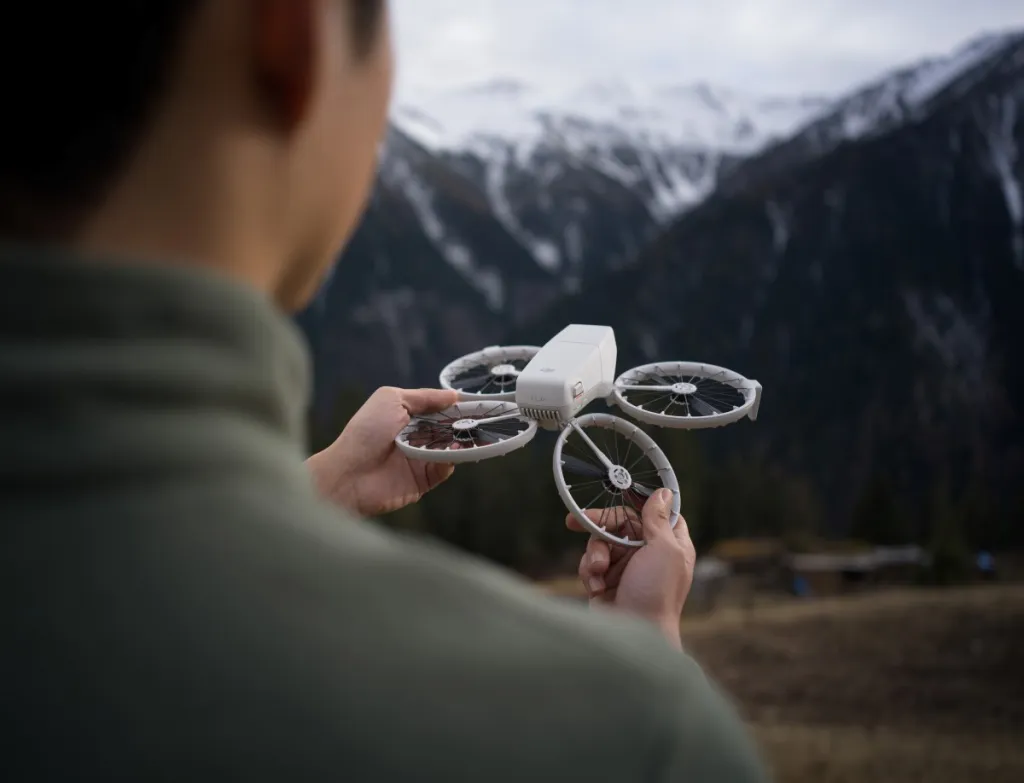
The DJI Flip arrived on January 14 as a lightweight, sub-250-gram aerial camera designed to remove friction from flying. It wasn’t positioned as a flagship or a replacement for the Mavic line. Instead, it leaned into simplicity: palm takeoff, subject tracking, and a camera system capable enough to deliver sharp photos and stabilized video without demanding pilot expertise.
With a 1/1.3-inch sensor, 48-megapixel stills, and a true 3-axis gimbal, Flip blurred the line between toy and tool — and did so intentionally. It felt like DJI reinforcing a familiar theme for 2025: lowering the barrier to entry while keeping image quality respectable.
Osmo Mobile 7 series

A month later, DJI turned its attention to smartphones.
Released on February 18, the Osmo Mobile 7 series wasn’t a radical reinvention, but it didn’t need to be. By 2025, smartphones were already the primary camera for millions of creators. DJI’s goal here was refinement: smarter tracking, better ergonomics, integrated lighting, and smoother coordination with its software ecosystem.
ActiveTrack improvements made it easier to stay locked on subjects, while battery and handling tweaks made the gimbal more practical for longer shoots. In the context of 2025, Osmo Mobile 7 felt like DJI doubling down on tools that sidestep many regulatory headaches altogether — phones paired with stabilization, not standalone cameras with radios of their own.
DJI RS 4 Mini
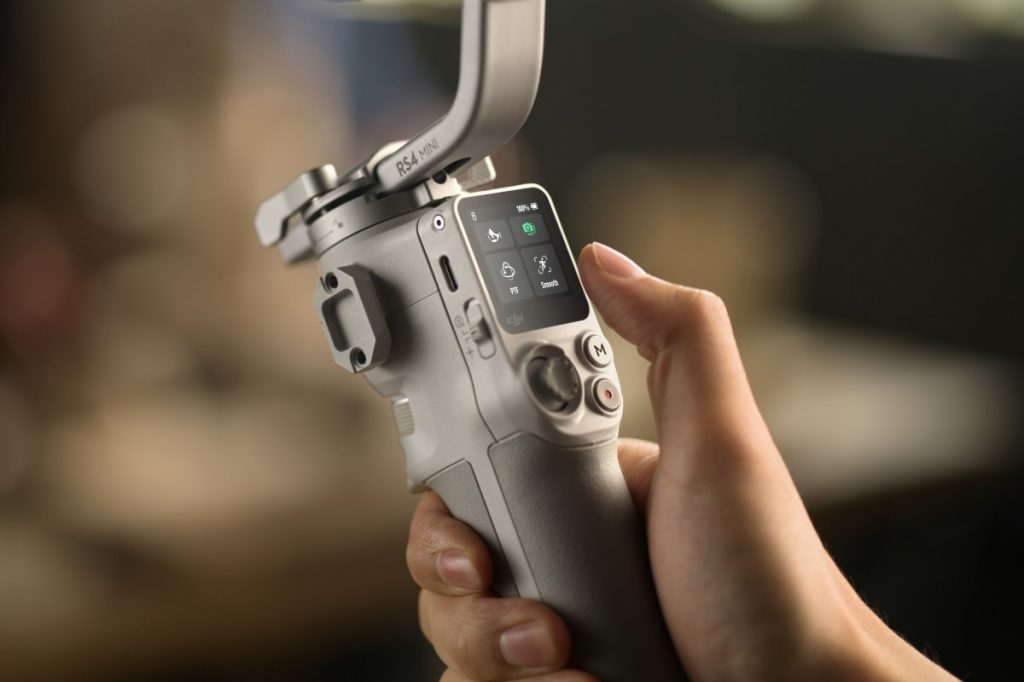
Just days later came the RS 4 Mini, a product that spoke directly to solo shooters and small crews.
Compact, lightweight, and capable of stabilizing mirrorless cameras without the bulk of larger rigs, the RS 4 Mini emphasized portability without sacrificing performance. It was the kind of tool that fits naturally into a creator workflow that jumps between handheld, drone, and mobile shots — exactly the ecosystem DJI has been building toward for years.
It also reinforced a subtle 2025 pattern: products that are easier to certify, easier to ship, and easier to integrate.
DJI Mavic 4 Pro

If any product defined DJI’s confidence in 2025, it was the Mavic 4 Pro.
This wasn’t a cautious release. It was a statement. Featuring a high-resolution Hasselblad camera, 6K video capture, and class-leading image quality, the Mavic 4 Pro pushed aerial imaging further into professional territory, without abandoning portability.
For filmmakers and advanced creators, it represented DJI at full strength. For the broader market, it was proof that even amid regulatory uncertainty, the company wasn’t dialing back its ambitions in the air.
New: Winter flying tips every DJI drone pilot should know
DJI Osmo 360

Mid-summer brought one of DJI’s most interesting camera launches of the year.
Osmo 360 marked DJI’s serious entry into immersive imaging, pairing high-resolution 360-degree capture with larger sensors and color profiles that appealed to more advanced users. This wasn’t a novelty camera designed for quick social clips alone. It supported workflows that included color grading, reframing, and professional output.
In a year where versatility mattered, Osmo 360 stood out as a product that expanded creative options rather than narrowing them.
DJI Mic 3
Audio often lags behind video in consumer tech, but DJI made sure that wasn’t the case in 2025.
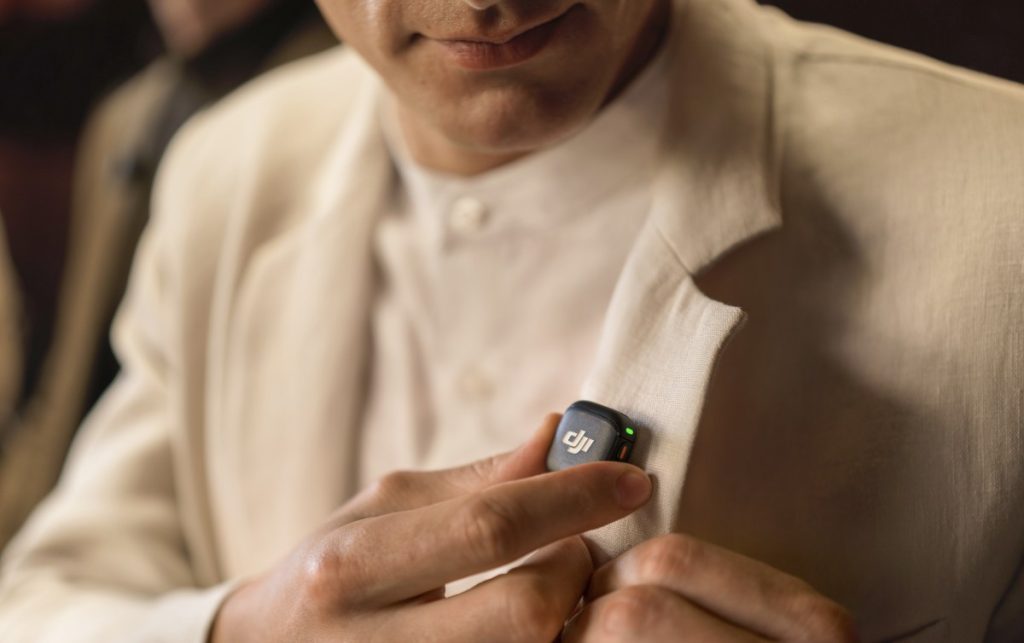
The DJI Mic 3 built on earlier versions with support for more complex setups, improved interference resistance, and features like timecode synchronization that signaled serious intent. It wasn’t just for vloggers anymore; it was for interviews, multi-camera shoots, and production environments where clean audio isn’t optional.
Mic 3 also underscored something important: DJI wasn’t just shipping cameras. It was reinforcing the entire creator stack.
DJI Mini 5 Pro
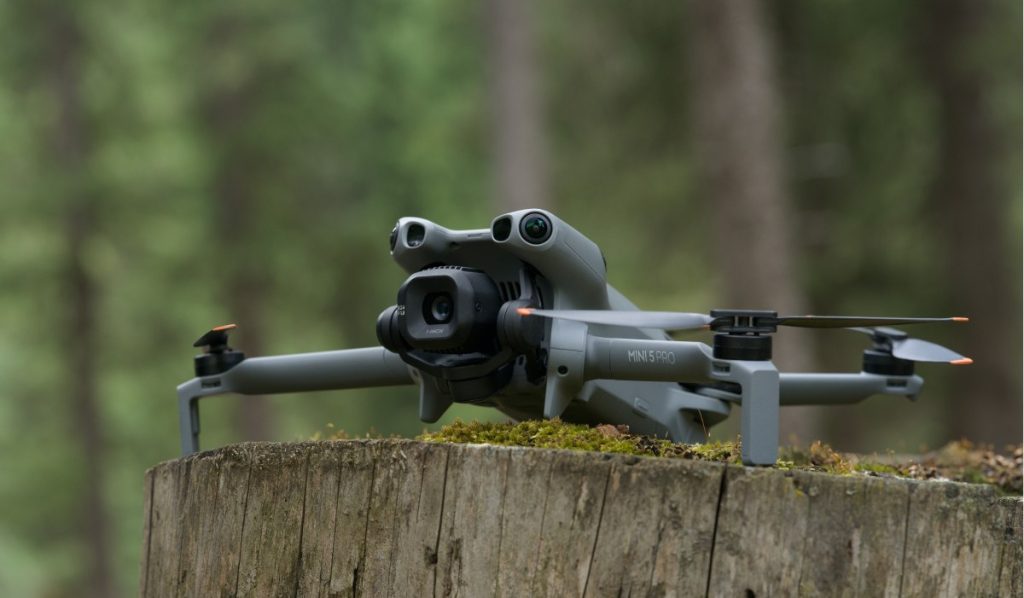
The Mini line has always been about doing more with less, and the Mini 5 Pro, released on September 17, pushed that idea further than expected.
With a one-inch sensor, high-frame-rate 4K video, and a wide-range gimbal capable of vertical shooting, the Mini 5 Pro delivered image quality that would have seemed unthinkable in a sub-250-gram drone just a few years ago. For creators navigating regulations, weight limits, and travel restrictions, Mini 5 Pro felt like DJI reading the room, and responding with precision.
Also see: Automated waypoint flying: How DJI drones plan perfect shots
DJI Osmo Nano

Just days later, DJI went smaller still.
Osmo Nano was designed for moments when even an action camera feels like too much. Compact, magnetically mountable, and capable of stabilized 4K capture, it fit into pockets, backpacks, and unconventional shooting setups.
In the context of 2025, Osmo Nano wasn’t about specs alone. It was about flexibility — a recurring theme across DJI’s releases this year.
More: DJI ending support for iconic Mavic Mini drone, OG Pocket camera
Osmo Mobile 8
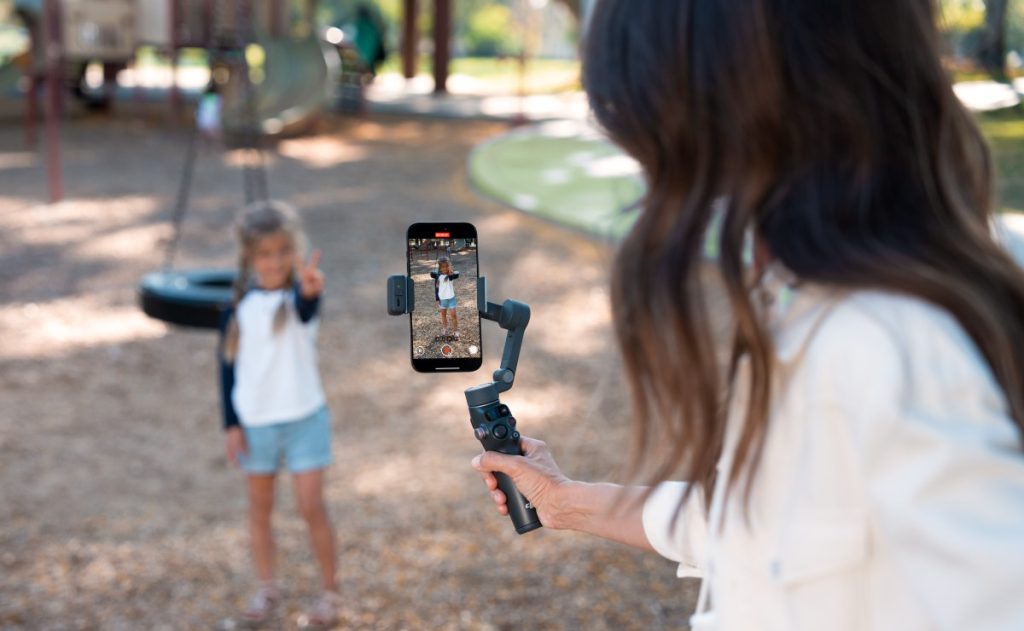
As the year wound down, DJI refreshed its smartphone gimbal lineup again with Osmo Mobile 8.
This update focused on refinement rather than reinvention: smoother tracking, better balance, and more intuitive controls. It reinforced DJI’s commitment to smartphones as a central pillar of modern content creation — and to accessories that enhance them without introducing unnecessary complexity.
DJI Neo 2

Neo 2 targeted the opposite end of the spectrum from the Mavic 4 Pro.
Designed for beginners and casual users, Neo 2 emphasized ease of use: gesture control, intelligent tracking, obstacle sensing, and built-in storage. It lowered the barrier to aerial footage without pretending to be something it wasn’t.
In a year defined by strategic releases, Neo 2 filled a clear role — welcoming new users into the ecosystem.
Osmo Action 6
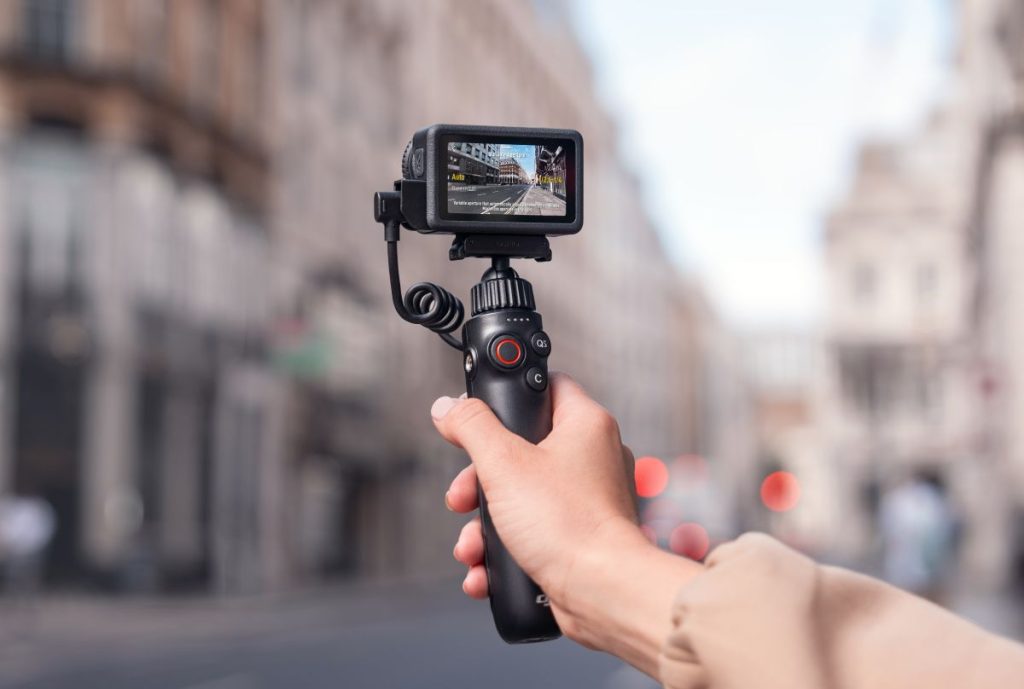
Osmo Action 6 wrapped up DJI’s consumer year with meaningful, practical upgrades rather than flashy gimmicks. The camera features a larger sensor for noticeably better low-light performance, improved dynamic range for high-contrast scenes, and DJI’s latest RockSteady and HorizonSteady stabilization for smoother footage during fast movement.
Related: DJI Osmo Action 6 camera just leveled up with 8K video
Expansion beyond cameras and drones
While consumer launches dominated headlines, DJI spent 2025 continuing to develop enterprise solutions — from software platforms to hardware supporting public safety, inspection, and industrial operations. That parallel effort mattered.
It showed that DJI wasn’t betting everything on a single outcome in the US retail market. The company was expanding capabilities where demand remained strong, even as regulatory uncertainty persisted.
What made DJI’s 2025 push even more notable was that it didn’t stop at cameras, drones, or creator tools. While most of the attention stayed on aerial and imaging gear, the company quietly expanded into home and lifestyle technology, applying the same core strengths — sensing, autonomy, and power management — to entirely new categories.
One of the clearest signals came with DJI Romo, the company’s first serious move into the robot vacuum space. Rather than treating home cleaning as a side project, DJI leaned heavily on its aviation DNA. Romo uses advanced visual navigation, LiDAR-based mapping, and AI-driven obstacle avoidance — technologies DJI has refined for years in drones — to deliver precise room mapping, intelligent path planning, and confident navigation around furniture, pets, and clutter. The result feels less like DJI dabbling in smart home gear and more like the company deliberately extending its autonomy expertise from the sky to the living room.

Power was the other major home-focused pillar. Throughout 2025, DJI continued expanding its DJI Power lineup, rolling out higher-capacity portable power stations designed not just for outdoor use, but also for home backup and professional workflows. Models like the Power 1000 V2 and Power 2000 emphasized quiet operation, fast charging, long-life LiFePO4 batteries, and enough output to run everything from camera rigs and laptops to essential household appliances during outages. For creators, these units doubled as mobile power hubs; for homeowners, they quietly positioned DJI as a serious player in personal energy storage.
Taken together, Romo and the Power series revealed something important about DJI’s strategy in 2025. Even as regulatory uncertainty loomed over parts of its US business, the company wasn’t narrowing its focus. Instead, it was broadening its footprint, exploring adjacent consumer categories where its expertise in robotics, perception, and power systems could translate into everyday utility — without relying on a single product category or regulatory outcome.
In hindsight, 2025 may stand out not because DJI faced pressure, but because of how it responded to it. This wasn’t a year of grand statements or public brinkmanship. It was a year of execution. DJI treated uncertainty as a reason to move deliberately, not defensively. It shipped products that were ready, strengthened its ecosystem, and ensured that creators had more tools, not fewer. What happens next remains an open question. But one thing is already clear: 2025 wasn’t a pause for DJI. It was a push.
More: Rewind 2025: Every Insta360 camera and gadget released this year


FTC: We use income earning auto affiliate links. More.


Comments