
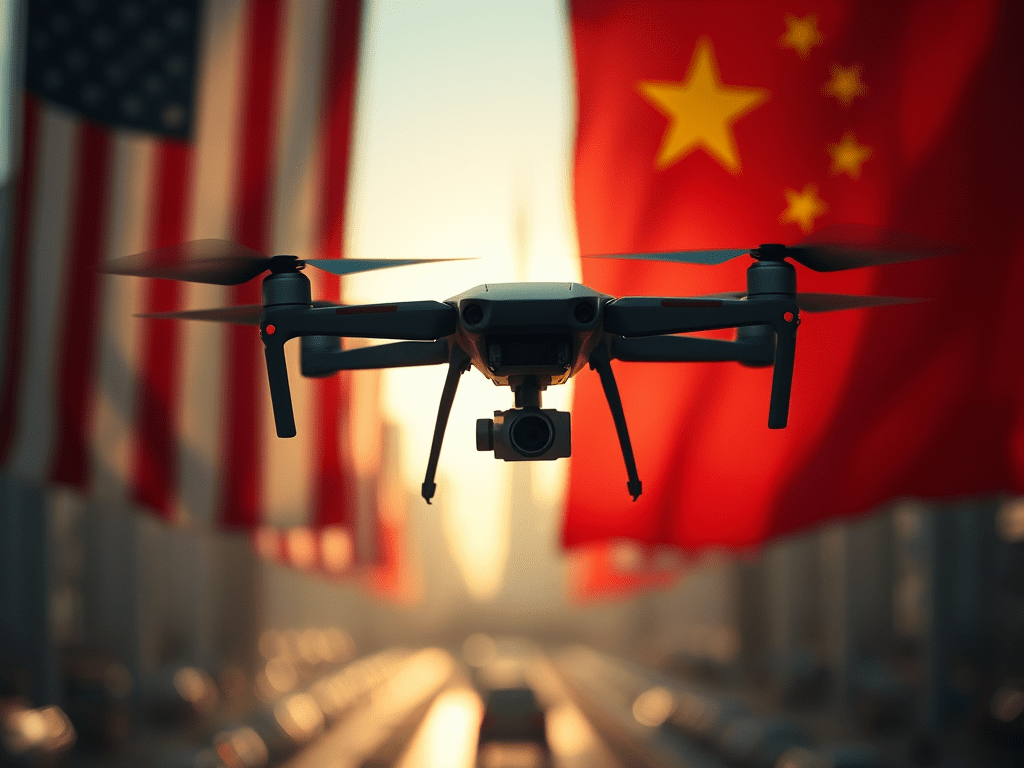
In a surprising twist to what was widely described as a sweeping ban on new foreign-made drones, the Federal Communications Commission (FCC) has now carved out significant exceptions that allow certain imported drones and critical components to continue entering the US market through the end of 2026.
In a new public notice, the FCC confirms that certain drones and drone components will be exempt from its sweeping Covered List restrictions, following a second national security determination from the Department of War.
The move doesn’t undo the broader crackdown on new foreign drone approvals, but it does clarify that not all drones are being treated the same.
And for operators, agencies, and manufacturers trying to navigate what comes next, those details matter.
A quick recap: Why new drone approvals stopped
As we reported earlier, the FCC’s action was not a unilateral decision. It followed a White House-convened interagency national security review that concluded drones and critical drone components produced in foreign countries pose “unacceptable risks” to US national security and public safety.
That determination, made under Section 1709 of the FY25 National Defense Authorization Act, directed the FCC to update its Covered List — a designation that prevents affected equipment from receiving FCC authorization. Without that authorization, new devices cannot be legally imported, marketed, or sold in the United States.
Crucially, the FCC emphasized then, and has reiterated since, that existing drones already approved or already in use are not impacted. Nothing is being grounded. Nothing is being recalled. The policy is about what comes next, not what’s already flying.
Related: DJI responds to US drone blacklist decision
Update: US drone import ban now has select exceptions
The latest update stems from a follow-up determination the FCC received on January 7, 2026, this time from the Department of War. That determination carved out two specific categories of drones and components that, at least for now, do not pose unacceptable national security risks and therefore should not remain on the Covered List. Those categories are:
- Uncrewed aircraft systems and components included on the Defense Contract Management Agency’s Blue UAS Cleared List
- UAS and components that qualify as “domestic end products” under the Buy American Standard
So, who actually gets through the gate? Systems from companies such as Parrot, Teledyne FLIR, Neros Technologies, Wingtra, Auterion, ModalAI, Zepher Flight Labs, and AeroVironment — all firms that already have deep ties to US government, defense, or enterprise drone programs. A parallel list of imported critical drone components that can continue entering the country includes manufacturers such as Nvidia, Panasonic, Sony, Samsung, ModalAI, and ARK Electronics.
It’s important to note these exemptions are time-limited and currently apply only through January 1, 2027. But for now, the FCC’s Public Safety and Homeland Security Bureau has updated the Covered List to formally exempt those systems and components.
New: Chinese drone ban update: Why DJI is still stuck, and what changed
What is Blue UAS, and why it matters
For readers outside defense circles, Blue UAS is a Department of War-led program designed to identify drone systems that meet stringent cybersecurity, supply-chain, and operational requirements for government use.
Being on the Blue UAS Cleared List means a drone has already undergone extensive vetting across hardware, software, manufacturing, and data-handling practices. In other words, these are systems the US government already trusts enough to deploy.
By exempting Blue UAS-listed systems, the FCC is effectively aligning its market controls with existing defense procurement realities — ensuring that trusted drones already cleared for government missions aren’t accidentally swept up in a blanket restriction.
The second exemption covers drones and components that qualify as “domestic end products” under federal Buy American rules. This is a significant signal. It reinforces that the policy goal isn’t simply to block foreign technology, but to actively create space for US-based manufacturing and supply chains to scale.
For domestic drone makers, and for integrators sourcing US-made components, this exemption helps preserve market access while the broader industrial base ramps up.
What this does not change for DJI, Autel Robotics
Despite the exemptions, the core structure of the FCC’s earlier action remains firmly in place. The default position is still that foreign-produced drones and critical components are included on the Covered List unless the Department of War or the Department of Homeland Security makes a specific determination otherwise. That means:
- New foreign drone models, such as those from DJI and Autel Robotics, still cannot receive FCC authorization
- The US market remains closed to unapproved new entrants
- Exemptions are conditional, revocable, and time-limited
The FCC also reiterates that it will continue updating the Covered List as it receives new determinations from national security agencies.
For everyday drone pilots, the takeaway remains reassuringly consistent:
- Your existing drone is still legal
- Your current operations aren’t changing
- There’s no sudden shutdown coming
For public-safety agencies and government contractors, the picture is more nuanced. Procurement decisions are now inseparable from supply-chain provenance, national security reviews, and future eligibility under federal rules.
Taken together, the FCC’s original action and this latest update reveal a system under construction. The US wants to build a framework that prioritizes trusted supply chains, domestic production, and government-vetted platforms, while allowing limited off-ramps where security agencies are confident in the risk profile.
More: DJI dropping support for Mavic Mini drone, Osmo Pocket


FTC: We use income earning auto affiliate links. More.


Comments