
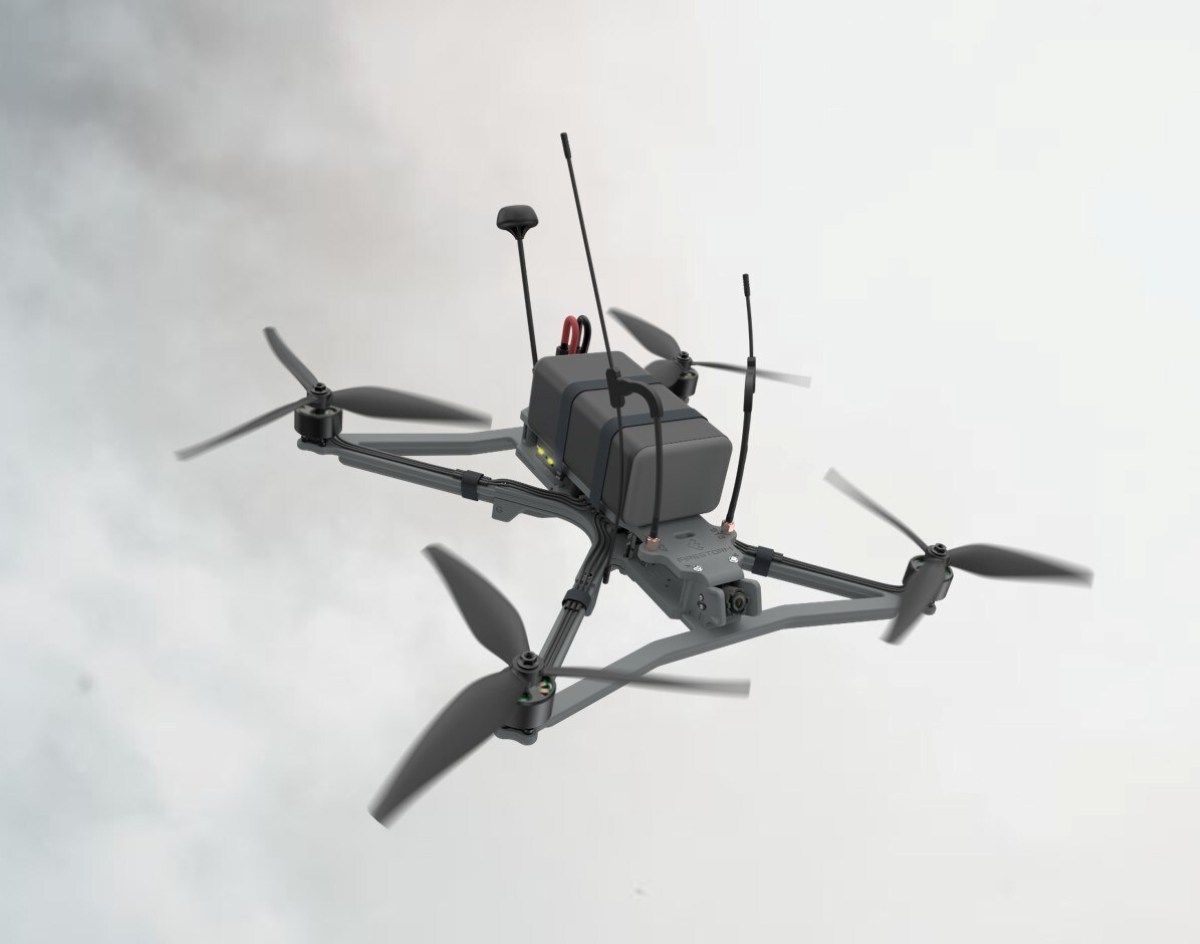
Two defense-tech companies — one focused on rapid manufacturing, the other known for battle-tested First Person View (FPV) drones — are teaming up to build what they say is a next-gen small drone designed specifically for modern combat. Firestorm Labs and Orqa have announced a partnership to produce the Firestorm Squall, a Group 1 FPV quadcopter designed to meet the needs of US and allied military forces. The pitch is straightforward but timely: US-built, NDAA-compliant drones that can be manufactured at scale, fast, and close to where they’re needed.
At a time when small, agile drones are shaping modern battlefields, FPV platforms have become especially important. They’re cheap compared to large aircraft, quick to deploy, and increasingly decisive in tactical situations. Orqa brings firsthand experience to that reality. The company’s FPV technology has been proven in active conflict zones, including Ukraine, where drones are used daily in high-risk, fast-moving missions.
Firestorm, meanwhile, specializes in something just as critical: how those drones get built. The company focuses on expeditionary and additive manufacturing, essentially bringing the factory closer to the front line. Its containerized “xCell” platforms are designed to produce drones, components, and spare parts wherever they’re needed, rather than relying on long and fragile supply chains.
The Firestorm Squall combines those strengths. The drone will be built in the US using NDAA-compliant components, a key requirement for Pentagon buyers and US allies looking to reduce reliance on foreign supply chains. For Orqa, the deal opens the door to Firestorm’s US-based infrastructure and manufacturing scale. For Firestorm, it adds a combat-proven FPV platform to its growing portfolio.
“In the world of FPV technology, there’s no better manufacturer than Orqa,” says Firestorm cofounder and CEO Dan Magy, pointing to Orqa’s frontline experience as a major differentiator. “If your life’s on the line, you want Orqa.”
Orqa cofounder and CEO Srdjan Kovacevic returns the praise, calling Firestorm a standout in a crowded drone innovation space and highlighting its additive manufacturing capabilities as “ground-breaking.”
While neither company has shared detailed performance specs or pricing, the emphasis is clearly on scale and affordability. That matters. Recent conflicts have shown that winning isn’t just about having the most advanced drone — it’s about having enough of them, and being able to replace losses quickly.
The companies say this partnership builds on years of collaboration and could expand into deeper technology sharing and in-theater platform development. In plain terms, drones could eventually be produced or adapted much closer to where troops are operating.
For US defense customers, that combination — mass production, domestic manufacturing, and combat-tested design — hits several priorities at once. And for a drone market increasingly shaped by real-world battlefield demands, the Firestorm Squall is positioned as a sign of where military drone development is heading next.
More: Wisconsin Police deploy drone to catch serial park pooper


FTC: We use income earning auto affiliate links. More.




Comments