
Imagine calling 911 and, before the first police officer or firefighter arrives, a drone is already hovering over the scene, streaming live video back to dispatchers and first responders. That’s the future BRINC says it’s building, and it just secured another major financial boost to make it happen.
The Seattle-based public safety drone company announced it has raised $125 million in a funding round led by Motorola Solutions, with participation from venture capital firm Index Ventures and Figma founder and CEO Dylan Field. The new investment pushes BRINC’s total funding to well over $250 million and gives the company fresh resources to dramatically expand its manufacturing and product lineup.
But perhaps the biggest takeaway is BRINC’s ambition: put a 911 response drone on the roof of every police and fire station in the United States.
There are roughly 80,000 police and fire stations across the country, making it one of the most ambitious visions yet for drone-assisted emergency response.
“Every second matters in an emergency,” says BRINC founder and CEO Blake Resnick. “Our 911 response drones put eyes on scene before first responders arrive, giving everyone the situational awareness they need to act decisively and keep people safe.”
For emergency agencies, that extra minute — or even a few seconds — can make a huge difference. A drone arriving first can help responders determine whether a suspect is armed, identify victims needing immediate assistance, assess a structure fire, or simply confirm what’s actually happening before personnel reach the scene.
New: Zipline’s drone delivery boom brings Tesla, Waymo, Uber veterans
The fresh funding will help BRINC scale up quickly. By the end of the year, the company plans to move into a new manufacturing facility that’s three times larger than its current factory. The expansion is expected to significantly increase production as more agencies adopt drone-first response programs.
The investment comes as demand for public safety drones continues to surge. According to BRINC, the company more than tripled its revenue in 2025 while increasing monthly production capacity fivefold. This year alone, it says it has signed nearly four times as many 911 response drone contracts as it had during the same period last year.
Among the agencies deploying BRINC technology are the Los Angeles Fire Department, the St. Louis Police Department, and hundreds of other public safety organizations nationwide.
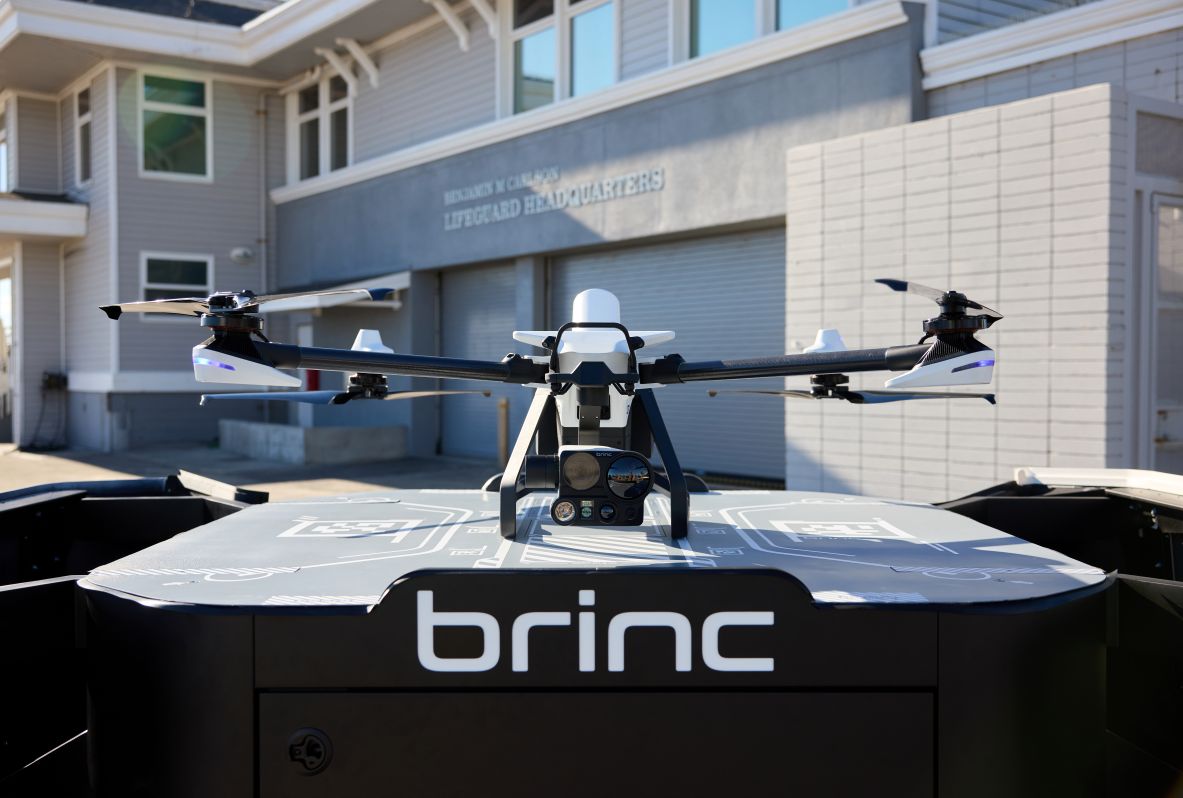
BRINC has steadily expanded beyond tactical indoor drones into a broader ecosystem designed for emergency services. Its Lemur 2 drone is built for indoor operations, allowing officers to search buildings remotely before entering potentially dangerous situations. The Responder platform focuses on extended flight time for emergency response missions, while the company’s newest system, Guardian (pictured above), is designed specifically for rapid 911 response and is intended to handle missions that traditionally required a helicopter.
One of BRINC’s biggest competitive advantages is its close relationship with Motorola Solutions. Because the two companies have integrated their technologies, dispatchers can quickly launch drones using the same communication ecosystem many emergency agencies already rely on. That tight integration could make it easier for departments to incorporate drones into everyday emergency operations rather than treating them as standalone tools.
The announcement also reflects a broader shift happening across US public safety agencies. While drones were once viewed primarily as specialty equipment for SWAT teams or search-and-rescue missions, many departments are now building Drone as First Responder (DFR) programs that dispatch aircraft immediately after a 911 call. In many situations, the drone reaches the scene well before officers, providing real-time intelligence that can improve decision-making and, in some cases, reduce unnecessary risk for both responders and the public.
For BRINC, the latest funding round is less about adding another drone to its catalog and more about scaling an entire emergency response model. Whether the company ultimately succeeds in placing a drone on every police and fire station roof remains to be seen, but with more than a quarter-billion dollars in backing, growing manufacturing capacity, and rising adoption among first responders, it’s making one of the biggest bets yet on drones becoming a standard part of every 911 response.
More: Drone mapping firm Emesent lands $17 million for AI growth


FTC: We use income earning auto affiliate links. More.




Comments