
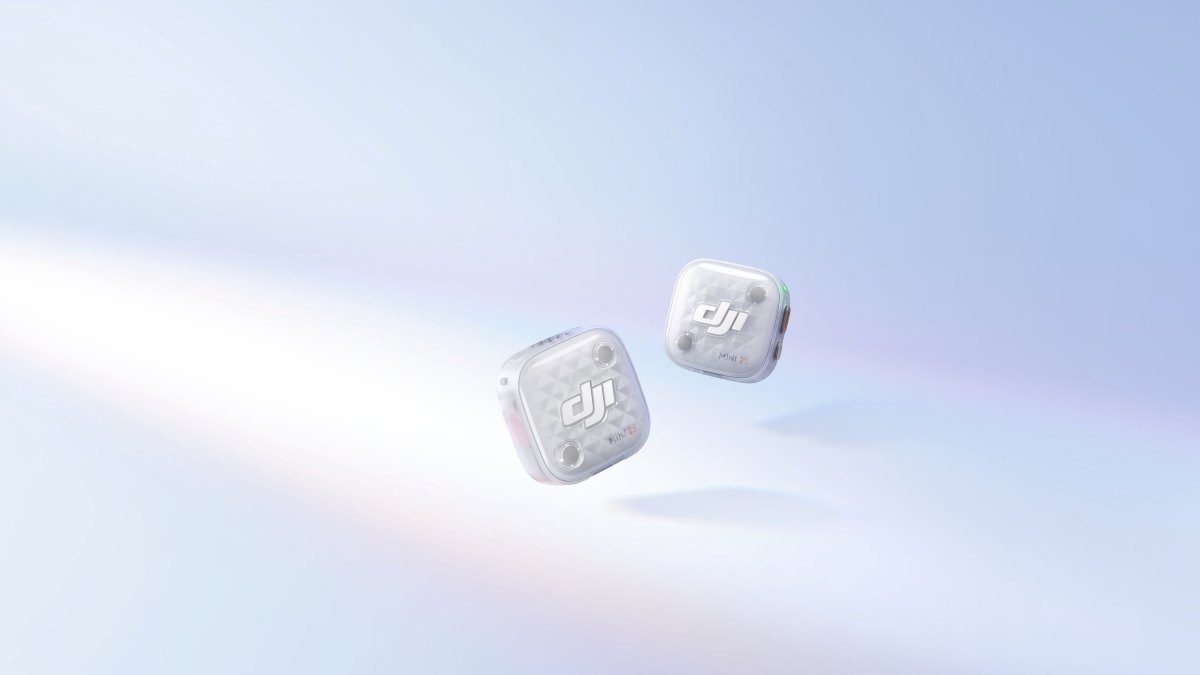
DJI has added another microphone to its increasingly crowded audio lineup, and this one brings a feature many creators have been asking for: built-in recording. The new DJI Mic Mini 2S comes with 32-bit float internal recording, up to 28 hours of onboard audio storage, upgraded AI noise canceling, and support for up to four transmitters. But for US customers, there is a familiar problem. DJI has not announced official availability or US pricing for the new microphone.
That puts the Mic Mini 2S in the growing category of new DJI products that are available in other markets but remain in limbo for American buyers.
The headline feature here is internal recording. Each Mic Mini 2S transmitter has approximately 14.5GB of built-in storage, enough for up to 28 hours of recording in the default 24-bit mode. Switch to 32-bit float recording and that drops to about 22 hours, but the advantage is greater flexibility when dealing with sudden changes in volume.
In other words, if you’re recording an interview and someone suddenly gets much louder, you’re less likely to end up with unusable audio because the recording clipped. That’s particularly useful for creators shooting in unpredictable environments where there isn’t always time to carefully set audio levels.
New: FCC could soon ban DJI drones already approved and sold in America
DJI has also added two levels of AI noise canceling. The Basic setting is designed to reduce things such as air-conditioning, fans and indoor background noise, while Strong mode is aimed at noisier outdoor environments.
There are a few other automatic tools aimed at making audio easier to manage. Clipping Control can tame sudden volume spikes, while Loudness Balance adjusts levels to keep voices more consistent. Creators can also choose between Regular, Bright and Rich voice profiles.
The other big change is the ability to connect up to four transmitters to a single Mic Mini 2S receiver. That makes the system more interesting for podcasts, group interviews and roundtable discussions where two microphones simply aren’t enough.
The Mic Mini 2S can also work with existing DJI Mic Mini and Mic Mini 2 transmitters, allowing users to build a larger setup without replacing everything. The transmitter itself weighs about 12 grams and can be attached using either a clip or magnet.
DJI is also leaning heavily into its camera ecosystem. The Mic Mini 2S transmitter can connect directly to select Osmo devices without a receiver, using DJI’s OsmoAudio system. Supported products include the Osmo Pocket 4P, Osmo Pocket 4, Osmo 360, Osmo Nano and Osmo Action 6. Direct connections deliver 48kHz/24-bit audio.
For US creators, though, the most important detail may be what DJI hasn’t said. The company has launched the Mic Mini 2S in multiple international markets, but there is still no official US product listing, US price, or availability date. That means American buyers looking for DJI audio gear right now may want to stick with the models already available rather than trying to import the newest one.
And there are still plenty of options, including the original DJI Mic Mini (20% off), Mic 2 (26% off), and DJI Mic 3 (37% off). The original Mic Mini remains the lightweight, straightforward option, while Mic 2 and Mic 3 offer more advanced features for creators who need a more capable wireless audio setup.
So, yes, the Mic Mini 2S is an interesting upgrade, particularly for anyone who has ever lost a great take because of bad audio levels. But for US buyers, the bigger question isn’t what the new microphone can do. It’s when, or whether, DJI will officially bring it to the US.
More: Insta360’s new camera is built for trips, trails, and everything between


FTC: We use income earning auto affiliate links. More.



Comments