
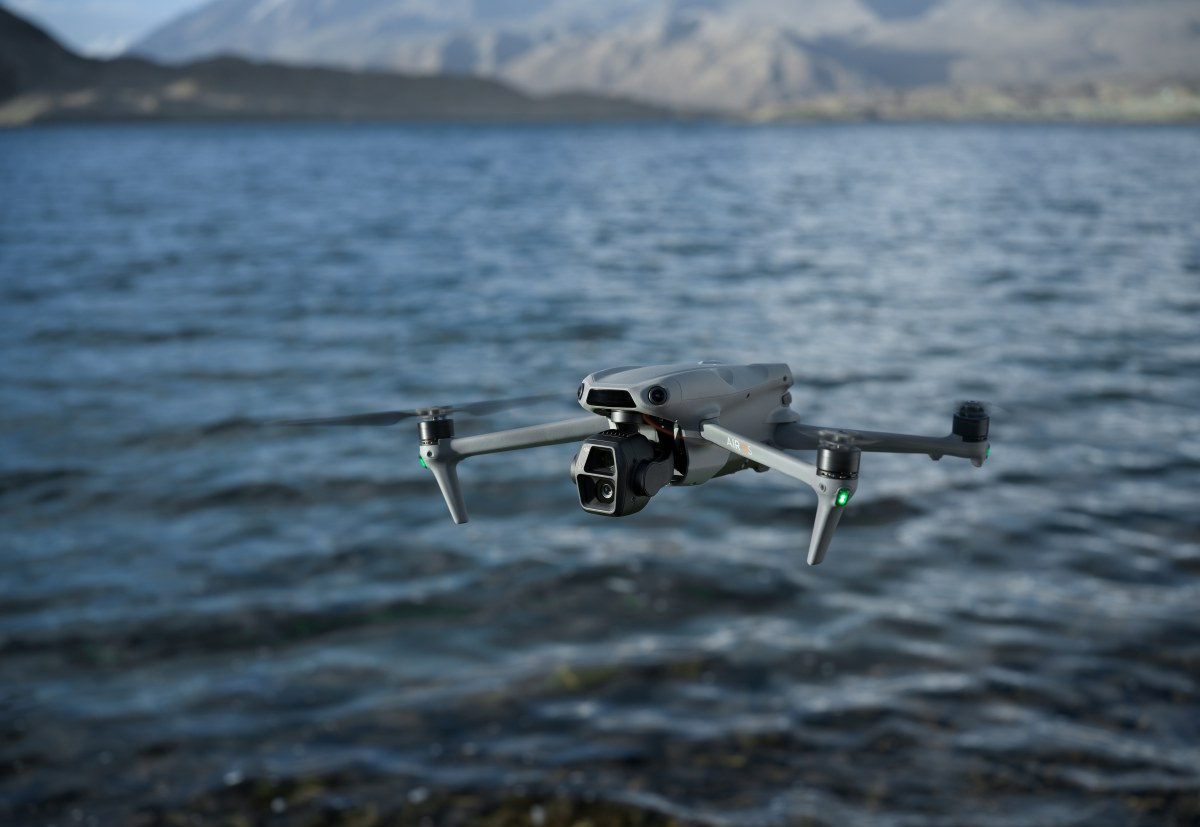
Could DJI actually escape the Pentagon’s blacklist? A new court ruling suggests it’s no longer out of the question.
The world’s largest drone maker just secured its biggest legal win in years after a federal appeals court found a major flaw in part of the government’s case. While DJI remains on the blacklist for now, the decision forces a lower court to take another look, offering the company fresh hope that the controversial designation may not be as permanent as many assumed.
For millions of Americans who fly DJI drones for photography, filmmaking, farming, inspections, and public safety, the ruling is significant. It doesn’t immediately change anything for consumers, but it marks the strongest judicial pushback yet against one of the Pentagon’s key arguments for keeping DJI on its list of companies allegedly tied to China’s military.
What happened?
On August 14, the US Court of Appeals for the District of Columbia Circuit partially reversed an earlier decision that had sided with the Department of Defense in DJI’s lawsuit challenging its designation as a Chinese Military Company.
The appeals court did not remove DJI from the Pentagon’s blacklist. Instead, it ruled that the lower court made an error when it upheld one specific part of the Defense Department’s reasoning without properly examining the evidence behind it. As a result, the case has now been sent back to the district court for another review.
That’s a procedural victory rather than a final legal win, but it’s an important one because it reopens a central question in DJI’s years-long battle with the US government.
New: This DJI Flip discount deal stands out amid fresh drone tariff uncertainty
The issue that changed everything
The three-judge appeals panel rejected three of DJI’s four arguments. The court agreed with the lower court that DJI wasn’t denied due process, that the Pentagon had sufficient grounds to conclude the company received certain forms of Chinese government assistance, and that the Defense Department didn’t improperly single DJI out compared with similar companies.
But the judges reached a different conclusion on another issue: whether DJI contributes to China’s defense industrial base.
According to the ruling, the Pentagon’s report included an entire section titled “DJI Contributes to the Chinese Defense Industrial Base.” The problem? Every word beneath that heading was redacted in the public version of the record.
The appeals court said the district court couldn’t simply accept the government’s conclusion without reviewing the actual reasoning behind it.
“There is… no publicly stated rationale for why the Secretary believes DJI contributes to the Chinese defense industrial base,” Judge Bradley Garcia wrote in the opinion.
The appeals court added that government lawyers couldn’t fill in the gaps afterward with their own explanations. Instead, the lower court must evaluate the Pentagon’s actual reasoning, including reviewing classified evidence if necessary.
Why DJI says this matters
DJI has welcomed the ruling, describing it as an important step toward overturning what it has long called an unjust designation.
“The Court’s finding that the public record contained insufficient evidence is a significant step toward correcting an unjustified designation,” a DJI spokesperson said.
The company reiterated that it is a privately held civilian technology company, not a military business, and said it has consistently opposed the use of its drones in combat while taking steps to discourage military use of its products.
“We remain committed to the responsible development of civilian technologies, from drones to handheld imaging products. We look forward to continuing to set the record straight as the case moves forward,” the spokesperson said.
The Department of Defense declined to comment because the litigation remains ongoing.
Why the blacklist matters
DJI was first added to the Pentagon’s Chinese Military Company list in 2022.
But being placed on the list doesn’t prevent Americans from buying DJI drones. Models like the DJI Mini 5 Pro, Air 3S, Flip, and Mavic 4 Pro remain widely available across the United States.
Instead, the designation primarily affects the federal government’s ability to do business with listed companies. The Defense Department is prohibited from contracting directly with them, and broader procurement restrictions affecting purchases through third parties are scheduled to take effect in 2027.
DJI has argued that the designation has already caused serious commercial damage, saying it has lost business opportunities, been labeled a national security threat, and been excluded from contracts with multiple federal agencies.
It’s also worth noting that the lawsuit comes amid growing efforts in Washington to reduce US dependence on Chinese-made drone technology.
Despite years of political scrutiny, DJI remains the dominant force in both consumer and commercial drones. Its aircraft are widely used by photographers, construction firms, utility companies, farmers, surveyors, firefighters, and law enforcement agencies because they combine advanced features with comparatively affordable prices.
That dominance has also fueled bipartisan concerns that the US relies too heavily on Chinese drone manufacturers for critical infrastructure and public safety operations.
The Trump administration has made domestic drone manufacturing a strategic priority, including signing executive actions aimed at boosting American drone production and reducing reliance on foreign suppliers.
DJI, meanwhile, has repeatedly argued that geopolitical tensions shouldn’t determine how civilian technology companies are treated.
What’s next?
The case now returns to the district court, where the judge will reconsider the specific issue identified by the appeals court. This time, the court may examine classified evidence that wasn’t part of the public record when the earlier decision was made. That review could ultimately uphold the Pentagon’s position, or require the government to better justify its designation. Either way, DJI’s legal fight is far from over.
For now, the company remains on the Pentagon’s blacklist. But after years of setbacks, the latest ruling gives DJI something it hasn’t had in a long time: a genuine opportunity to challenge one of the US government’s most consequential actions against it.
More: Why America’s nuclear bases suddenly need DJI drones


FTC: We use income earning auto affiliate links. More.



Comments