
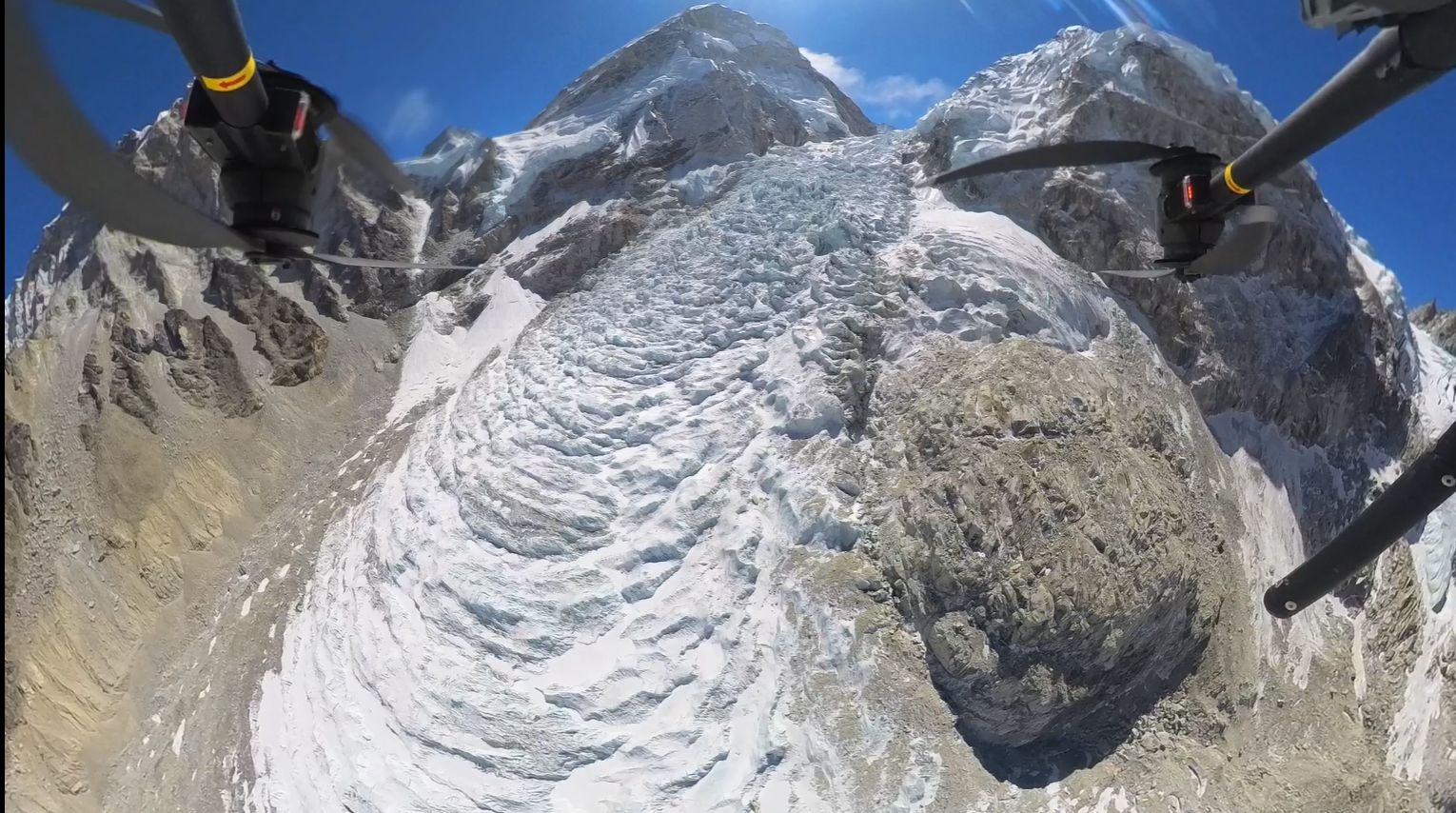
Who needs helicopters when you’ve got a drone flying oxygen tanks to 20,000 feet? DJI’s FlyCart 30 just pulled off a record-setting Everest season — saving Sherpas hours of danger and hauling trash off the world’s tallest mountain.
During the now-concluded 2025 spring climbing season, DJI’s heavy-lift delivery drone transported 1,259 kg of critical supplies and garbage across the treacherous Khumbu Icefall. The 25-day mission replaced dozens of risky trips usually made by Sherpas on foot, each requiring six to eight hours of hiking through some of the most dangerous terrain on Earth.
This wasn’t a trial run. It was the first full-scale, real-world deployment of drone-based logistics at extreme altitudes, and it worked.
From death zone to drone zone
The FlyCart 30 carried life-saving oxygen bottles, food, and climbing gear from Everest Base Camp (5,300 m) up to Camp 1 (6,000 m). Then it returned carrying bags of waste, reducing the environmental impact of climbing expeditions and protecting the fragile Himalayan ecosystem.
DJI worked with Nepal-based drone services company Airlift, adventure film crew 8KRAW, and certified mountain guide Mingma Gyalje Sherpa to make the project a reality.
“Last year, I lost three Sherpas in the Khumbu Icefall,” Mingma said during DJI’s 2024 test flights. “If our timing is off by even a few seconds, we can lose our lives. The drone changes everything.”
The FlyCart 30 used a self-detaching winch system to lower gear without needing to land. This was critical in Everest’s rugged, sloped terrain where safe drone landings aren’t always possible. The drone maintained stability in –15°C temperatures, low oxygen levels, and high winds — conditions that would ground most aircraft.
Each trip took only 6 to 12 minutes, compared to several hours on foot, dramatically improving both efficiency and safety. The drone’s maximum payload of 15 to 20 kilograms allowed it to haul everything from ropes and ladders to oxygen tanks and trash bags.
New: FCC greenlights DJI Neo 2 drone; will US Customs let it land?
Cleaning up the world’s highest dump
Everest’s growing popularity has left behind an ugly legacy: trash. Some 80+ tons of garbage have been removed in recent years, but waste continues to accumulate — including empty oxygen bottles, food wrappers, and human waste.
The FlyCart 30’s ability to fly waste down from Camp 1 is a big step forward for sustainable mountaineering. Fewer helicopter runs mean lower carbon emissions. Fewer porter trips mean fewer lives at risk.
Local officials are now working to scale drone-assisted cleanup efforts and are even training Sherpas as drone operators, turning them from human pack carriers into high-tech pilots.
Beyond Everest: A global workhorse
Launched globally in January 2024, the DJI FlyCart 30 drone is already making an impact worldwide. In Japan, it’s planting trees on steep slopes. In Norway, it’s aiding mountain rescue. In Mexico, it’s helping with solar panel installations. Even in Antarctica, the drone supports scientific missions in remote areas.
What makes the FlyCart 30 stand out is its versatility and toughness. With a range of up to 16 km, customizable payload bays, and the ability to auto-return when signals drop, it’s built for places where roads don’t go and helicopters can’t land.
Now, DJI and its partners are eyeing other Himalayan peaks for future drone operations. The success of this season proves that drone logistics isn’t just a cool concept — it’s a safe, scalable solution that could transform mountain expeditions, disaster response, and remote infrastructure projects.
More: Gaussian Splatting magic: DJI Terra’s biggest leap since launch


FTC: We use income earning auto affiliate links. More.




Comments