
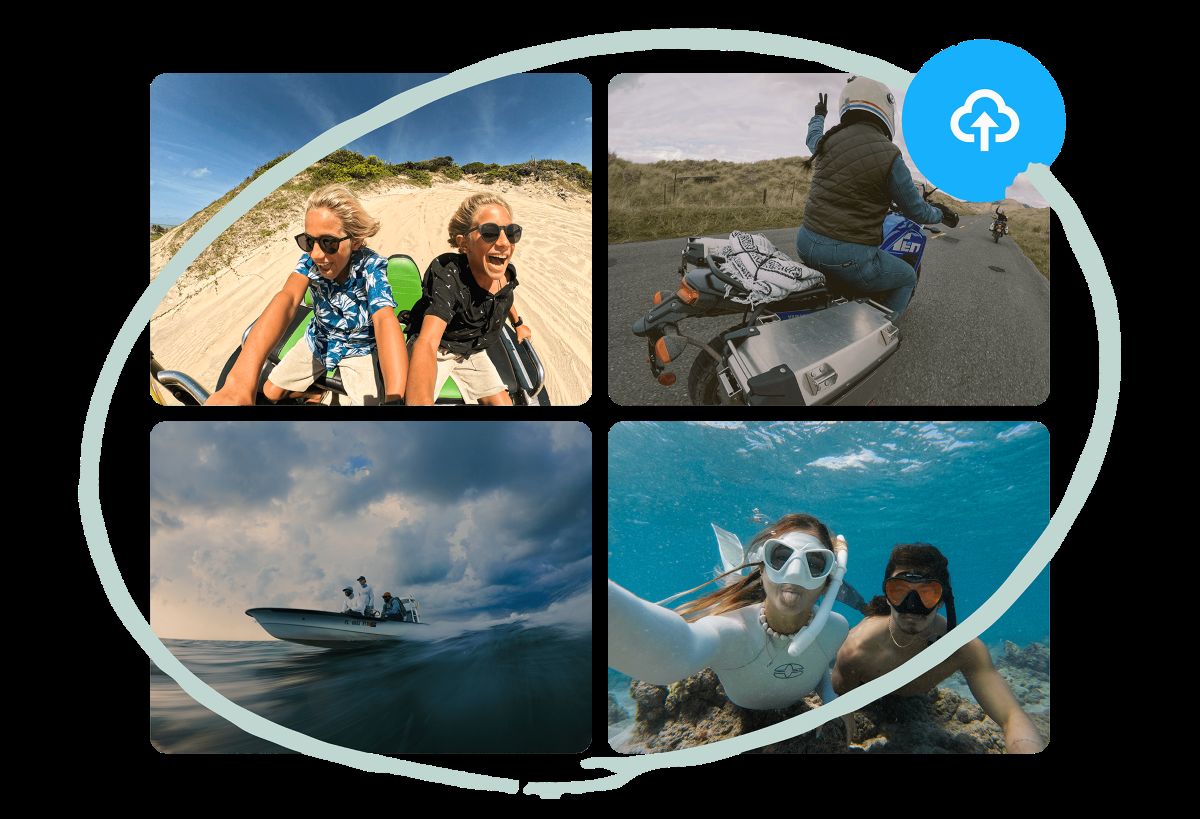
GoPro has long been the go-to camera for capturing moments that are anything but ordinary. From mountain bikers bombing down alpine trails, surfers riding towering waves, and travelers documenting epic road trips, to FPV (first-person view) drone pilots weaving through forests or skimming rooftops at full tilt — GoPro’s compact, rugged design and stunning image quality have made it a favorite for creators worldwide. Now, the company is giving those creators — especially US subscribers — a new way to turn their cloud-stored videos into income.
GoPro opt-in program for AI training
GoPro has announced the launch of an opt-in AI training program, allowing subscribers to license their user-generated content (UGC) to leading tech companies developing artificial intelligence systems. If chosen for licensing, creators earn 50% of the revenue GoPro receives from its partners.
It’s a voluntary program; only footage from subscribers who explicitly opt in will be considered. Participants can manage which videos are included and can opt out anytime.
“The GoPro community is one of the most prolific groups of documentarians in the world,” says Nicholas Woodman, GoPro’s founder and CEO. “We’re excited to help them monetize the growing demand for authentic, real-world video to train AI models.”
GoPro’s cloud library already holds over 450 petabytes of high-quality footage from all over the world — an incredibly rich dataset for AI developers looking to improve how their systems see, interpret, and respond to the real world.
Why drone and FPV footage is particularly valuable
While GoPro’s customer base is diverse, the FPV drone community captures footage with a unique set of qualities:
- Dynamic movement: FPV drones can swoop, roll, and fly through tight spaces, creating perspectives impossible with ground cameras.
- Varied environments: Drone pilots shoot everywhere — from snowy peaks to abandoned factories — providing AI models with a wide range of textures, lighting conditions, and obstacles.
- Precision and speed: High-frame-rate aerial footage offers AI developers valuable data for motion prediction and object tracking.
Whether mounted directly on a quadcopter frame or paired with lightweight drone-specific models like the GoPro Hero, Hero11 Black Mini, or Bones, these cameras are already an industry standard for FPV work. For drone pilots uploading their best flights to GoPro’s cloud, this new program could mean those thrilling runs now have a second life — and a payout.
New: HoverAir Aqua waterproof drone set to launch August 21
How AI training program works
- Invitation-only start: The rollout has begun with an invitation-only group of US subscribers, but the program will be expanded to all US subscribers over time.
- Full control over what’s shared: After opting in via the GoPro Quik app or website, you can select or deselect videos for the program. There’s a 7-day window after uploading any new footage to remove it from eligibility.
- You keep ownership: Creators retain all intellectual property rights. GoPro only gains a license to share opted-in videos with AI partners.
- Payment when licensed: Not every clip will be chosen, but if it is licensed, you’ll receive 50% of the revenue GoPro collects from its partner. Payments can be made via bank transfer, PayPal, Venmo, prepaid cards, or gift cards.
- Privacy considerations: GoPro says it will only work with AI companies that follow applicable privacy laws and guidelines.
Why AI developers want GoPro footage
AI systems — particularly those focused on visual recognition, robotics, and autonomous navigation — thrive on diverse, real-world data. A static dataset shot in controlled environments isn’t enough. They need footage showing:
- Sudden lighting changes (entering tunnels, sunset, reflections)
- Motion blur and stabilization challenges
- Moving subjects like people, animals, or vehicles
- Complex terrain and obstacles
This is where GoPro users shine. Whether it’s a hiker’s first-person trek through a canyon, a snowboarder navigating powder, or a drone pilot chasing rally cars, these clips provide AI with realistic, high-variance examples to learn from.
Let’s say you’re an FPV pilot who regularly uploads freestyle or cinematic flight videos to the GoPro cloud. Under this new program:
- A tech company working on autonomous drones could license your footage to train its obstacle-avoidance AI.
- A robotics firm could use your city-skimming shots to teach navigation in cluttered environments.
- A sports analytics startup might license your race footage to enhance motion-tracking algorithms.
In each case, your clip’s path from personal project to AI training material is straightforward — you just have to opt in.
Now, GoPro is upfront that not every participant will earn money; only licensed content will generate payouts. But for drone pilots who already invest in aircraft, batteries, and editing, even occasional licensing could help offset costs. And for non-drone creators — cyclists, skaters, divers, travelers — it’s a way to let existing footage work for you.
It’s also a move that positions GoPro at the intersection of creator economy and AI, while strengthening its role as more than just a hardware brand — it becomes a broker between creators and the tech industry.
More: Autel confirms end of EVO Nano, Lite consumer drone series


FTC: We use income earning auto affiliate links. More.

Comments