
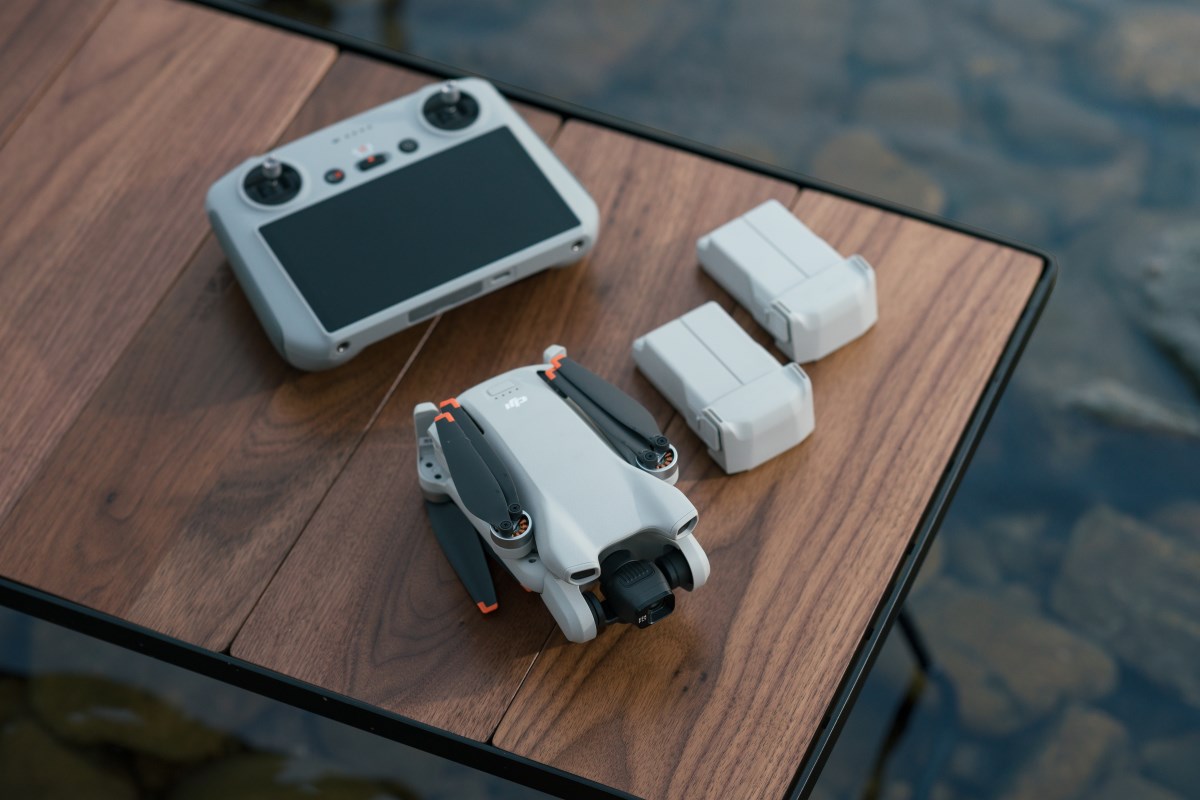
The Federal Communications Commission (FCC) is tightening its grip on foreign-made technology, and drone maker DJI may soon feel the heat. FCC Chairman Brendan Carr has announced that the agency will vote on new rules allowing it to revoke certifications for previously approved devices deemed national-security risks.
The proposal is part of a broader effort to close loopholes in US communications safeguards. If adopted, it would let the FCC not only block new product authorizations for companies on its “Covered List” (which already includes the likes of Huawei and Hikvision) but also revoke certifications for existing models if new concerns arise. And that’s where DJI’s fate could get complicated.
Carr says the new rules would give the FCC “new tools to safeguard our networks from insecure spy gear” and ensure that “foreign adversary-controlled devices” can’t enter or remain in the US market.
That’s a deliberately broad definition, and drones like those made by DJI could easily fit the criteria — even though the company builds privacy controls directly into its systems, barring even consumer users from syncing their flight logs to DJI servers, eliminating the potential for any kind of remote data access.
FCC’s expanding scope and what it means for DJI
The problem is, the FCC’s upcoming vote is less about specific companies and more about building a legal framework to act against any technology it deems “untrustworthy.”
DJI is far from hypothetical in this space. The Pentagon has placed DJI on its Chinese Military Companies list, forbidding its use in federal contracts; and the Department of the Interior grounded much of its DJI drone fleet over cybersecurity and foreign-parts concerns.
Now, the FCC’s forthcoming vote could expand its security rules in two key ways. First, it would allow the agency to prohibit the import, marketing, or sale of already-authorized devices if they’re later deemed a security risk. Second, it would close the “component parts loophole,” ensuring that covered manufacturers can’t slip banned technology into other products. Remember, Anzu Robotics, Skyrover?
In short, even if DJI isn’t immediately blacklisted, any products containing components from restricted entities — or future software dependencies — could be blocked from certification.
Chairman Carr emphasizes these steps are part of a “long-standing, bipartisan commitment” to protecting America’s networks. But for drone users, it’s a reminder that geopolitics can hit closer to home than expected, right down to what camera you can take to the sky.
Then there’s another layer of timing pressure on the world’s largest consumer drone maker: Under a clause in the 2025 National Defense Authorization Act (NDAA), DJI faces a crucial deadline: by December 23, 2025, a US national-security agency must complete a formal review of the company. If that doesn’t happen, or if the review raises red flags, then DJI could be added to the FCC’s Covered List by default.
Without FCC certification, no new DJI drones could be legally imported or sold in the United States. Retailers couldn’t restock. Repair shops couldn’t order parts. Even future software updates could be halted if they require FCC compliance.
This wouldn’t mean that existing drones would suddenly stop working. The FCC doesn’t have the power to “brick” previously sold products. But it could mark the end of DJI’s dominance in American skies — turning current models into collector’s items almost overnight.
New: DJI takes Pentagon back to court in escalating US drone ban fight
Narrowing window for DJI drone enthusiasts
As of now, DJI drones still remain legal to import and sell, but only barely. Retailers are already scrambling. Inventories have thinned; many popular models are listed as “out of stock” or are on backorder. The DJI US webstore shows all drone units as sold out. Meanwhile, major retailers like Amazon are showing limited stock, if any, for models beyond a select few.
Which models are still turning up in listings? Here’s a snapshot of what’s being quietly cleared out, and what may still be snatched before the shutter falls:
- DJI Mini 3: Beloved for its balance of affordability and pro-level quality, the Mini 3 shoots crisp 4K HDR video and weighs under 249 grams, meaning no registration is required for recreational flyers.
- DJI Neo: A compact new entrant, the Neo is DJI’s attempt to reimagine the everyday mini drone. It delivers stunning flight stability, beginner-friendly controls, and quick 2.7K recording, ideal for first-time pilots or travelers.
- DJI Mini 4K: A budget-friendly model that punches above its weight, offering the same portability as the Mini 2 but with improved low-light performance and cinematic 4K video. It’s currently available at a 20% discount on Amazon for Prime members.
- DJI Mini 5 Pro: DJI’s latest ultra-portable powerhouse, the Mini 5 Pro combines lightweight design with advanced obstacle sensing, 4K/60fps video, and extended flight times — perfect for creators who want pro features without the bulk.
- DJI Mavic 4 Pro: The Mavic 4 Pro is DJI’s top-tier prosumer drone, boasting superior 1-inch sensor cameras, cinematic gimbal stabilization, and long-range O3+ transmission, making it ideal for serious photography and videography enthusiasts as well as professionals.
- DJI Air 3S: Designed for creators who demand versatility, the Air 3S boasts a dual-camera setup, enhanced obstacle sensing, and flight times that stretch up to 46 minutes.
- DJI Avata 2: A thrilling first-person-view (FPV) drone that lets users experience flight like never before, complete with smooth indoor and outdoor controls and crisp 4K/60fps footage.
- DJI Flip: DJI’s most creative concept yet — an ultra-portable camera drone designed for social creators, folding flat into a pocket while capturing buttery-smooth clips for TikTok or Instagram.
For years, DJI drones have defined what’s possible in aerial photography, offering precision, portability, and cinematic quality few can match. But with the FCC tightening rules and national-security reviews looming, that golden era may be nearing its end in the United States.
Right now, DJI drones remain fully legal to own, operate, and purchase. Yet if regulators move forward as expected, this could be the last season American consumers see DJI drones on store shelves.
For consumers, it’s less about an immediate ban than a gradual suffocation of the DJI ecosystem. Over time, firmware freezes. Parts vanish. Support shrinks. But the drones already sold? They’ll fly.
More: DJI slams US court decision keeping drones under Pentagon blacklist


FTC: We use income earning auto affiliate links. More.

Comments