
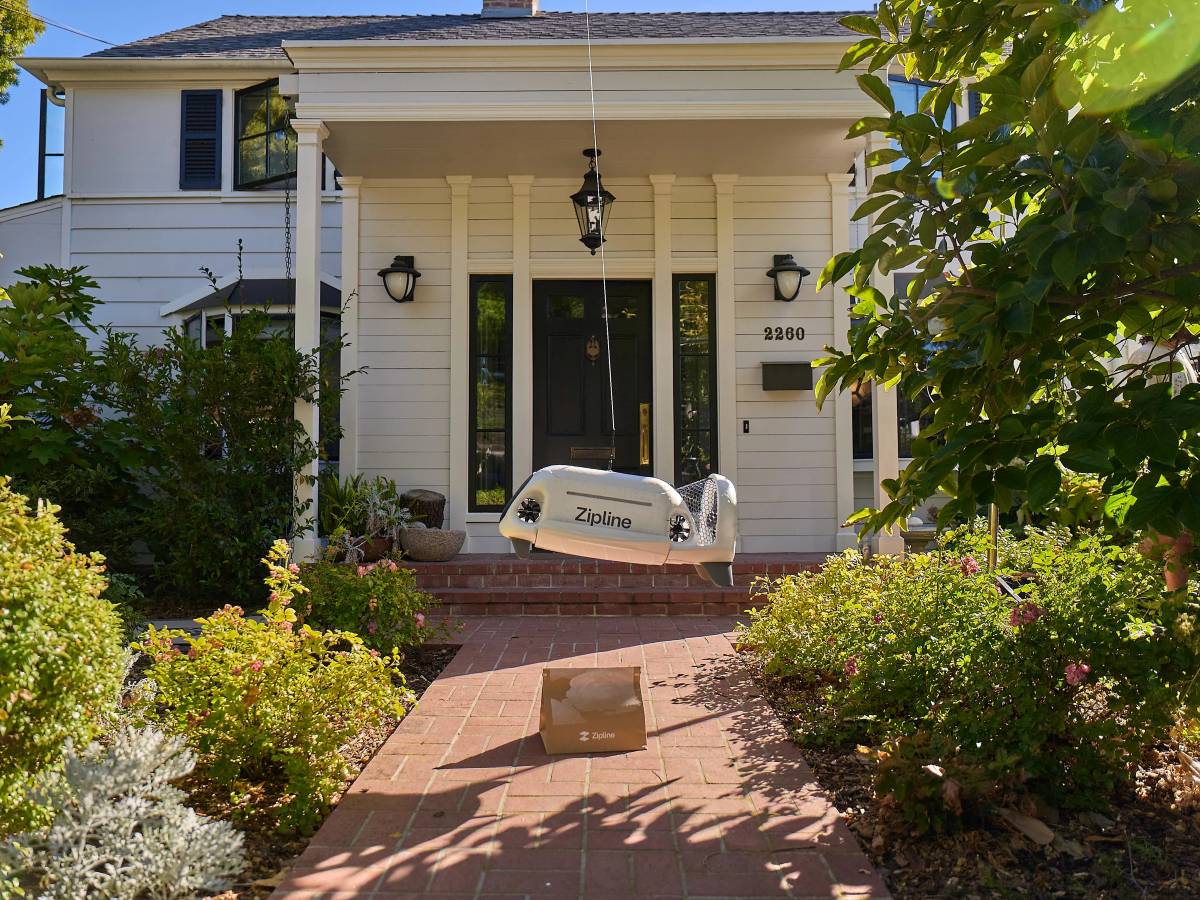
Drone delivery is no longer something you explain; it’s something you schedule. Zipline says it has now completed more than 2 million commercial deliveries, raised over $600 million in new funding, and reached a $7.6 billion valuation, as it prepares to expand its autonomous delivery service to Houston and Phoenix in early 2026, with more US metros to follow later in the year.
The milestone comes as Zipline scales at a pace that’s becoming difficult to ignore. Across the US, the company delivers food, retail goods, and healthcare products directly to customers’ homes — often in minutes. Zipline says its US deliveries have grown by roughly 15% week over week for the past seven months, a trajectory that suggests autonomous on-demand delivery is moving out of early adoption and into everyday life.
In Houston and Phoenix, eligible customers will soon be able to order tens of thousands of items through the Zipline app, with deliveries arriving in as little as 10 minutes. For Zipline, these launches mark the start of a broader national push — and a test of whether drone delivery can truly function as infrastructure at scale.
Zipline’s recent growth hasn’t come from slow, cautious rollouts. Since August, the company has launched delivery services in new areas nearly every week, unlocking thousands of customers at a time. What’s notable is how quickly each new location ramps up.
The company’s first Dallas-area site took 10 weeks to reach 100 deliveries per day. Newer sites are hitting that same mark in just two days. Zipline says it exceeded its Q3 daily delivery volume target by about 30%, reached its Q4 target six weeks early, and continues to accelerate.
Customers cite the same reasons for sticking around: speed, convenience, and the ability to reclaim time. Zipline’s median flight time is just three minutes, fast enough to replace errands that would otherwise require a car trip. The result, according to the company, is a service that quickly stops feeling experimental and starts feeling essential.
That shift is reflected in how customers describe their first deliveries. One customer in Anna, Texas called the experience “seamless” and an unexpected improvement to daily life.
“What initially felt like a novelty quickly became something much deeper,” she said, describing how her children— ages 5, 11, and 14 — react to each delivery. From her youngest ordering his favorite snacks to her older kids watching the aircraft arrive, she said Zipline created “joy and engagement in a way traditional delivery never has.”
That kind of response matters for a technology that relies on public trust. Zipline’s aircraft operate quietly, autonomously, and without emissions — designed to blend into neighborhoods rather than disrupt them.
But why exactly do Houston and Phoenix come first? Well, Houston and Phoenix are sprawling metro areas where fast, car-free delivery could have an outsized impact. They also represent cities willing to embrace advanced logistics technology.
“Zipline’s expansion to Phoenix reflects our city’s strength as a national hub for advanced technology, autonomous systems, and jobs of the future,” says Phoenix Mayor Kate Gallego. She points to faster, cleaner deliveries and the role the investment plays in reinforcing Phoenix’s position at the forefront of mobility and logistics innovation.
For Zipline, the two cities are just the beginning. The company says the latest funding round — which includes participation from Fidelity Management & Research Company, Baillie Gifford, Valor Equity Partners, and Tiger Global — will help it expand into at least four new states this year.
This week’s announcement also underscores Zipline’s growing lead in the sector. The company says it has now completed more deliveries than all other drone delivery companies combined.
To date, Zipline’s zero-emission aircraft have flown more than 125 million autonomous commercial miles, delivering over 20 million items without a serious injury. Its medical delivery operations, the company says, help save more than 10,000 lives per year.
For comparison, according to NHTSA data, driving roughly the same number of miles in the US would typically result in hundreds of crashes, dozens of injuries, and at least one fatality. Zipline increasingly positions autonomous logistics not just as faster and cleaner, but also as fundamentally safer.
As Keller Cliffton, Zioline CEO and cofounder, sums up, “Autonomous logistics has been maturing for more than a decade, and the last year has made it unmistakably clear that when deliveries are faster, cleaner, safer, and cheaper, demand isn’t just high, it grows exponentially. In 2026, autonomous logistics will become an everyday staple for people across several states in the US.”
More: Mini 4K or Flip? These DJI drone discounts make the choice tough


FTC: We use income earning auto affiliate links. More.


Comments