
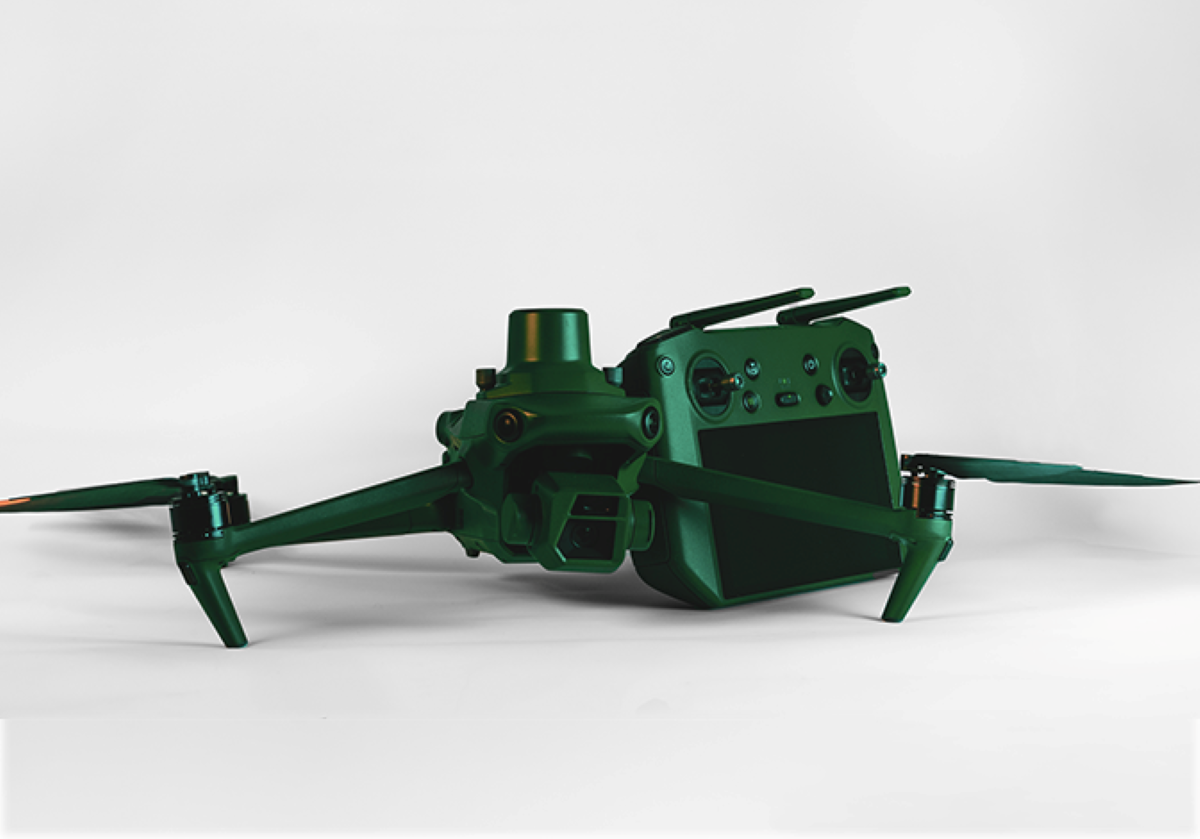
Texas Attorney General Ken Paxton has slapped a major lawsuit on Anzu Robotics — the very company that just announced its flagship Raptor drone has been discontinued because of component shortages. What looked like a supply-chain stumble has now blown up into a full-blown national security story.
When Austin-based Anzu Robotics launched its green-painted Raptor T drone in 2024, it positioned the aircraft as something many American buyers were actively searching for: a secure, American-aligned alternative to Chinese-made drones. Now, Paxton says that pitch wasn’t just misleading, it was unlawful.
In a sweeping lawsuit filed in Collin County, the State of Texas accuses Anzu of deceiving consumers about the origins, firmware, and data practices of its drones. The core allegation? That Anzu’s Raptor T is “essentially a DJI Mavic 3 painted green.”
In Paxton’s words, the product is “nothing more than a 21st-century Trojan horse linked to the CCP.”
The bigger context: DJI under the microscope
The lawsuit doesn’t exist in a vacuum. It builds on years of scrutiny around DJI, the world’s dominant drone maker with a massive share of the global market.
Over the past several years, DJI has landed on multiple US government lists tied to national security concerns. Federal agencies have raised alarms about data access risks under Chinese law. Texas recently added DJI to its Prohibited Technologies List, barring its hardware from state-owned systems.
Against that backdrop, Anzu entered the market offering what many buyers interpreted as a workaround — similar performance, but without the geopolitical baggage.
According to Texas, that distinction may have been largely cosmetic.
The state’s petition reads like a technical teardown. Investigators and independent security researchers, the lawsuit says, found that:
- The Raptor T’s internal hardware matches the DJI Mavic 3 Enterprise
- The firmware is signed and encrypted using DJI’s cryptographic keys
- The remote controller appears to be a relabeled DJI RC Pro
- Software components rely heavily on DJI’s SDK
Perhaps most controversially, Texas alleges that DJI retains control of the root cryptographic keys used to sign firmware, meaning DJI could theoretically push updates or access systems at a foundational level.
If true, that would directly undercut Anzu’s claims that its firmware was independently developed and secured.
Anzu had previously said its firmware was a custom snapshot, housed on US-based servers and inaccessible to outside modification. The lawsuit claims technical analysis shows otherwise.
New: DJI sues FCC over ‘flawed’ ban on new US drone sales
The licensing question
Here’s where things get nuanced.
Anzu has never denied having a licensing agreement with DJI. In fact, its website and public webinars have acknowledged that it licensed drone designs from DJI. In the tech world, licensing core hardware or designs isn’t unusual. It’s common for companies to white-label, rebrand, or license foundational platforms while modifying software, distribution, or services. From smartphones to enterprise servers, partnerships and OEM agreements are everywhere.
The legal issue here isn’t whether licensing exists; it’s whether consumers were clearly and consistently informed about how deep that relationship ran.
Texas alleges that Anzu initially failed to disclose the DJI connection in FCC filings and marketed itself as an American alternative without prominently clarifying the hardware and firmware overlap.
The state also points to public comments from Anzu CEO Randall Warnas, suggesting that the partnership emerged after DJI faced mounting legislative restrictions in certain US states.
According to the complaint, that raises the possibility that Anzu functioned as a “passthrough entity” to preserve DJI’s market access.
Related: DJI responds to US lawmakers’ concerns over ties with Anzu Robotics
Data, security, and the CCP angle
National security concerns sit at the heart of the case.
US agencies have previously warned that PRC laws give the Chinese government broad authority to access data held by Chinese firms. Texas argues that because Anzu’s drones allegedly rely on DJI firmware and encryption keys, they carry the same vulnerabilities that led to DJI’s placement on federal restriction lists.
The lawsuit also challenges Anzu’s claims that “Your Data is Your Data” and that no customer data is shared with DJI. Texas contends that the technical architecture, including firmware signing and DJI’s priority technical support, creates potential pathways for access.
At this stage, these are allegations, not judicial findings. Anzu has not yet had its day in court.
But the state is seeking serious remedies: civil penalties of up to $10,000 per violation, injunctive relief, and court orders requiring Anzu to clearly disclose that the Raptor T is a rebranded DJI drone.
You can read the complete lawsuit here.
What this means for buyers
For enterprise and government customers, the implications could be significant. If Anzu drones are deemed functionally equivalent to DJI drones under regulatory definitions, they could face similar restrictions in government procurement and critical infrastructure use.
That’s not just a legal technicality. It affects police departments, surveyors, construction firms, and utility operators who may have purchased Anzu equipment believing it fell outside DJI-related bans.
Texas argues those buyers were deprived of “critical information necessary to make informed purchasing decisions.”
Anzu, for its part, has previously emphasized American ownership, Malaysia-based manufacturing, and US-hosted infrastructure. Whether those representations were materially misleading under Texas law will ultimately be decided in court.
Zoom out, and this case reflects something bigger: the growing geopolitical tension embedded in supply chains.
In today’s tech ecosystem, components, firmware, and intellectual property often cross borders multiple times before reaching customers. Licensing agreements blur lines between “American-made” and “Chinese-designed.” That complexity is now colliding with national security policy.
Texas is framing this as consumer protection and security enforcement. Critics may view it as part of a broader political push against China-linked companies. Either way, the lawsuit signals that states are increasingly willing to test the limits of transparency in tech partnerships.
More: Skydio poised for $4M windfall from LAPD drone deal


FTC: We use income earning auto affiliate links. More.


Comments