
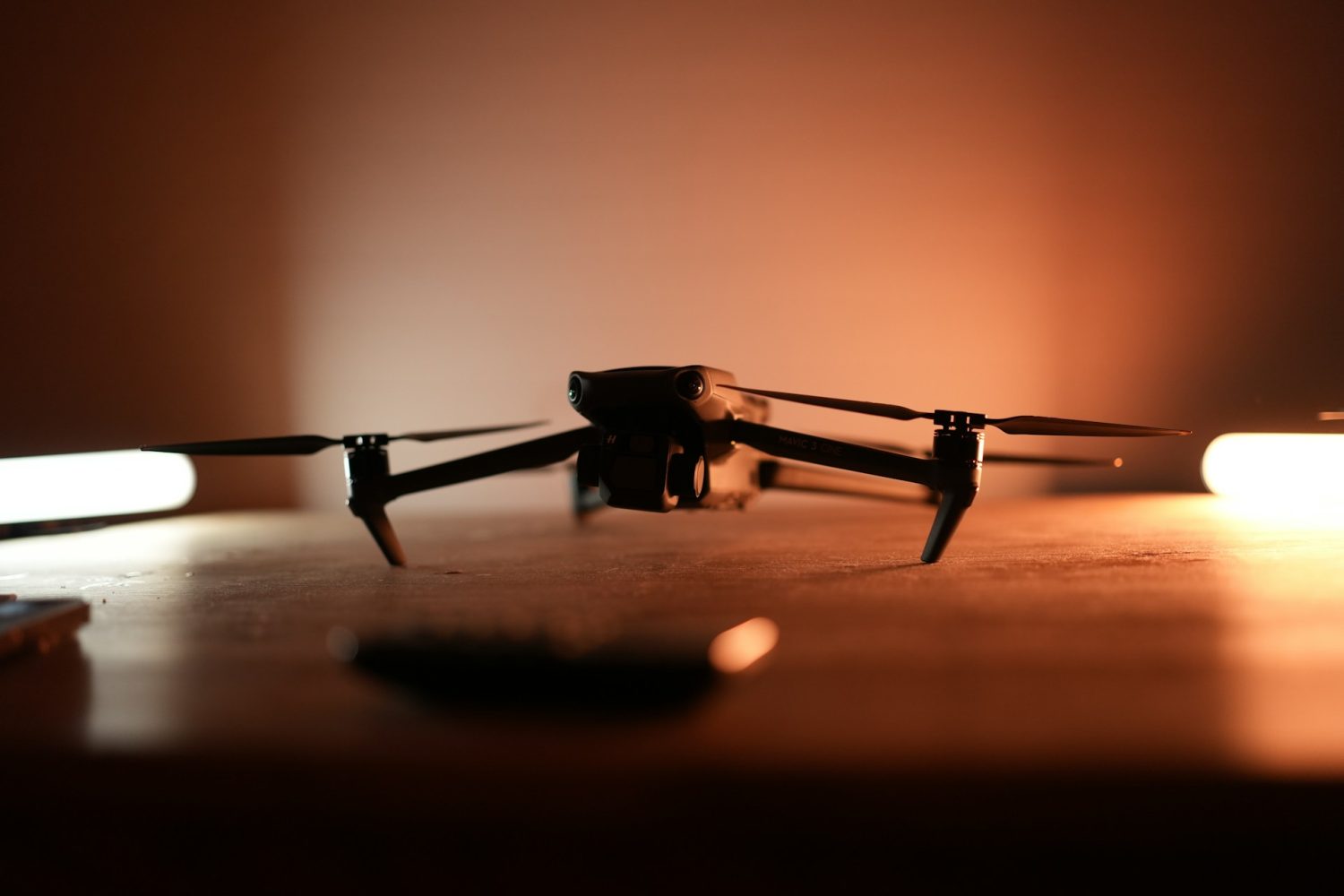
Just when it looked like tech giant DJI might finally get a real shot at pushing back against the US government’s crackdown on foreign-made drones, the Pentagon has stepped in — and slammed the door shut a little harder.
What does the US government know about foreign drones that the public doesn’t? A new memo from the Department of Defense offers a clue, and it’s not exactly reassuring for DJI or the millions of Americans who rely on its drones.
In its memo, the Pentagon firmly opposes any effort to reconsider the Federal Communications Commission’s decision to place foreign-made drone systems and critical components on its “Covered List” — a designation that effectively blocks new products from being approved for sale in the US.
That list isn’t symbolic. If a drone can’t get FCC authorization, it can’t legally be marketed or imported into the country. And according to US national security agencies, that restriction is justified.
The government’s determination — first formalized in late 2025 — concluded that foreign-built drones pose “unacceptable risks” to national security and public safety. The new memo doesn’t just repeat that claim. It reinforces it, strongly.
And it applies broadly, from consumer drones like the DJI Mini 5 Pro and DJI Air 3S to enterprise systems like the DJI Matrice 4 used by public safety agencies and infrastructure operators.
The part of the story we can’t see
Here’s where things take a more serious turn. The Pentagon makes it clear that this conclusion wasn’t reached lightly — or based only on publicly available concerns about data security or supply chains. Instead, it says the determination relied on both classified and unclassified intelligence, including a classified annex that was submitted to Congress as recently as April 3, 2026.
That detail changes the tone of the entire debate. Up until now, much of the public conversation around DJI has centered on hypothetical risks: data access, remote updates, potential ties to foreign governments. DJI has consistently denied wrongdoing and argued that there’s no concrete evidence of misuse.
But the Pentagon’s memo suggests the government may be operating with information that hasn’t — and perhaps can’t — be shared publicly. And that makes this fight much harder for DJI to win in the court of public opinion, let alone in an actual courtroom.
To understand why this matters, you have to look at how quickly this issue has escalated.
The FCC’s move to expand its Covered List in late 2025 wasn’t just a bureaucratic update; it was part of a broader push under the Secure Networks Act and the FY2025 National Defense Authorization Act to lock down US communications infrastructure. Drones, increasingly connected and data-driven, have now been pulled into that same national security framework.
DJI responded the way you’d expect: by fighting back. The company has launched legal challenges, arguing that the restrictions are overly broad, lack transparency, and could hurt American businesses, first responders, and creators who depend on affordable drone technology.
But this new Pentagon memo signals that the issue has moved beyond regulatory interpretation. This is now a national security red line.
More: DJI confirms end-of-support timeline for Mavic 2, Matrice 600 drones
The twist: Not all foreign drones are treated the same
And yet, this isn’t a simple blanket ban. In fact, even as the Pentagon doubles down on the risks, the US government has quietly been carving out exceptions.
In early 2026, the FCC — acting on Pentagon recommendations — approved limited exemptions for certain foreign-made drones and components that were deemed not to pose a security threat. Some of these include systems that passed strict cybersecurity and supply chain reviews or meet “Buy American” standards. Others were granted case-by-case approvals; but none of them from Chinese manufacturers.
But here’s the catch: these exemptions are temporary. Many are only valid through the end of 2026 (or early 2027), creating a narrow and uncertain pathway for select companies.
So while the US isn’t banning every foreign drone, it’s clearly filtering them, and drawing a sharp line between “trusted” systems and everything else. And so far, DJI isn’t on the approved side of that line.
Interestingly, the Defense Department’s memo never explicitly names DJI. Instead, it refers broadly to “foreign-produced UAS and critical components.” Still, there’s little ambiguity about who this affects most. DJI isn’t just another drone maker; it dominates the global market. Its products are everywhere, from Hollywood sets using the DJI Inspire 3 to first responders flying the Mavic 3 Enterprise during search-and-rescue missions.
So when the US government tightens restrictions on foreign drones, it’s not just targeting a company; it’s disrupting an ecosystem. Public safety agencies may have to switch platforms. Creators could face higher costs. And US-based drone companies may suddenly find themselves with a rare opportunity to compete.
What happens next?
In practical terms, the memo strengthens the FCC’s hand at a critical time. By formally opposing reconsideration, the Department of Defense is effectively telling regulators — and indirectly, the courts — that the current restrictions are grounded in serious national security concerns. That could have several ripple effects:
- DJI’s legal fight gets steeper: Courts tend to defer to national security agencies, especially when classified evidence is involved.
- Public safety agencies face tough choices: Many rely on DJI drones because they’re cost-effective and reliable. Alternatives exist, but they’re often more expensive or less mature.
- US drone makers get an opening: Domestic manufacturers could benefit, but scaling up to match DJI’s technology and pricing won’t happen overnight.
Zoom out, and this isn’t just about drones. It’s part of a much larger shift in how the US government views foreign technology in critical systems, from telecom infrastructure to AI to connected devices. Drones just happen to sit at the intersection of all those concerns: cameras, connectivity, data, and mobility.
And with this memo, the Pentagon is making it clear that, at least from its perspective, the risks outweigh the benefits.
Existing drones like the DJI Flip will, nonetheless, keep flying. But the future of what comes next, and whether DJI gets to be part of it in the US, is now tied to a question that still hasn’t been fully answered in public: What, exactly, does the government know?
More: Skyrover wants to be your next DJI drone


FTC: We use income earning auto affiliate links. More.

Comments