
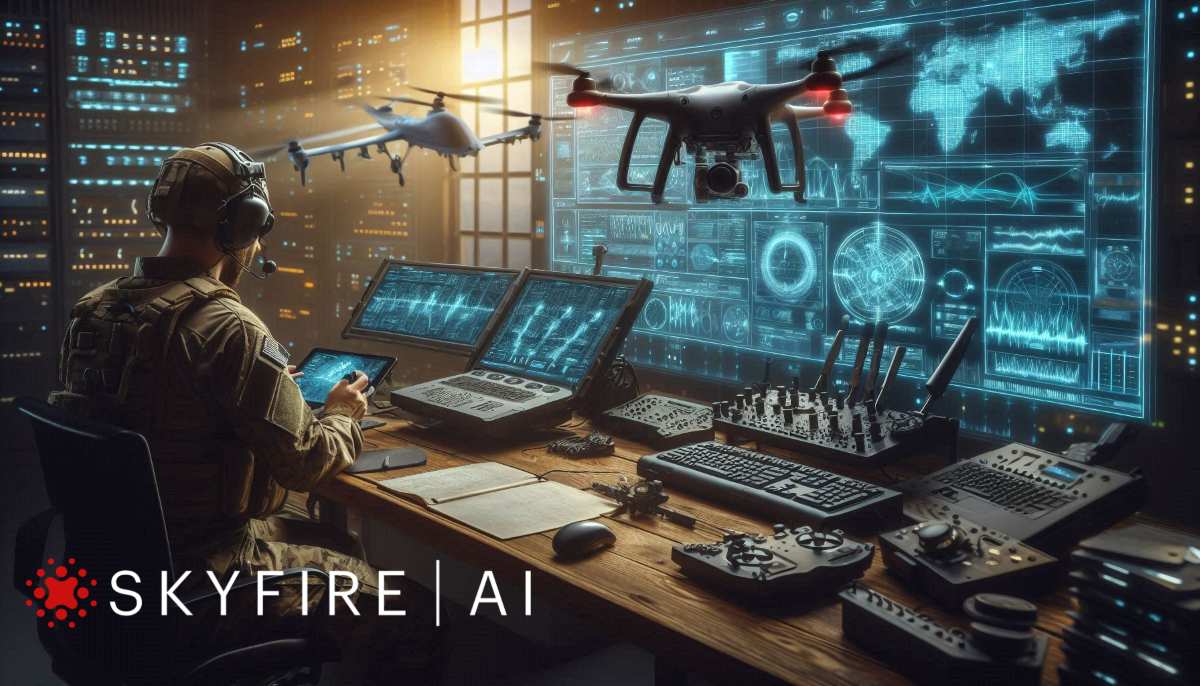
A startup aiming to change how drones operate in high-stakes situations just landed fresh funding, and it’s going after one of the biggest challenges in the industry: scaling drone operations without adding more human pilots.
SkyfireAI, a US-based company focused on AI-powered drone autonomy, has raised $11 million in seed funding led by Mucker Capital, with backing from AI Fund and several other investors. The goal is straightforward but ambitious: build a software platform that allows multiple drones to operate together autonomously in real-world, mission-critical environments.
Right now, most drone operations, especially in public safety, require significant human oversight. That limits how quickly agencies can respond and how many drones they can deploy at once. SkyfireAI is trying to flip that model by creating what it calls an “AI-native” system that can coordinate multiple drones simultaneously, reducing the burden on operators while improving response times.
The company says its platform is designed for first responders, law enforcement, defense teams, and critical infrastructure operators — groups that often deal with fast-moving, high-risk scenarios. Think 911 response, disaster monitoring, crowd safety at large events, or even delivering medical supplies when every second counts.
CEO Don Mathis, who cofounded the company with a team of veterans from the US Navy, intelligence community, and DARPA, frames the mission in simple terms: faster deployment, better coordination, and more actionable information in critical moments.
What makes SkyfireAI stand out is its platform-first approach. Instead of building hardware or locking customers into specific drones, the company is developing software that can plug into different systems and manage the full mission lifecycle: from planning and deployment to real-time orchestration and oversight.
That flexibility matters in the US, where drone adoption — especially in public safety and defense — often runs into regulatory hurdles, staffing limitations, and operational complexity. By leaning on AI and computer vision, SkyfireAI is betting it can help agencies scale their drone programs without dramatically increasing costs or manpower.
Investors seem to agree. Andrew Ng, whose AI Fund backed the company early, highlights how advances in AI are now allowing software to “perceive and act” in the physical world, something that’s especially valuable in time-sensitive, real-world missions.
With the new funding, SkyfireAI plans to accelerate product development, grow its team, and expand deployments across public safety and defense sectors. If it works, the company could play a key role in shaping how autonomous drone fleets operate in the US, not just as tools, but as coordinated systems that can make faster, smarter decisions when it matters most.
More: Canada tests drones dropping explosives for avalanche control


FTC: We use income earning auto affiliate links. More.



Comments