
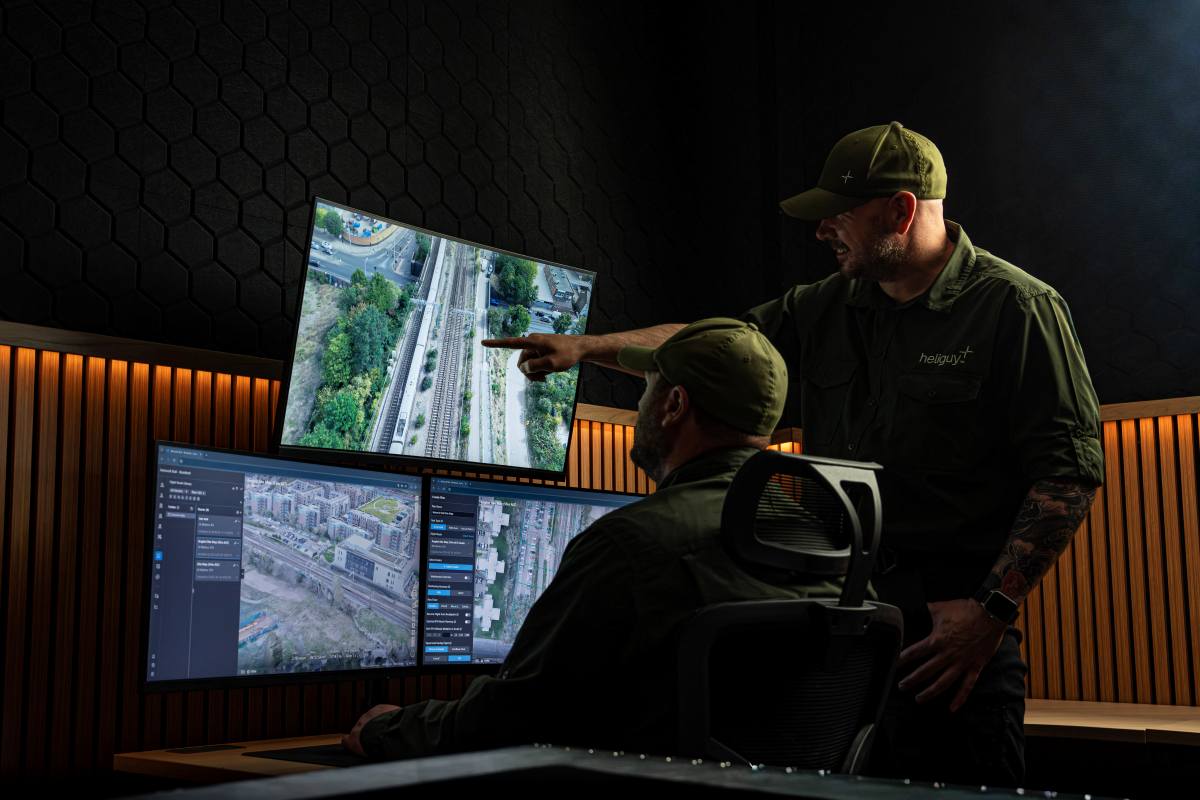
The future of drone-powered railway inspections may not involve a pilot standing trackside at all. UK drone solutions provider Heliguy has secured a significant Beyond Visual Line of Sight (BVLOS) authorization from the UK Civil Aviation Authority (CAA), allowing it to conduct remote drone operations for rail infrastructure giant Network Rail.
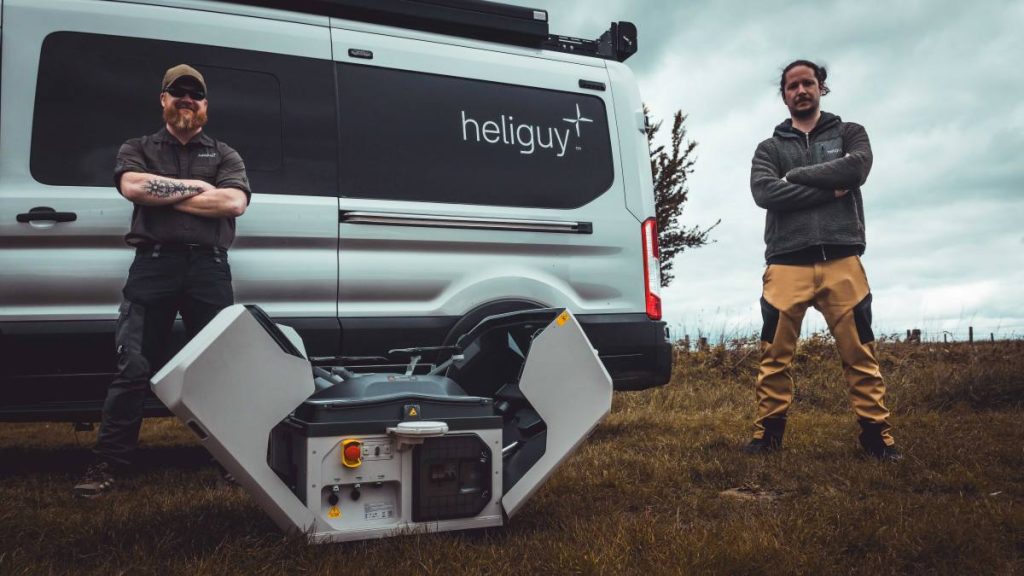
Under the authorization, automated DJI Dock 3 systems will be deployed at two Network Rail locations in Gloucester and Romford. Instead of sending drone crews into the field, Heliguy pilots will control missions remotely from the company’s Remote Operations Command Centre in Newcastle, which is hundreds of miles away from where the drones are flying.
The project relies on the Dock 3 and the DJI Matrice 4TD, a drone equipped with both high-resolution visual cameras and thermal sensors. Scheduled flights will take place Monday through Friday, providing repeatable inspections and near real-time situational awareness across parts of the rail network.
For Network Rail, the benefits go well beyond simply replacing boots on the ground. Rail operators regularly face challenges ranging from infrastructure faults and trespassing incidents to vandalism and security threats. Having an always-available aerial asset that can launch automatically and stream live imagery could help teams assess situations faster, make more informed decisions, and reduce service disruptions.
Simon Gillibrand, operations director for Network Rail’s Western Route, says the technology will give teams quicker access to information, helping them respond more effectively while keeping trains moving safely.
New: AirData crosses 120 utility customers as drone use surges
What makes this approval particularly notable is the regulatory hurdle that had to be cleared. The authorization was granted under the UK’s Specific Operations Risk Assessment (SORA) framework at SAIL II, a level that requires operators to demonstrate a robust safety case covering operational, airspace, and ground risks. According to Heliguy, the process took 16 months of collaboration and testing to prove that routine BVLOS operations could be conducted safely in complex railway environments, including densely populated areas.
That matters because BVLOS remains one of the most sought-after capabilities in the drone industry. While drones are already widely used for inspections, surveying, and public safety missions, many operations still require pilots or visual observers to remain close to the aircraft. Removing that requirement dramatically expands what drones can do and improves the economics of large-scale deployments.
For drone enthusiasts in the United States, the announcement serves as another example of how regulators and infrastructure operators around the world are gradually embracing routine BVLOS operations. The Federal Aviation Administration has also been steadily expanding approvals for advanced drone missions, with many industry experts viewing BVLOS as the key to unlocking the next phase of commercial drone growth.
Network Rail believes the new capability could eventually transform how railway infrastructure is monitored and maintained. The initial deployments in Gloucester and Romford are expected to serve as a blueprint for wider adoption across the network.
Richard Barke, route crime and security manager for Network Rail’s Anglia Route, says the ability to view incidents in real time could help bridge the gap between infrastructure and operations teams while improving response times and service resilience.
Meanwhile, Heliguy sees the project as validation of its growing investment in remote drone operations, regulatory consulting, and autonomous DJI Dock deployments.
As drone-in-a-box systems continue to mature, projects like this are offering a glimpse of a future where critical infrastructure can be monitored around the clock by remotely operated aircraft, without requiring anyone to be physically present on site. For railways, utilities, and public safety agencies, that future may be arriving sooner than many expected.
More: This DJI drone flies up to 93 minutes for under $300


FTC: We use income earning auto affiliate links. More.


Comments