

DJI is gradually widening the launch of its new Osmo Pocket 4P. After introducing the dual-lens pocket camera in China last month, the company has now brought it to Japan, Indonesia, and Vietnam. The US, however, is still nowhere to be found on the launch map.
When DJI launched the Osmo Pocket back in 2018, it essentially created a new category: a camera small enough to slip into your pocket but capable of producing buttery-smooth footage thanks to a built-in mechanical gimbal. Nearly a decade later, the company is taking its biggest leap yet.
The new Osmo Pocket 4P is DJI’s first-ever dual-lens pocket gimbal camera. There’s just one catch for US buyers: at least for now, you can’t officially buy one.
DJI has quietly launched the Pocket 4P in select Asian markets, including Japan, Indonesia, and Vietnam. Much like several of the company’s recent releases, there’s no official US launch announcement. That means American creators will likely have to play the waiting game, or eventually turn to third-party importers if they want to get their hands on one.
If that sounds familiar, it should. DJI’s latest cameras and drones have increasingly followed this regional rollout strategy, with US availability becoming far less predictable than it once was.
Related: Drone ban is one thing, why can’t America get other DJI gadgets?
Two cameras, one tiny gimbal
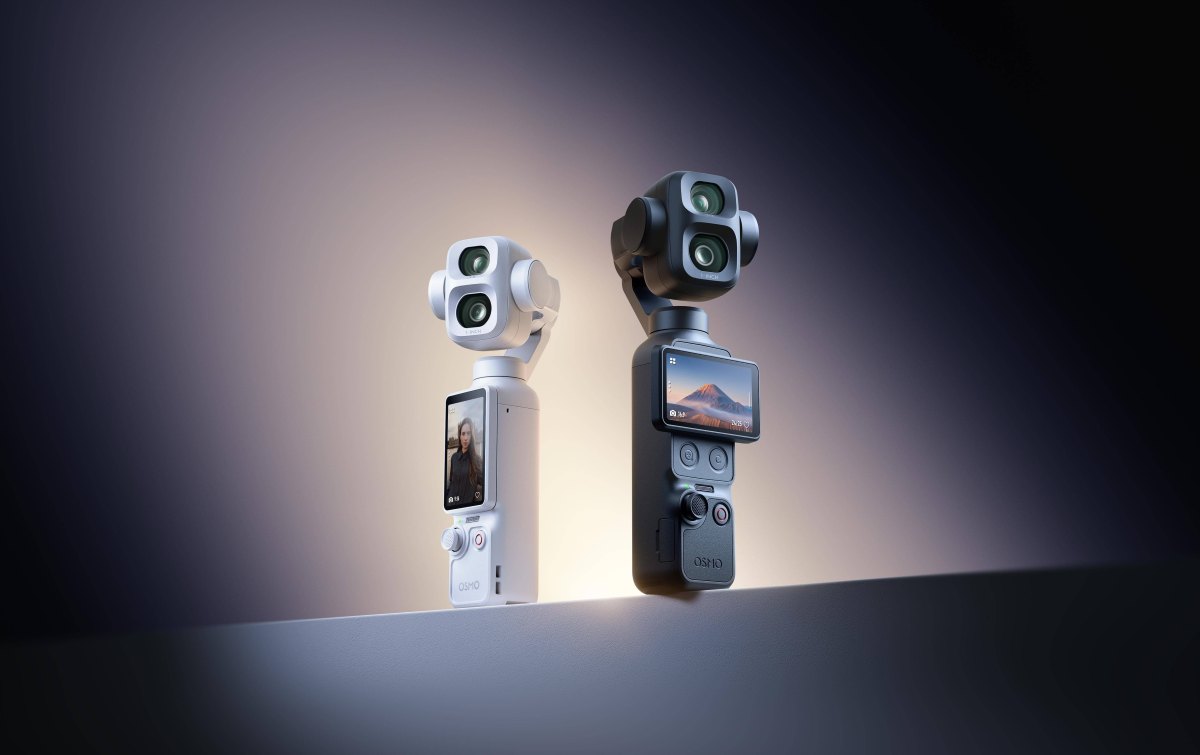
The headline feature is obvious the moment you look at the Pocket 4P: it has two built-in cameras.
The primary camera uses a brand-new 1-inch CMOS sensor paired with a 20mm equivalent f/2.0 lens. According to DJI, it delivers an impressive 17 stops of dynamic range thanks to LOFIC imaging technology — a figure that’s usually associated with much larger and significantly more expensive cinema cameras.
The second camera is where things get especially interesting. Instead of relying entirely on digital zoom, DJI has added a dedicated 60mm equivalent telephoto lens with a bright f/1.8 aperture. That makes it far better suited for portraits than the wide camera, producing more flattering facial perspectives and noticeably stronger background blur.
The telephoto camera also supports 3x optical zoom, while digital zoom extends up to 12x. For creators, it essentially means carrying both a wide-angle vlog camera and a portrait lens without swapping anything.
A bigger leap for video creators
DJI is also introducing an entirely new color profile called 10-bit D-Log 2. If you enjoy color grading your footage, this is arguably one of the biggest upgrades on the spec sheet. DJI says the format captures over a billion colors while preserving significantly more highlight and shadow detail, giving editors greater flexibility during post-production.
Combined with the claimed 17-stop dynamic range, the Pocket 4P is clearly targeting creators who want footage that looks more cinematic straight out of the camera.
The camera also records 4K video at up to 240 frames per second, enabling dramatic 8x slow-motion footage. Whether you’re filming waterfalls, sports, snow, or fast-moving city scenes, those frame rates open up plenty of creative possibilities.
New: 1,100 drones challenge FIFA World Cup security, 500 already seized
Familiar Pocket convenience, smarter software
Despite the new hardware, DJI hasn’t forgotten the features that made the Pocket lineup popular.
The camera still weighs just 230 grams, making it genuinely pocketable while retaining its signature three-axis mechanical gimbal for stabilized footage.
DJI says its upgraded ActiveTrack 8.0 can now keep people, pets, vehicles, and other moving subjects centered even while zoomed in. Gesture controls also return, letting users trigger recording or activate subject tracking with simple hand movements.
Other quality-of-life improvements include:
- 37MP still photos
- Live Photo capture in 4K
- USB 3.1 transfer speeds up to 800 MB/s
- Charging from 0% to 80% in about 18 minutes
- Up to 210 minutes of battery life on a full charge
DJI is also expanding the accessory ecosystem with dedicated ND filters, a Black Mist filter, battery grip, fill light, wide-angle adapter, mini tripod, and compatibility with its OsmoAudio microphone lineup.
What about the US?
That’s the million-dollar question. DJI hasn’t announced any plans for an official US release, and recent history suggests American buyers shouldn’t expect one anytime soon.
Several recent DJI products have either launched outside the US first or skipped the American market altogether. While many like the Osmo Pocket 4 eventually become available through specialty retailers and importers, there’s rarely a predictable timeline, and pricing often ends up higher than the official retail price once import costs are factored in.
For creators who don’t mind buying through trusted third-party resellers, the Pocket 4P will likely become available eventually. But exactly when that happens, and at what price, is anyone’s guess.
Still, if the specifications translate into real-world performance, the Osmo Pocket 4P could represent the biggest upgrade the Pocket series has seen since its debut. A genuine dual-camera setup, cinema-focused image quality, and DJI’s trademark stabilization make it look like a compelling option for travel creators, vloggers, and filmmakers alike, even if US buyers may have to jump through a few extra hoops to own one.
More: DJI refreshes Osmo Pocket 4 with maintenance update


FTC: We use income earning auto affiliate links. More.

Comments