

When DJI unveiled the O4 Air Unit earlier this year, the FPV (first-person view) drone community braced for a leap: 4K/60fps filming, crisp 1080p live feed, and a size-light enough to sit on tree branches… or your fingertip. BETAFPV answered the call with the Pavo Femto, a 75 mm, brushless 2S whoop that feels almost magical in how well it balances size with capability.
Despite weighing just 54.77 grams, the Pavo Femto is a fully capable micro FPV drone designed for indoor racing, freestyle flights, and cinematic close-quarters footage. At the heart of the Pavo Femto is the DJI O4 FPV camera, a 1/2-inch image sensor that captures crisp 4K/60fps video. BETAFPV’s creative engineering allows this unit to fit into a ducted 2-inch frame powered by 1102–22000KV motors and a 2S 450mAh battery that the company recommends.
New: DJI Mini 4 Pro shortage? 3-battery SkyRover X1 drone is only $763
To address the DJI O4 Air Unit’s sensitivity to high-frequency vibrations caused by its built-in gyroscope for video stabilization, Pavo Femto features dedicated shock-absorbing components. The system uses a POM material bracket with four custom shock-absorbing balls for structural strength and durability. This innovative design effectively isolates and absorbs high-frequency vibrations, ensuring smooth, stable footage and eliminating image shake or jello effects during FPV filming. Perfect for creators seeking high-quality aerial videography.
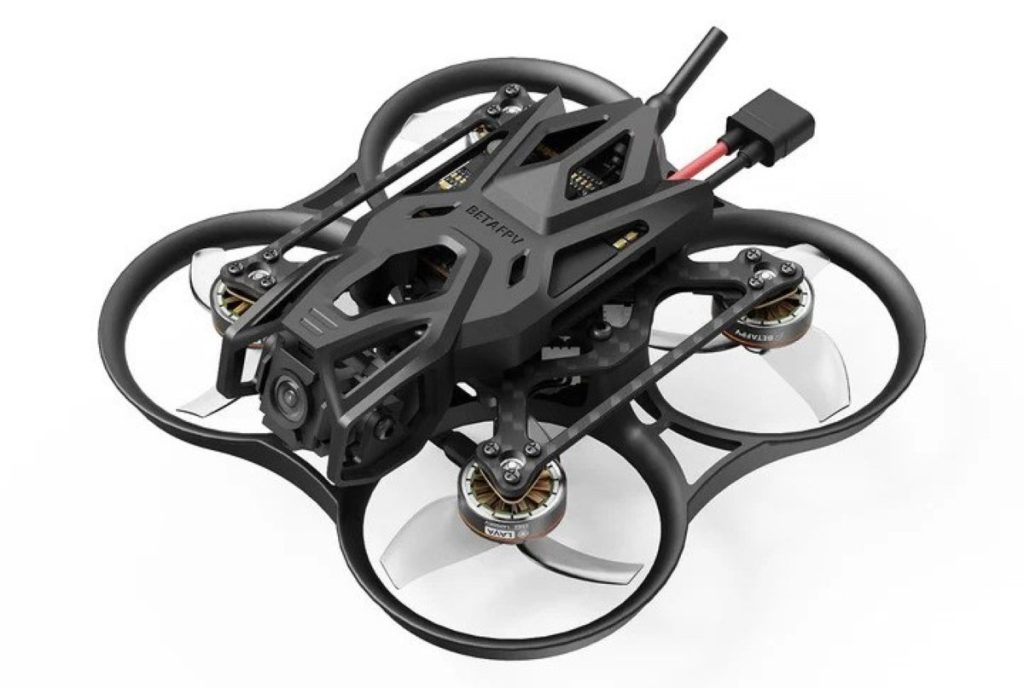
BETAFPV claims a flight time of about 5 minutes, which is short, but in line with the high-energy demands of indoor FPV flying. The drone is also equipped with an F4 20A flight controller, specifically designed for HD VTX. Equipped with a dual BEC solution, it provides stable power outputs of 9V 2A for the DJI O4 Air Unit and 5V 3A for external devices. The 20A ESC ensures agile and dynamic flight performance, while dedicated 6-Pin connectors for the DJI O4 Air Unit and a conveniently positioned USB ports simplify installation and maintenance.
It’s important to note that the Pavo Femto isn’t a ready-to-fly solution out of the box. Like most FPV drones, it’s sold as a Plug-and-Play model, meaning it requires assembly and installation of receiver and camera. You will also need your own DJI Goggles 3 and DJI RC Motion 3 or compatible FPV controller to operate it. Setting up the drone requires binding, configuring Betaflight firmware, and managing battery safety.
This means it’s not designed for beginners just entering the hobby; it’s best suited for FPV pilots who already own DJI’s latest FPV ecosystem or are experienced enough to know what they’re getting into.
More: This drone now shoots spirals, tracks smarter, obeys mid-flight commands


FTC: We use income earning auto affiliate links. More.

Comments