

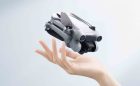
A 71-year-old Chinese-born Canadian citizen has been deported from the United States after pleading guilty to using his DJI Mavic 3 Pro drone to capture hundreds of unauthorized images of Cape Canaveral Space Force Base in Florida.
Xiao Guang Pan from Brampton, Ontario, was sentenced to 12 months of probation this week. But the punishment carried a decisive consequence: a deportation order. Immigration and Customs Enforcement (ICE) agents were asked to remove him from the country shortly after his sentencing, and he is now permanently barred from re-entering the US without direct government approval.
From tourist to federal defendant
Court records show Pan entered the US on a tourist visa in November 2024. His Instagram account chronicled his travels through Texas and Orlando, where he showcased the same DJI Mavic 3 Pro drone that investigators later seized. By early January, he had made his way to Florida’s Space Coast — home to Cape Canaveral and some of the nation’s most sensitive launch facilities.
On January 7, NASA officials monitoring airspace near Cape Canaveral detected unusual drone activity. Brevard County deputies tracked the signals and found Pan flying his drone from a parking lot at Port Canaveral. That discovery opened the door to a federal investigation — and to suspicions that his “tourist photography” was anything but harmless.
More: New DJI Osmo 360 firmware turns twists into selfies
What the drone revealed
A forensic search of Pan’s equipment exposed a staggering collection of imagery. Investigators found 1,919 photos and videos, including 243 stills and 13 videos that directly depicted Space Force facilities.
- Day one: Using his drone’s telephoto lens, Pan shot fuel depots, munition storage areas, and launch complexes from miles away.
- Day two: He returned with his Mavic 3 Pro, capturing close-ups of payload processing facilities and military contractor infrastructure.
- Day three: He flew again, this time in Class D controlled airspace, recording security checkpoints, power distribution systems, and even a Navy submarine wharf.
Agents also uncovered screenshots on Pan’s phone showing Google Maps images of Cape Canaveral, complete with the base name highlighted — contradicting his later claims of ignorance.
When questioned, Pan said he had only been photographing sunrises and cruise ships. He insisted he hadn’t realized he was near a military base and claimed his drone never issued airspace alerts.
But the logs told a different story. The DJI remote controller recorded multiple warnings about restricted zones, each ignored by Pan. With evidence mounting, prosecutors reminded him that lying to federal investigators is a crime. By June, he had little choice but to sign a plea deal.
He was formally charged in February with three counts of unlawfully photographing defense installations. Each carried a maximum penalty of one year in prison and a $100,000 fine. Judge Gregory Presnell ultimately sentenced him to probation, but paired it with deportation — closing his US chapter for good.
Back in Canada, Pan had a very different reputation. His biography on the Brampton Arts Organization (BAO) website described him as an “enthusiastic drone photographer” who had traveled extensively, visiting nearly every US state, much of Europe, and beyond. In 2023, his work was even displayed in a photo exhibit marking Brampton’s 50th anniversary.
Now, that same hobbyist has been deported under American espionage laws. BAO, when contacted by Canadian media, confirmed his past involvement in exhibitions but offered no comment on his US conviction.
Not an isolated drone spying incident
Pan’s case is far from unique. Mere weeks before this incident, another drone operator, Yinpiao Zhou, was arrested for photographing Vandenberg Space Force Base in California. Zhou was caught while attempting to flee to China and later sentenced to four months in prison.
These back-to-back cases highlight a troubling trend: US military installations are increasingly vulnerable to unauthorized drone surveillance. Reports to Congress reveal hundreds of drone incursions at bases nationwide, from Camp Pendleton to Langley Air Force Base.
Security analysts warn that even consumer-grade drones can map out fuel storage, control centers, and other critical infrastructure — information that foreign adversaries would find invaluable.
For Pan, the line between sightseeing and spying blurred the moment he launched his drone over Cape Canaveral. What began as a trip chronicled on Instagram ended in a guilty plea, a criminal record, and deportation.
For US officials, Pan’s deportation is less about punishing one man than about sending a message: drone incursions near military sites will not be tolerated. Cape Canaveral is a cornerstone of America’s space and defense strategy, and imagery captured there could expose vulnerabilities tied to national security launches.
And for anyone tempted to launch a drone near restricted zones, the message is clear: those flights could land you in federal court — or on the next plane out of the country.
More: Mother sues Orlando after holiday drone show injures child


FTC: We use income earning auto affiliate links. More.



Comments