
Starting January 1, 2026, the United Kingdom is rolling out major changes to how drones are regulated — and that includes pretty much anyone flying a drone, whether it’s for fun or work. These updates tighten safety rules, broaden who must register and test, and introduce a brand-new classification system. DJI, the world’s largest consumer drone manufacturer, explains what pilots from both the UK and abroad should know.
A new drone class-marking system (UK0–UK6)
One of the biggest shifts is the introduction of UK class marks that manufacturers will put on drones sold in the UK. These range from UK0 to UK6 and are similar to Europe’s existing C-class labels, but uniquely UK in purpose.
For now, EU C-class labels (C0–C6) on drones like the DJI Mini 5 Pro or DJI Air 3S will continue to be recognized until December 31, 2027, making the transition smoother for pilots who use European-bought drones in Britain. After that, UK markings fully take over.
Different marks affect where you can fly safely:
- UK0 and UK1 drones can fly over people under certain conditions.
- UK2 drones fly near people with extra safety training.
- Higher classes like UK3 are for heavier or more advanced drones with stricter limits.
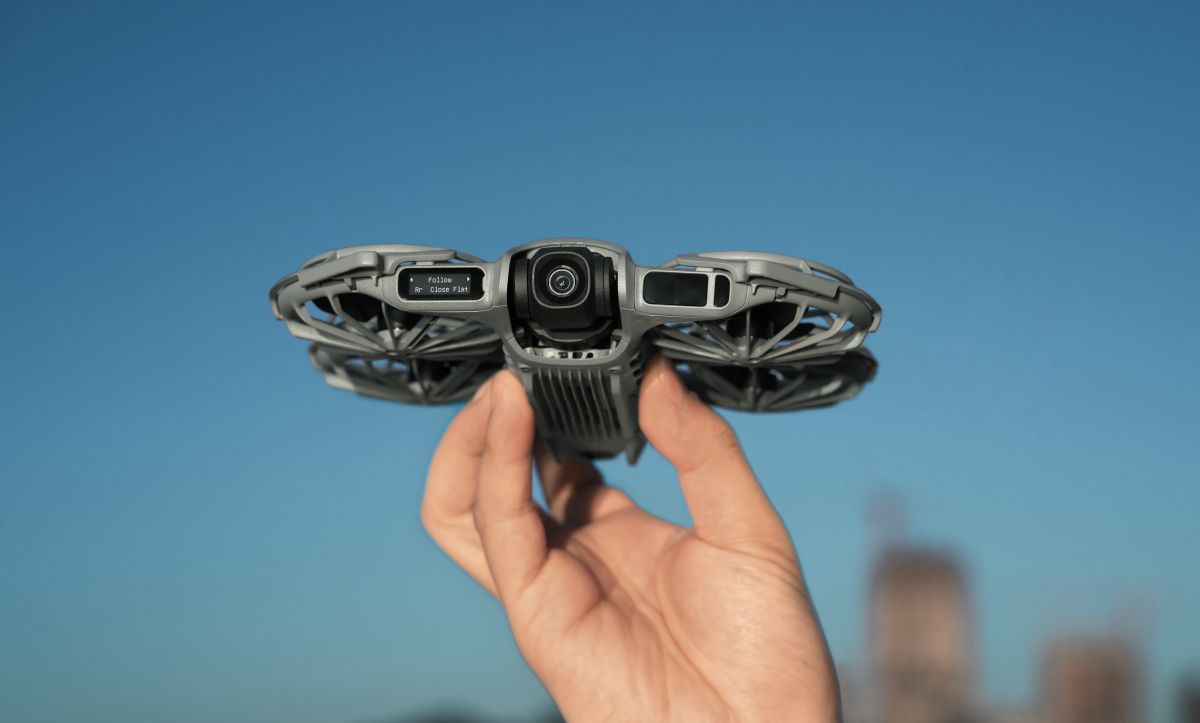
The weight that triggers official requirements is dropping. Previously, pilots only had to register and test for drones 250 grams and up. From 2026, that drops to just 100 grams (3.5 oz), essentially covering ultra-lightweight drones such as DJI Neo and Neo 2.
What that means in practice:
- If your drone weighs 100 g or more, you’ll need a Flyer ID (a free online theory test).
- If it also has a camera and weighs 100 g or more, you’ll need an Operator ID (think of this as a registration number tied to you as the pilot)
| DJI drones | EU C-Class | Recognized as during transition until Dec. 31, 2027 |
| DJI Neo 2, DJI Neo, DJI Flip, DJI Mini 5 Pro, DJI Mini 4 Pro, DJI Mini 3, DJI Mini 2 SE | C0 | UK0 |
| DJI Air 3S, DJI Air 2S, DJI Air 3, DJI Avata 2, DJI Mavic 3, DJI Mavic 3 Cine, DJI Mavic 3 Classic, DJI Mavic 3E EU, DJI Mavic 3T EU, DJI Mavic 3T Advanced EU | C1 | UK1 |
| DJI Mavic 4 Pro, DJI Mavic 3 Pro, DJI Mavic 3 Cine, DJI Mavic 3E EU, DJI Mavic 3T EU, DJI Mavic 3M EU, DJI Matrice M30/30T, DJI Mavic 4E, DJI Mavic 4T, DJI Matrice 4D, DJI Matrice TD (Also C6) | C2 | UK2 |
| DJI Inspire 3, DJI M350 RTK, DJI Matrice 400 | C3 | UK3 |
New: Winter flying tips every DJI drone pilot should know
Remote ID: Digital identification in the sky
Another big change is Remote ID — essentially a digital “license plate” that a drone broadcasts while flying, including its identity and location. In the UK, Remote ID will become mandatory for class-marked drones starting January 1, 2026, and for legacy or unmarked drones with cameras by January 1, 2028, if they weigh 100g or more. This phased approach gives pilots time to upgrade older drones or add compatible modules.
If you’re familiar with drone flying in the United States, this might sound familiar because the Federal Aviation Administration already requires Remote ID for most drones that must be registered. In the US, drones that need FAA registration (typically those over 0.55 lb or 250g, or flown commercially under Part 107) must broadcast identification and location information when in flight. This rule has been in force since September 2023, and enforcement policies transitioned to full compliance by early 2024.
Nevertheless, it’s worth reiterating that Remote ID is not an internet livestream of your camera feed or personal info; it’s a short-range broadcast that helps authorities locate where a drone is being flown and by whom, particularly if it’s in the wrong place or acting unsafely. Both the UK and US versions aim to support safer skies as drone flights, from hobbyist videography to package delivery, become more common.
Where and when you can fly
The rules also reorganize flying zones using clearer category names that many pilots find easier to remember:
- A1 – Over People
- A2 – Near People (needs extra competency)
- A3 – Far from People
To fly in A2 (closer to people, like parks or urban environments), you’ll now need an A2 Certificate of Competency (A2 CofC). Pilots with this can fly certain mid-weight drones (UK2) closer to people, with safety restrictions that include keeping a minimum distance or slower speeds.
If you’re flying at night, you’ll need to fit a flashing green light on your drone so other pilots and aircraft can see it — another new safety feature aimed at reducing collisions.
As far as insurance rules are concerned, if you fly drones for fun, insurance is optional (but still a smart idea). If you fly commercially, third-party liability insurance remains mandatory.
For more info, and links to the UK CAA’s official website and the UAS Restrictions Map by NATS, see DJI’s official blog.
More: How DJI’s automated Waypoint Flight makes cinematic drone flying easy


FTC: We use income earning auto affiliate links. More.


Comments