
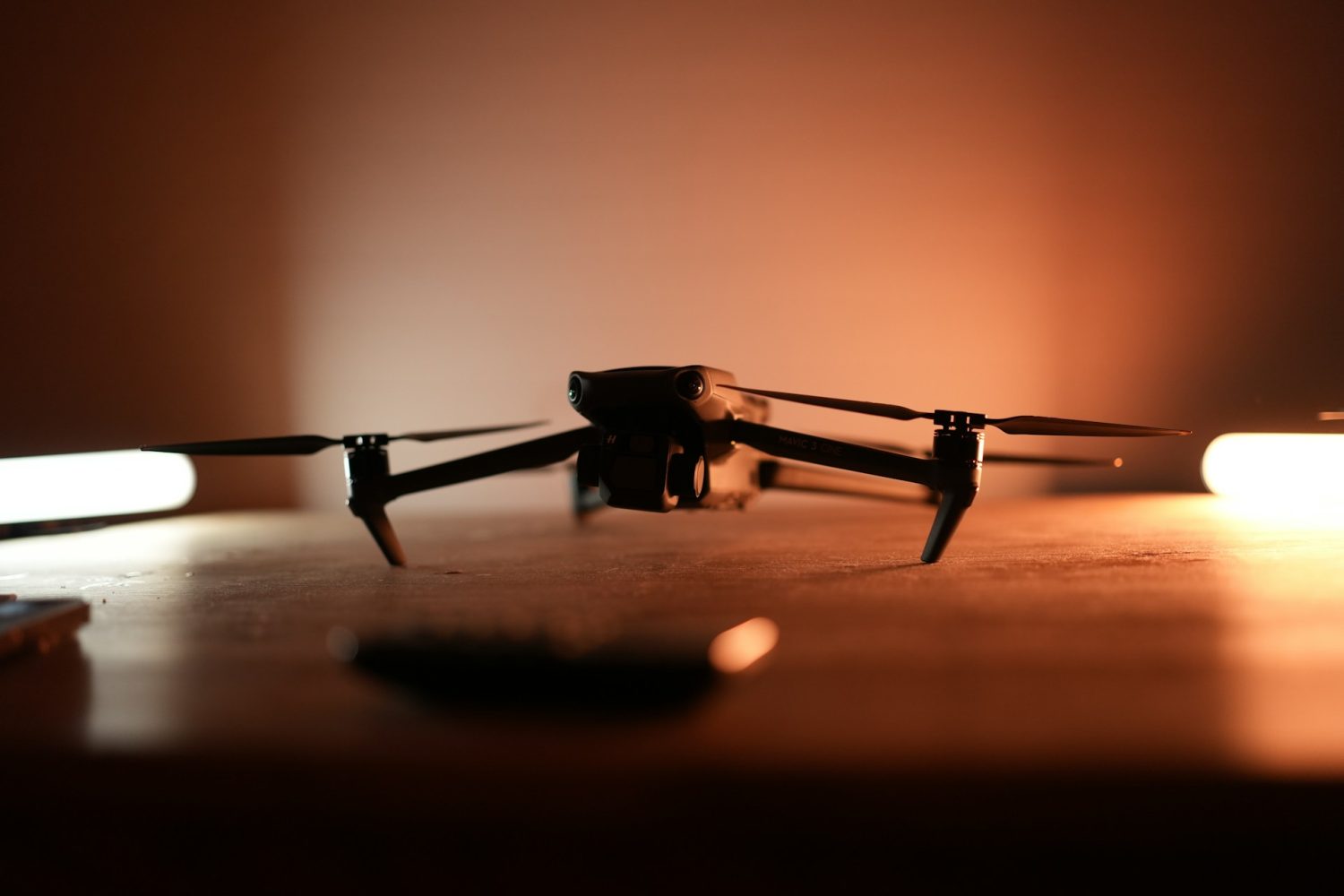
Washington’s fight over Chinese drones is no longer just a national security debate happening inside congressional hearing rooms. For thousands of Americans, it’s becoming a deeply personal issue tied to jobs, emergency response, roof inspections, farming operations, photography businesses, and even search-and-rescue missions.
That reality is becoming increasingly visible in a wave of public comments submitted to the Federal Communications Commission (FCC) as regulators consider restrictions tied to Chinese drone giant DJI.
More than 3,000 public comments have been filed in response to DJI’s FCC petition — roughly ten times the volume seen in comparable FCC proceedings — showing how emotionally charged and economically significant the issue has become for drone users across the country.
The comments come from small-business owners, firefighters, police departments, inspectors, photographers, and recreational pilots. While the submissions represent only a small sample of America’s drone community, together they paint a picture of an industry heavily dependent on affordable Chinese-made drones, especially those from DJI and Autel Robotics. And many of those users say there simply is no realistic American replacement today.
One Louisiana-based inspector, Chip Fornaris of J Monroe Inspections, explains that his fleet includes three DJI drones and one Autel thermal drone used for roof inspections. He says the drones allow him to safely inspect dangerous areas that once required climbing ladders and risking serious injury.
“According to the American Academy of Orthopedic Surgeons… approximately 500,000 people are treated for ladder-related injuries annually,” he writes in his FCC filing.
For Fornaris, the issue ultimately comes down to affordability. He estimated that replacing his $6,000 Autel thermal drone with a comparable American-made system could cost around $20,000.
“I could not afford it,” he writes. “I would go back to risking life and limb… or just close my small business.”
That cost gap appears repeatedly throughout the FCC filings. A drone photography business owner named Mark Barber says his company relies on DJI Air 3S drone to support his family financially. According to Barber, American-made alternatives are both “inferior and considerably more expensive.”
“Overhead is critical,” Barber says. “Currently, DJI provides the only viable option for me to continue the income associated with my business.”
New: DJI’s explosive 2026 drone security report just went public
Others are not necessarily dismissing national security concerns outright, but they want more evidence made public before a sweeping crackdown moves forward. Florida-based aerial photographer John J. McGee is urging regulators to conduct a formal audit and release the findings publicly. “If there is a clear security threat that can be documented by the audit and results, I can accept that,” he says.
McGee also questions why drones are being singled out while many other consumer electronics products are manufactured in China. “Banning DJI, you may as well ban all iPhones,” he says, referencing Apple’s Chinese manufacturing ties through Foxconn.
The national security concerns surrounding DJI have been debated in Washington for years. Critics argue that Chinese-made drones could potentially expose sensitive infrastructure or government data to Beijing. DJI has repeatedly denied those allegations and has long argued there is no evidence its products transmit unauthorized data to the Chinese government.
Many commercial operators point out that drones can be flown offline without internet connectivity, something several commenters emphasized in their FCC filings.
But perhaps the strongest opposition to restrictions is coming from public safety agencies. Firefighters, police departments, and search-and-rescue teams across the United States increasingly rely on drones for thermal imaging, disaster response, water rescues, missing-person searches, and hazardous incident monitoring. And many departments say DJI dominates because it offers the best balance of reliability, ease of use, and cost.
Battalion Chief William Marsiglio III, who manages a public safety drone program, warns that replacing existing DJI systems could dramatically reduce operational capabilities. According to Marsiglio, a DJI thermal drone costing roughly $7,300 could require around $25,000 for a comparable American-made replacement, one he described as less capable and less reliable.
“We would rather purchase a US-made drone,” Marsiglio says. “However, the less capable and three times as expensive US-made drone vs. DJI makes that non-realistic.”
He warned that forcing agencies into more expensive platforms could reduce the number of drones departments can afford, ultimately limiting emergency response capabilities.
Sheriff’s departments are voicing similar concerns. Sgt. Scott Hanson says his Sheriff’s Office depends heavily on DJI drones for search-and-rescue operations, emergency response, and incident documentation. He praises DJI’s standardized systems, saying deputies can transition between aircraft with minimal retraining — an important factor during emergencies.
“The overall quality and performance of DJI products are significantly superior to competing platforms currently available to our agency,” Hanson says.
He adds that losing access to replacement parts or future equipment could hurt operational readiness while straining already tight budgets.
The comments also reveal a broader reality often overlooked in Washington’s political debate: DJI is no longer just a consumer electronics brand in America. Over the past decade, DJI drones have quietly become infrastructure tools for thousands of industries. Roof inspectors use them to avoid dangerous climbs. Farmers use them to monitor crops. Real estate photographers use them for marketing. Utility companies use them to inspect power lines. Firefighters use thermal cameras to locate hotspots. Police departments use them during hostage situations and missing-person searches.
In many ways, the controversy highlights a bigger challenge facing the United States as it tries to reduce dependence on Chinese technology.
American drone makers like Skydio have gained support in Washington and continue expanding their capabilities, especially in defense and enterprise markets. But many users argue the domestic industry still struggles to match DJI’s combination of affordability, software maturity, camera quality, battery performance, and product ecosystem, particularly for smaller operators with limited budgets.
Even some commenters who support building a stronger American drone industry warn that forcing a rapid transition before domestic alternatives are ready could create unintended consequences.
For now, the FCC proceeding has become something larger than a technical regulatory process. It has turned into a rare public window into how deeply Chinese drone technology has embedded itself into everyday American work — from rural roof inspections in Louisiana to emergency rescue operations across the country. And judging by the thousands of comments flooding regulators, many drone users are no longer staying quiet about what they believe is at stake.
More: The US wants to move beyond DJI drones, but can it?


FTC: We use income earning auto affiliate links. More.

Comments