
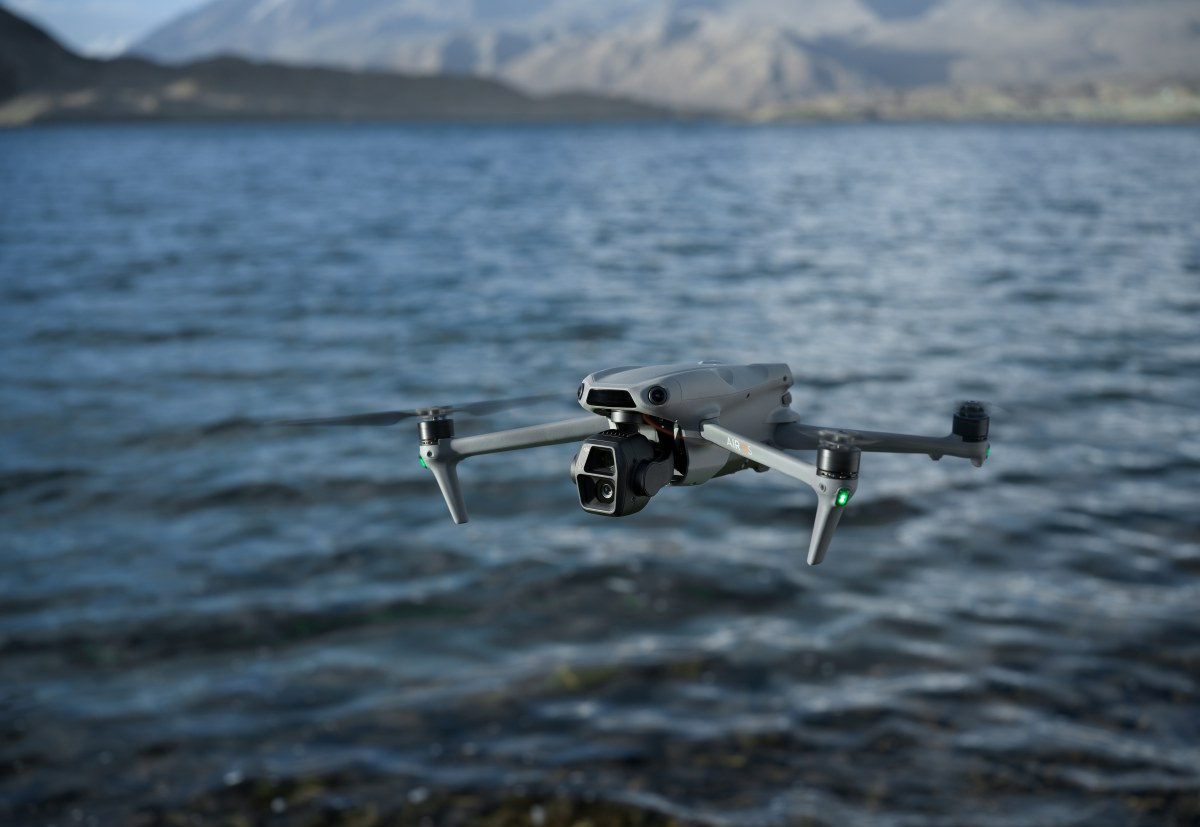
For years, millions of Americans who use DJI drones have been hearing the same warning on repeat: these drones could be a national security threat. Now, DJI has fired back with what may become one of the most explosive documents in the entire US drone ban debate.
The company has released the findings of what it calls the most comprehensive independent security assessment ever conducted on its drone systems, and the results are likely to send shockwaves through America’s drone industry, public safety agencies, small businesses, and Washington itself.
According to the report, a US-based cybersecurity firm spent five months aggressively trying to break, hijack, manipulate, intercept, and expose vulnerabilities in DJI’s drone ecosystem. What they found could completely reshape the conversation. Or make the political fight even uglier.
The assessment was conducted by OnDefend, a US cybersecurity company staffed by former military and government security professionals. The testing targeted two of DJI’s newest systems: the dual-camera Air 3S and the enterprise-focused Matrice 4E.
And after months of adversarial testing across hardware, firmware, apps, radio frequencies, supply chain components, and network traffic, the firm reported something few expected to hear:
- Zero critical findings.
- Zero high-risk findings.
- Zero medium-risk findings.
That alone is enough to ignite fierce debate online. But the details are even more dramatic. According to the report, testers found no evidence of data being transmitted outside the United States. All observed app connections reportedly resolved to US-based infrastructure.
They also reported no hidden backdoors, no unauthorized remote access mechanisms, and no successful attempts to jailbreak or manipulate the drone controllers. Even the radio frequency analysis — one of the most sensitive parts of the investigation — reportedly uncovered no unexplained or covert transmissions.
That matters because allegations surrounding hidden communications and potential foreign access have been central to the push against DJI for years.
OnDefend says it also searched for unauthorized hardware modifications, counterfeit components, hidden antennas, covert RF channels, and supply chain tampering. Again, the firm says it found none.
And this wasn’t surface-level testing. The company says it conducted full-spectrum RF scanning from 1 MHz to 6 GHz, hardware teardowns, silicon-level analysis, meddler-in-the-middle attacks, firmware testing, privilege escalation attempts, replay attacks, jamming simulations, and network interception exercises.
In plain English? They tried hard to break these drones.
New: Why Motorola is spending $1.5 billion on drone defense
The report says they couldn’t find evidence supporting the nightmare scenarios many DJI users had feared lawmakers were assuming. That’s why this release is likely to hit emotionally for thousands of Americans whose jobs and businesses are tied to DJI products.
Because this debate stopped being theoretical a long time ago. Across the US, DJI drones are deeply embedded in real-world operations that save time, money, and in some cases, lives. Police departments use them for search-and-rescue missions, accident reconstruction, tactical response, and missing person cases. Fire departments use them during wildfires and disasters. Farmers rely on them to monitor crops and reduce costs.
Roof inspectors, utility operators, surveyors, filmmakers, real estate creators, and independent freelancers use DJI systems every single day because they are often dramatically cheaper and easier to deploy than alternatives.
DJI says more than 80% of the 1,800-plus state and local law enforcement agencies using drones rely on DJI systems. Even more alarming for many small businesses is another statistic included in the release: 43% of drone business users reportedly believe restrictions on DJI would have an “extremely negative” or even “business-ending” impact.
That’s the part many Americans outside the drone world still don’t fully understand. For countless operators, this isn’t about gadgets. It’s about mortgages. Paychecks. Emergency response. Small businesses. Side hustles. Creative careers. And entire public safety programs built around equipment that agencies can actually afford.
That’s why DJI’s inclusion on the FCC Covered List in late 2025 triggered such panic across the industry. The designation effectively labeled the company as a national security risk, despite DJI repeatedly arguing that no specific public technical evidence had been presented to support the decision.
Now, DJI is using this new assessment as ammunition in its ongoing appeal.
Adam Welsh, DJI’s head of global policy, doesn’t mince words. “These findings confirm what DJI has consistently maintained: our products are secure, our data practices are transparent, and the concerns underlying our FCC Covered List designation are not supported by technical evidence,” he says. “We commissioned this independent assessment because we believe facts should inform policy decisions. We are calling on the FCC to consider these findings carefully as part of our ongoing appeal, and we remain committed to engaging constructively with relevant authorities.”
But before anyone declares the controversy over, there’s an important catch. OnDefend itself acknowledges this was a point-in-time assessment, meaning future software or firmware changes would still require ongoing review and validation. The firm also identified several low-risk findings tied to areas like wireless hardening and application security configurations, though it said none posed realistic threats to safe operations or widespread confidential data exposure.
Related: FCC’s DJI, Autel ban ignores how drones actually work
Still, the bigger political question remains unresolved: If America pushes DJI out, who realistically replaces it at the same scale and price point?
That question has haunted the US drone industry for years. Because even many critics of DJI privately acknowledge the uncomfortable reality: there still isn’t a direct one-to-one replacement for many of the company’s products, especially for cash-strapped public agencies and small operators.
And that’s exactly why this report is likely to spread fast across drone communities, first responder groups, filmmaker circles, and small business networks.
Not because it ends the debate. But because it throws gasoline directly onto it.
If you know someone who flies drones for work, public safety, filmmaking, farming, inspections, or content creation, this is one of those stories they’ll probably want to read for themselves. Especially before the next big policy decision lands.
Here’s the full report:
More: The US wants to move beyond DJI drones, but can it?


FTC: We use income earning auto affiliate links. More.


Comments