
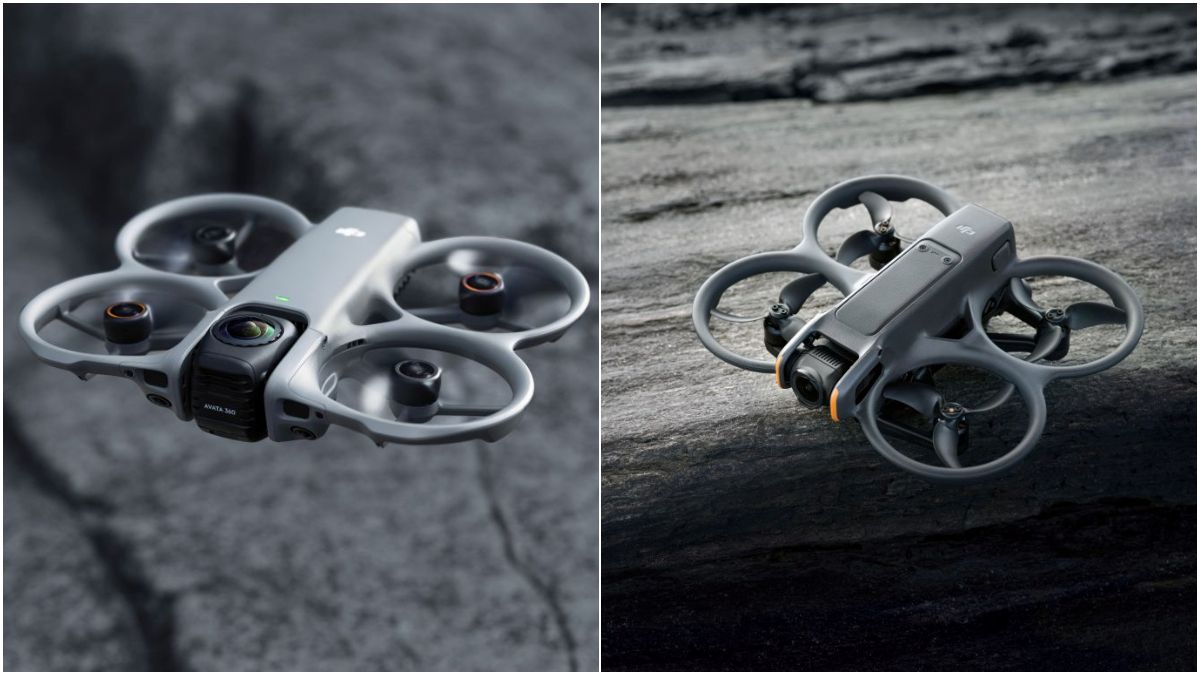
DJI has quietly created one of the most confusing buying decisions in the drone industry. Not because its drones are difficult to understand, but because two of its most popular first-person view (FPV) models now appeal to completely different types of users despite looking remarkably similar on paper.
The DJI Avata 2 remains one of the easiest FPV drones to recommend. Yet the newer Avata 360 introduces capabilities that many creators have wanted for years, including full 360-degree capture, 8K recording, and the ability to reframe shots after landing. And with prices ranging from $619 to $1,399 depending on the bundle, choosing the right one could save, or cost, hundreds of dollars.
On paper, the choice seems obvious.
The newer DJI Avata 360 shoots 8K 360-degree video, captures 120MP photos, features omnidirectional obstacle sensing, and lets creators reframe shots after the flight is over. Meanwhile, the DJI Avata 2 has been one of the most popular FPV drones ever released, winning over pilots with its simplicity, immersive flying experience, and approachable price.
But here’s the thing: these drones aren’t really competing for the same buyer. One is primarily built for flying. The other is primarily built for content creation.
Understanding that difference could save you hundreds of dollars, or convince you that spending more is actually worth it.
First, let’s talk pricing. Unlike many drone comparisons where one model costs dramatically more than the other, DJI has made this decision surprisingly difficult.
DJI Avata 2 bundles
- DJI Avata 2 Fly Smart Combo (Single Battery, Goggles N3, RC Motion 3): $619
- DJI Avata 2 Fly More Combo (3 Batteries, RC Motion 3, DJI Goggles 3): $1,019 after discount
DJI Avata 360 bundles
- DJI Avata 360 (RC 2) Single Battery: $719
- DJI Avata 360 Fly More Combo (RC 2): $979
- DJI Avata 360 Motion Fly More Combo with 3 Batteries, Goggles N3, RC Motion 3, 2-year Warranty, and several accessories: $1,399
Among the various bundles available in the US today, the entry-level difference is only $100. That alone will make many buyers wonder whether they should buy the newer drone. But price is only part of the story. You need to pay attention to what’s included in those boxes.
The entry-level Avata 2 package comes with DJI Goggles N3 and the RC Motion 3 controller, giving new pilots one of the easiest ways to experience FPV flight. Point your hand, pull the trigger, and the drone follows. The lower-priced Avata 360 packages currently being sold in the United States tell a different story.
Because of limited availability of DJI’s motion-control ecosystem, the $719 Avata 360 and the $979 Avata 360 Fly More Combo ship with the RC 2 controller instead. That means flying with traditional dual sticks rather than DJI’s intuitive motion controls. For experienced drone pilots, that may not matter. For newcomers, however, it absolutely does.
One reason the Avata series became so popular is that DJI largely removed the intimidation factor from FPV flying. The RC Motion controllers helped beginners feel comfortable almost immediately. The RC 2 is still an excellent controller, but it requires a more traditional piloting approach and a greater learning investment.
In practical terms, buyers attracted to the Avata 360’s lower advertised prices should understand that they are not getting the same out-of-the-box flying experience offered by the Avata 2 Fly Smart Combo. To get a more comparable package, shoppers should look at the $1,399 Avata 360 Motion Fly More Combo, which includes three batteries, Goggles N3, RC Motion 3, and additional accessories. At that point, however, the price gap versus the $1,019 Avata 2 Fly More Combo with Goggles 3 expands to roughly $380.
Beyond the price: What happens after you press record?
The Avata 2 follows the traditional FPV drone formula. You fly. You frame the shot. You capture the footage. You edit and publish. Simple.
The Avata 360 completely changes that workflow. Instead of recording only what the camera sees, it records everything around the drone using dual 1/1.1-inch sensors. After the flight, you can virtually move the camera, create new angles, and produce multiple videos from the same flight. The drone records up to 8K/60fps spherical video and 120MP images.
That’s a huge shift. Imagine flying through a canyon. With the Avata 2, you need to decide exactly where the camera should point while flying. With the Avata 360, you can decide later.
For content creators, that’s incredibly powerful. For casual pilots, it may be completely unnecessary.
New: DJI Pocket rival? Insta360 unveils Leica-powered Luna Ultra camera
Why creators are obsessed with the Avata 360
The Avata 360 effectively combines two categories into one drone. It’s both an FPV drone and a 360 camera in the sky. That means:
- You can create horizontal YouTube videos.
- You can create vertical TikTok videos.
- You can reframe footage for Instagram Reels.
- You can create impossible camera moves after the flight.
- You can track subjects even if they temporarily leave frame.
Features such as ActiveTrack 360, Spotlight-style reframing, virtual gimbal controls, and post-flight camera selection create a level of flexibility that traditional drones simply cannot match.
For travel creators, adventure athletes, YouTubers, and social media professionals, this is the biggest advancement in FPV content creation since DJI launched the original Avata.
Why the Avata 2 remains the smarter buy for many people
Here’s something many buyers don’t realize. More flexibility often means more work. The Avata 360 gives you incredible creative freedom, but it also requires more editing. Much more.
Every flight produces significantly more data. You’ll spend time reframing clips, choosing virtual camera angles, exporting different versions, and learning a new workflow.
The Avata 2 avoids all that. You shoot. You edit. You upload. Done.
That’s one reason the Avata 2 remains incredibly attractive despite being the older drone. It still delivers immersive FPV flying, excellent image quality, easy acrobatic modes, and one of the friendliest learning curves in the FPV world. For many pilots, that’s all they need.
Let’s talk image quality
This category is more nuanced than most people expect. If you’re comparing specifications, the Avata 360 wins. The drone uses dual 64MP sensors, captures 8K 360-degree footage, and can produce 120MP photos. The Avata 2 uses a single 1/1.3-inch sensor with 12MP effective resolution and captures up to 4K/100fps video.
But image quality isn’t just about megapixels. The Avata 2 often produces footage that is ready to use immediately. The Avata 360’s footage reaches its full potential after reframing and processing.
That’s why many professional creators love the Avata 360 while many recreational pilots continue to prefer the Avata 2. One rewards editing. The other rewards flying.
Safety and obstacle avoidance
This is one area where the Avata 360 clearly pulls ahead. The Avata 360 includes omnidirectional obstacle sensing, helping detect obstacles around the aircraft. The Avata 2 relies primarily on downward and backward vision systems and lacks full obstacle-sensing capabilities.
If you’re flying around trees, buildings, hiking trails, or unfamiliar environments, that extra protection could be valuable. For beginners, it may even be worth the price difference alone.
Flight performance: Not everything favors the newer drone
The Avata 360 weighs approximately 455 grams. The Avata 2 weighs around 377 grams. That difference matters.
Lighter drones generally feel more agile and responsive. Many FPV enthusiasts describe the Avata 2 as feeling more direct and sportier in flight, while the Avata 360 prioritizes versatility and camera capability.
If your dream is ripping through tight gaps, carving turns, and experiencing FPV flying at its purest, the Avata 2 still holds a strong advantage.
Which bundle delivers the best value?
For first-time buyers, the value winner is arguably the DJI Avata 2 Fly More Combo. You get three batteries, the proven Avata platform, and enough flight time to enjoy a full day of flying. For creators, however, the DJI Avata 360 Fly More Combo (RC 2) might be the sweet spot.
The most difficult decision is at the top end. Do you spend $1,019 on the Avata 2 Fly More Combo with Goggles 3? Or stretch to $1,399 for the Avata 360 Motion Fly More Combo? That extra $380 is essentially the cost of entering DJI’s 360-degree ecosystem.
So which drone should you buy?
Buy the DJI Avata 2 if:
- You’re new to FPV drones.
- You want the best value.
- Flying excites you more than editing.
- You want a proven platform.
- You want simpler workflows.
- You prefer a lighter, more agile aircraft.
Buy the DJI Avata 360 if:
- You create YouTube videos.
- You post regularly on TikTok or Instagram.
- You want maximum flexibility from every flight.
- You enjoy editing.
- You want the newest imaging technology.
- You frequently wish you had captured a different camera angle.
The bottom line
Most drone buyers searching Google for “best DJI FPV drone” will probably be happier with the Avata 2. It’s easier, cheaper, lighter, and arguably more fun for pure flying. But content creators searching for the best 360 drone for YouTube should take a serious look at the Avata 360.
The Avata 2 captures the shot. The Avata 360 captures every possible shot. And in a world where creators are constantly looking for new ways to stand out, that distinction may be worth far more than the extra money.
More: Everything DJI wants new Pocket 4 owners to know


FTC: We use income earning auto affiliate links. More.

Comments